India Face Physical Zimbabwe Test in Unity Cup Third-Place Playoff
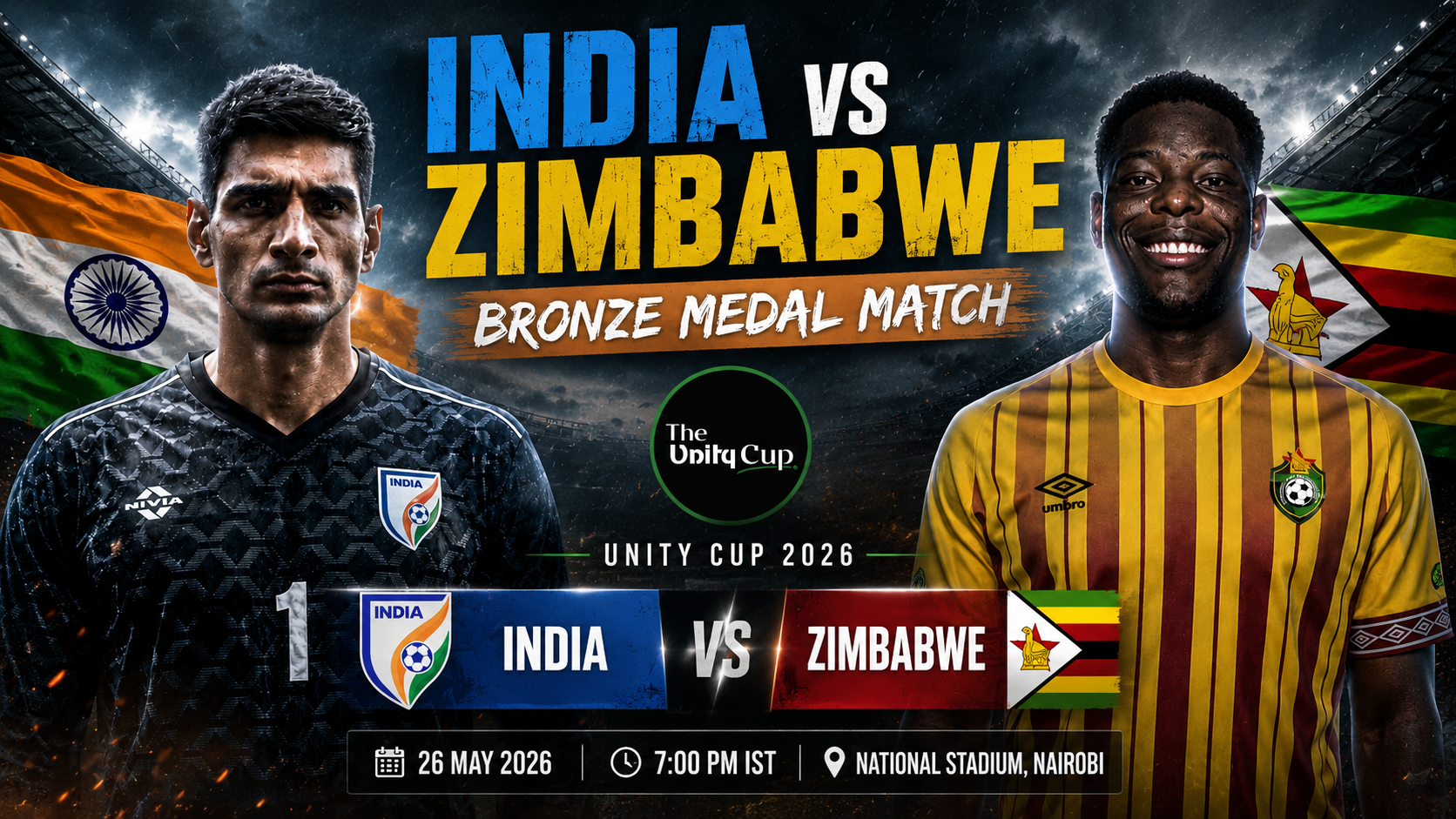
The Indian men's football team will have one final opportunity to end its Unity Cup 2026 campaign on a positive note when it takes on Zimbabwe in the third-place playoff in London on May 30.
While the fixture may not carry the glamour of the final, it presents an important test for Khalid Jamil's side against another physically imposing African opponent. After falling short against Jamaica in the semi-finals, the Blue Tigers now face a Zimbabwe team that possesses quality, experience and several players competing at a high level in European football.
For India, a victory would provide a significant confidence boost ahead of upcoming international assignments. For Zimbabwe, it is another chance to salvage something from a tournament that has seen them narrowly miss out on the final.
The match will also mark only the second football meeting between India and Zimbabwe. Their only previous encounter came more than two decades ago at the 2003 Afro-Asian Games, where Zimbabwe emerged victorious in an entertaining 5-3 contest. While the two nations frequently meet on the cricket field, football encounters between them have been exceptionally rare. That makes Friday's clash a unique occasion as the rivalry shifts back to the football pitch after a gap of 23 years.
According to the latest FIFA rankings, Zimbabwe sit at No. 130 in the world, six places above India, who are ranked 136th. However, rankings alone do not tell the full story.
Unlike Jamaica, whose squad featured several debutants and experimental selections, Zimbabwe arrive with a number of players who have significant experience in competitive European leagues. The standout name is undoubtedly Marshall Munetsi. The dynamic midfielder enjoyed an excellent season in France, representing Paris FC in Ligue 1 after his move from Wolverhampton Wanderers. Munetsi scored four goals in 15 Ligue 1 appearances and remains one of Zimbabwe's most influential players.
His ability to contribute both defensively and offensively makes him a constant threat. Whether breaking up opposition attacks, carrying the ball through midfield or arriving late in the box, Munetsi is capable of changing games.
Another major figure is Marvelous Nakamba. The experienced midfielder has spent several seasons in English football and provides Zimbabwe with composure, leadership and defensive stability in central areas. His ability to control the tempo of matches could prove crucial against India.
Jordan Zemura is another player the Blue Tigers must monitor closely. The attacking full-back is known for his pace and willingness to drive forward from wide positions, creating overloads and stretching opposition defences. Combined with Zimbabwe's physicality and direct style, these players make the Warriors a dangerous proposition.
India's defeat to Jamaica exposed several areas that require improvement, particularly when facing athletic opponents who can match and exceed them physically. Zimbabwe, however, pose a slightly different challenge. While Jamaica relied heavily on possession and structured build-up play, Zimbabwe are generally more direct in their approach. They look to move the ball forward quickly, attack space aggressively and make maximum use of their physical strength.
Set pieces are another area where India will need to remain alert. Zimbabwe possess several aerially dominant players and have consistently used dead-ball situations as an important attacking weapon.
For Khalid Jamil, organising a compact defensive structure will once again be a priority.
India's task has become more difficult following a worrying injury update involving Ryan Williams. The winger, who made an immediate impact after making his international debut and scored against Hong Kong, is expected to miss the Zimbabwe clash because of a hamstring injury.
His absence removes one of India's most direct attacking outlets and reduces the team's options in transition. Williams could be doubtful for the upcoming friendly matches against Tajikistan, making his recovery a significant concern for the national team management. With Anwar Ali already unavailable due to injury and several key players missing from the Unity Cup squad, India's resources remain stretched. Despite the challenges, the match presents another valuable opportunity for Khalid Jamil to continue shaping his team.
The Unity Cup has offered India exposure against opponents that differ significantly from those usually faced in Asian competitions. Such experiences are crucial as the Blue Tigers attempt to raise their level and compete more consistently against stronger opposition.
A positive result against Zimbabwe would not only secure third place but also provide tangible evidence that India can compete against physically dominant teams with players based in Europe's top leagues.
Friday's encounter may not decide a trophy, but it could reveal plenty about the direction of the Indian national team. Zimbabwe enter the match as slight favourites due to their superior individual quality and European-based core. Yet India have shown resilience in difficult situations before and will view this as an opportunity to finish the tournament strongly. The challenge is clear.
The Blue Tigers must cope with Zimbabwe's physicality, remain disciplined defensively and be clinical whenever opportunities arise.
If they can do that, India may have a chance to rewrite a rivalry that has remained one-sided for more than two decades.
Comments (0)
to post comments, replies, and votes.
Loading comments…