India Qualify for AFC U-17 Asian Cup 2027 Unbeaten, Set Sights on Historic FIFA World Cup Berth
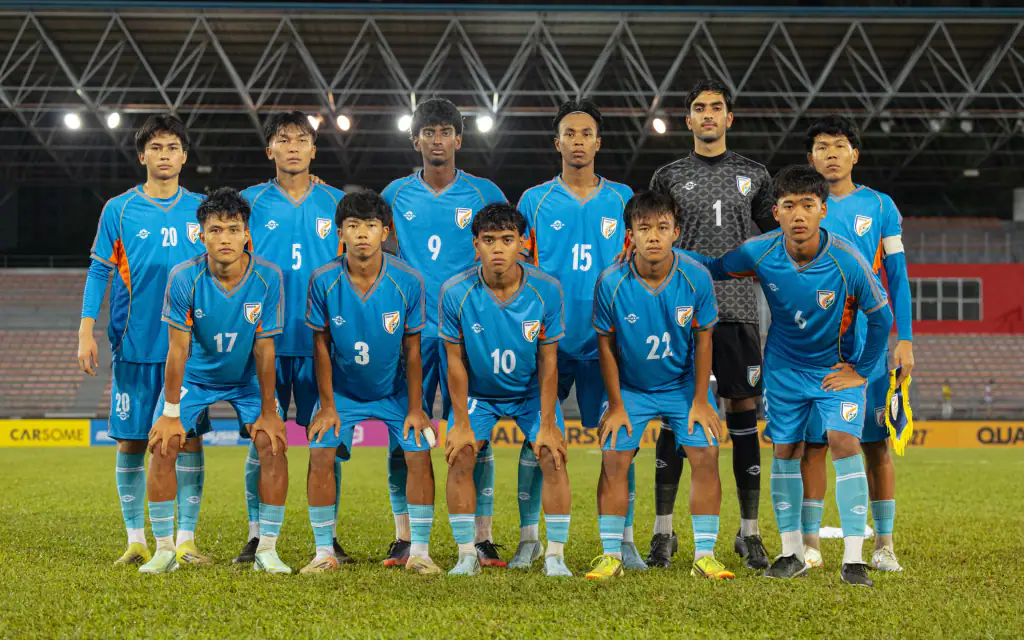
India’s U-17 men’s football team has secured qualification for the 2027 AFC U-17 Asian Cup in Uzbekistan after completing an unbeaten campaign at the qualifiers in Malaysia.
Head coach Mehrajuddin Wadoo’s side finished at the top of Group E with 10 points from four matches, scoring 20 goals and conceding just three.
A 0-0 draw against hosts Malaysia on November 20 confirmed India’s place in the continental finals. The result completed a campaign featuring three consecutive victories over Singapore, Guam and Palestine, followed by a disciplined performance in the decisive fixture.
India were the only team in Group E to finish the qualifiers undefeated, underlining their consistency across the four matches. The 20 goals scored also marked the country's highest-ever tally in an AFC U-17 Asian Cup qualifying campaign.
More importantly, qualification gives India another opportunity to compete for a place at the FIFA U-17 World Cup. With eight Asian teams set to qualify for the 2027 global tournament in Qatar, reaching the quarter-finals of the Asian Cup in Uzbekistan will be enough to secure a World Cup berth.
India opened their Group E campaign with a 4-2 victory over Singapore on November 11. Captain Dallalmuon Gangte led the attack with a hat-trick, while Sharry added the fourth goal late in the contest. The Blue Colts then produced their biggest result of the qualifying campaign, defeating Guam 12-0. Raj Singh Wahengbam scored four goals, while Gangte registered his second consecutive hat-trick. Seven different Indian players found the net, demonstrating the attacking depth within the squad.
The third fixture against Palestine was arguably the most important contest of the campaign. India secured a 4-1 victory, with Kamgouhao Doungel opening the scoring before Mukundo Singh Ningthoujam, Gangte and Zoramdinthara Lalhunmawia added second-half goals.
The match was interrupted by heavy rain, resulting in a delay of more than two hours. Palestine also had to play with 10 men following a first-half red card. India managed the conditions and the contest effectively to secure three crucial points.
That victory placed India in a strong position heading into the final match against Malaysia. A draw was sufficient to confirm first place, and Wadoo’s side delivered a compact defensive display to hold the hosts to a goalless result.
Gangte leads the scoring charts
Captain Dallalmuon Gangte emerged as India's standout performer, finishing the qualifying campaign with seven goals. His consecutive hat-tricks against Singapore and Guam established the team's early momentum, while his goal against Palestine proved important in the decisive phase of the group.
Raj Singh Wahengbam also made a significant contribution with four goals against Guam. The scoring was spread across the squad, allowing India to rely on more than one attacking outlet throughout the campaign.
At the other end, the defence showed its importance in the final fixture. India had scored freely in the first three matches, but the ability to protect a result against Malaysia demonstrated a different dimension to the team's performance.
India finished Group E with a goal difference of +17, comfortably ahead of the other teams in the standings.
The World Cup opportunity: Why the quarter-finals matter
The biggest incentive awaiting India in Uzbekistan is the opportunity to qualify for the 2027 FIFA U-17 World Cup in Qatar. Asia has eight qualification places available through the continental championship. Under the 16-team Asian Cup format, the teams finishing in the top two positions in each of the four groups advance to the quarter-finals.
That makes a quarter-final appearance sufficient to secure a place at the FIFA U-17 World Cup. India would not need to reach the semi-finals or win the Asian title to qualify.
The significance of this pathway is considerable. India have previously reached the quarter-finals of the AFC U-17 Asian Cup in 2002 and 2018, but those campaigns did not result in World Cup qualification. Under the earlier allocation, only the four semi-finalists qualified from Asia in 2018.
India have appeared at the FIFA U-17 World Cup only once, in 2017, when they participated as hosts. Reaching the last eight in Uzbekistan would therefore secure the country's first qualification for the tournament on sporting merit.
While the qualifying campaign provides plenty of encouragement, the level of competition in the final tournament will be significantly higher. India struggled at the 2026 AFC U-17 Asian Cup in Saudi Arabia, losing both group-stage matches against Australia and Uzbekistan without scoring. That experience offers a reminder of the gap the team must bridge against established continental sides.
The next six months will be crucial for Wadoo and his squad. India will need to maintain the defensive organisation shown against Malaysia while developing the ability to compete against stronger opponents who may dominate possession and create sustained pressure.
The attacking contributions of Gangte and Wahengbam provide a promising foundation, but the team will need collective consistency across all departments.
India have completed the first objective: qualification for Uzbekistan 2027. The next target is far more significant. A quarter-final finish would take the Blue Colts to the FIFA U-17 World Cup in Qatar and mark a major milestone for Indian football.
Comments (0)
to post comments, replies, and votes.
Loading comments…