Indian Football's Heaviest International Men Football Losses: 11–1 Defeat to Soviet Union Remains Team's Worst Ever Loss
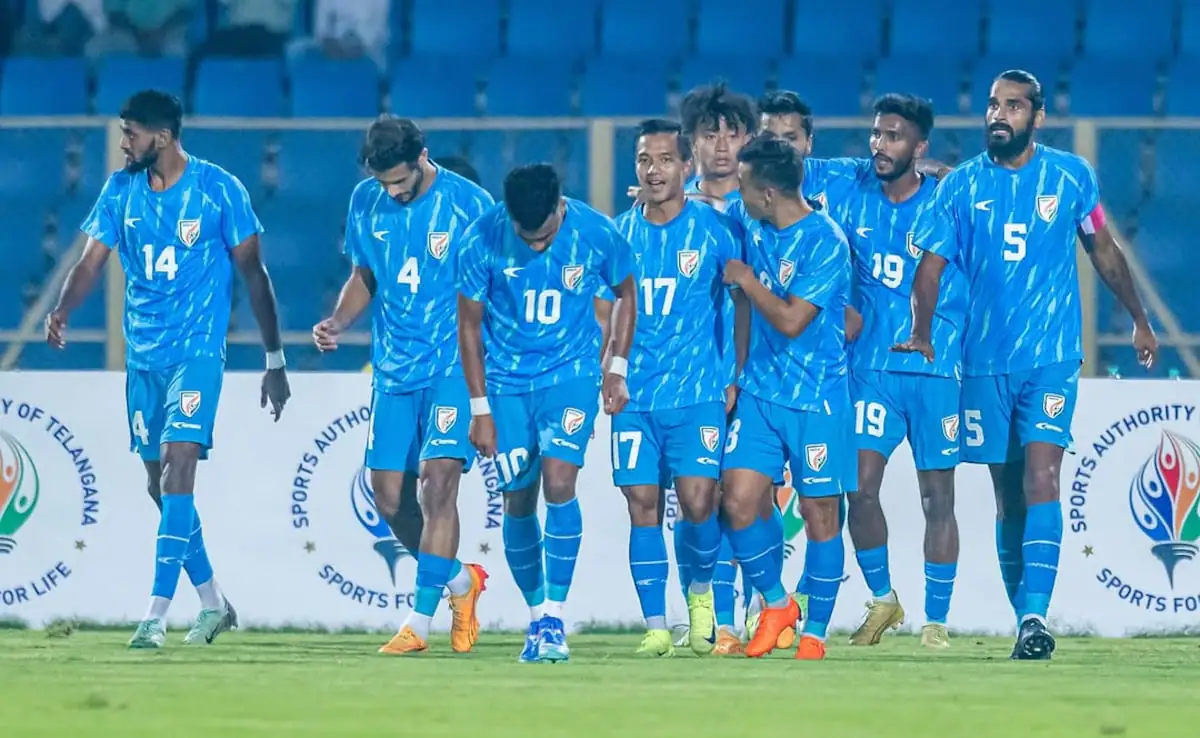
India's men's football team's toughest losses show the gaps the team has faced against stronger Asian sides and the setbacks that have shaped its recent path.
The India men's national football team's heaviest recorded international defeat is an 11–1 loss to the Soviet Union on 16 September 1955. The 0–9 loss to Burma at the 1971 Merdeka Tournament remains India's heaviest defeat against an Asian opponent and the second-heaviest loss in the team's international history.
The team also suffered a 0–7 loss to the United Arab Emirates in 1993 during World Cup qualifying and a 1–7 defeat to Chinese Taipei in 1996 in Asian Cup qualifying. Other major defeats include a 1–10 loss to Yugoslavia at the 1952 Olympics. The 11–1 defeat to the Soviet Union in 1955 remains the heaviest loss in Indian football's international history, while the 0–9 defeat to Burma in 1971 remains the team's worst loss against an Asian opponent. Played at the Merdeka Tournament, the match exposed the gap between India and more developed Asian programs at the time.
The 0–7 loss to the UAE in 1993 came during 1994 FIFA World Cup qualifying, a period when India struggled to keep pace with faster, more physical teams in the region. The 1–7 defeat to Chinese Taipei in 1996 was another low point, happening during Asian Cup qualifying and drawing sharp criticism at home.
India also suffered a 1–10 defeat to Yugoslavia during the 1952 Summer Olympics, which remains one of the largest margins of defeat ever recorded by the national team.
Other heavy defeats in India's record include a 1–7 loss to China at the 1974 Asian Games, a 0–6 defeat to the UAE in 1996 World Cup qualifying, and a 0–6 loss to the UAE again in a 2021 international friendly. This research demonstrates that lopsided scores were not limited only to one era but have taken place in various competitions during different decades. India's more recent years have also been marked by poor performance, adding to their woes. In the 2024 AFC Asian Cup, India failed to score any goals for itself despite playing against such teams as Australia (0-2), Uzbekistan (0-3), and Syria (0-1) in the group stage of the tournament. The lack of goals and the clean-sheet defeats highlighted ongoing issues in attack and overall match sharpness.
During 2026 World Cup qualifying, India suffered a damaging 1–2 home defeat to Afghanistan in Guwahati. That defeat, followed by several other qualifier losses, would demoralize them and create some doubts regarding their ability to compete against regional rivals. Their efforts were not fruitful, and that created some pressure on the training regime and selection process of the players.
Results after the 2024 Asian Cup cycle led to a sharp slide in India's FIFA ranking. The team fell to 133rd, its lowest position since 2016. The decline in ranking was not just a consequence of losing, but was also due to the failure to have success against teams with similar rankings. The drop in rankings could impact seeding for future qualifier tournaments.
Several reasons have led to such significant losses by the Indian national team in the past. For one, the national team usually comprises players drawn from within the domestic league teams of the I-League and ISL, where the standard of play is still in its developmental phase. Players are rarely exposed to high-pressure games against strong opponents from other countries in Asia.
Tournament format can also worsen mismatches. In World Cup and Asian Cup qualifying, early rounds sometimes pair India with much stronger opponents. When goal difference matters or when top teams play with full strength for the full match, the result can become very one-sided.
Indian football authorities have tried to address these issues through coaching swaps, foreign technical advisors, and more international friendlies against regional opponents. Some programs now focus on youth development, fitness standards, and better scouting.
Tournaments also use seeding or preliminary rounds to keep matches fair, and some bodies give grants and exchange coaches to slowly lift skills across the region.
Losing can be beneficial as well. It is quite common for small teams to conduct an evaluation, hire experienced coaches, and schedule games that fit their capabilities after such losses. The public will equally motivate their teams to act, making the process quick. It enables small teams to progress and catch up with their big rivals.
Comments (0)
to post comments, replies, and votes.
Loading comments…