India’s Women’s Hockey World Cup Semifinal Hopes Rest on Must-Win Australia Clash and Netherlands’ Help
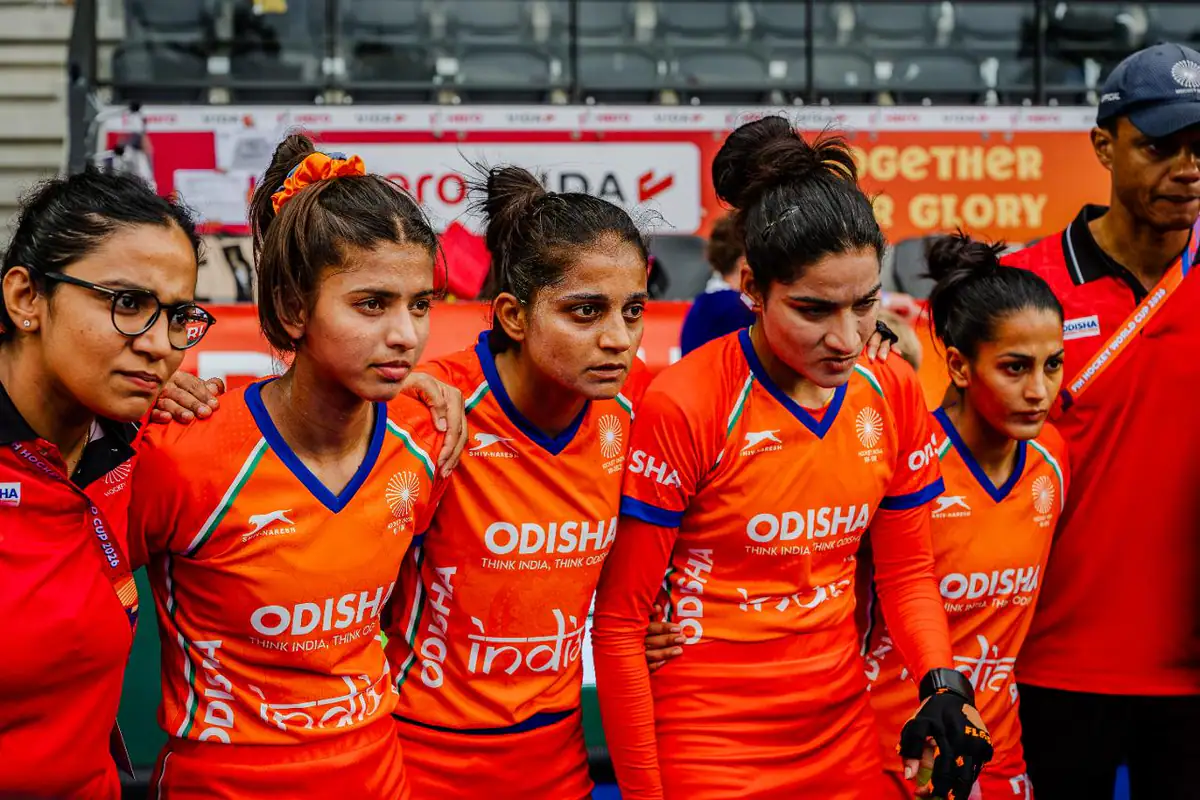
The Indian women’s hockey team will enter its biggest match of the FIH Hockey World Cup 2026 knowing that victory may still not be enough.
India face Australia in a decisive Pool E clash on Sunday, with their hopes of reaching the World Cup semifinals dependent on both their own performance and the result of the Netherlands versus China match earlier in the evening. The equation is clear, even if the path to qualification remains complicated.
India must beat Australia. But before that, they will be hoping hosts and defending champions, the Netherlands, either defeat China or hold them to a draw. If China manages to beat the Dutch, they will move to five points and secure the second semifinal place from the pool, ending the hopes of both India and Australia.
If China draws or loses, however, the door remains open. That would make India's 10:30 PM IST clash against Australia at Amstelveen a virtual knockout match, with the winner taking a major step towards creating history.
The Netherlands is already through as the battle for second spot intensifies.
The Netherlands have already booked their place in the semifinals after defeating India 2-0 on Friday. The defending champions entered the second stage carrying three points from the opening phase and added another three against India to move to six points. China currently sits on two points after drawing against Australia, having carried one point forward from the first stage. India and Australia both have one point, making Sunday's fixtures decisive.
The Netherlands will face China at 7:30 PM IST before India takes on Australia. For India, the best-case scenario is straightforward: China fails to win, followed by an Indian victory against Australia. A draw against Australia will not be enough. India needs all three points.
That makes the match against the Hockeyroos arguably their biggest game of the tournament. “We see it as a quarterfinal,” India chief coach Sjoerd Marijne said.
“It’s always very close against Australia, and that’s how I think the match on Sunday will be. There will not be many secrets because we play many times against each other. It’s a must-win game for both sides and that’s something which makes it a big challenge for us.”
The familiarity between the two teams adds another layer to the contest. India and Australia recently played a four-match series before the FIH Nations Cup earlier this year. The series ended 2-2, underlining how closely matched the two sides have been.
There is little scope for surprise. Both teams understand each other's strengths, attacking patterns and defensive systems. Sunday is therefore likely to be decided by execution rather than tactical secrecy. For India, one positive from the tournament has been their defensive resilience.
Against the Netherlands, the hosts struck early and eventually won 2-0, but India remained composed for long periods. Their defensive structure frustrated one of the strongest attacking teams in world hockey and ensured that the Dutch did not score from open play.
That performance could prove important psychologically heading into the Australia match. If India can defend with similar discipline, they have already shown they can stay competitive against the world's best teams.
Savita and Bichu Devi provide defensive assurance.
India's goalkeeping department has been one of the team's major strengths throughout the campaign. Veteran goalkeeper Savita has once again provided leadership and calmness, while Bichu Devi has also offered an assured presence between the posts. Their role will be particularly important against Australia.
A match of this magnitude is likely to be decided by small margins. A crucial save, a penalty corner block or a defensive intervention inside the circle could be the difference between a semifinal place and elimination. India's defenders have repeatedly shown their ability to absorb pressure, but the challenge on Sunday will be to maintain that concentration while also taking greater risks in attack.
Because unlike against the Netherlands, a draw will not help. India has to win.
Attack must convert chances.
That requirement places added pressure on India's forwards and penalty corner unit. India have created opportunities throughout the tournament through open play and set pieces. But converting those chances consistently remains the next challenge. Against elite teams, opportunities are limited.
Marijne acknowledged that India must become more clinical in the decisive moments. “Against big teams, if you get three opportunities, you have to convert one or two,” he said. “That’s something we keep working on.”
The same applies to penalty corners. India have earned set-piece opportunities but have not always converted them into goals. In a potential knockout match against Australia, one successful penalty corner could completely alter the contest.
“At the moment we are not scoring off a lot of penalty corners, and we know that,” Marijne added. “But we have the quality, and I have confidence in Navneet Kaur and Deepika. They both have shown that they can do it, and hopefully they can do it against Australia.”
Navneet and Deepika could therefore have significant roles to play. India's attacking players will need to find the right balance between patience and urgency. They cannot afford to force opportunities early and expose themselves defensively, but they also cannot allow Australia to control the tempo.
India's journey through the World Cup has now reached a simple point. Everything comes down to one night.
First, they must watch the Netherlands versus China match and hope the defending champions prevent China from taking all three points. Then comes the task India can control: beating Australia. The recent 2-2 series result provides evidence that India are capable of competing with the Hockeyroos. Their disciplined display against the Netherlands provides further confidence.
But now they must turn competitiveness into victory. For the Indian women, the defensive foundations are already in place. Savita, Bichu Devi and the defensive unit have repeatedly demonstrated their ability to withstand pressure.
The final piece is attacking efficiency. If India can combine their defensive resilience with sharper finishing inside the circle, Sunday could become a historic night.
The equation is demanding. A little help from the Netherlands. And then a must-win performance against Australia.
For India, there is no bigger challenge in the tournament so far. But there is also no clearer opportunity. The semifinal dream is still alive. Now, the Indian women must seize it.
Comments (0)
to post comments, replies, and votes.
Loading comments…