India's Wrestling Revolution: WFI Appoints Four World-Class Foreign Coaches as Nation Eyes Asian Games and Olympic Glory
Indian wrestling is preparing for a new era. The Wrestling Federation of India has appointed four foreign coaches across all disciplines of the sport, assembling what is arguably the most distinguished and comprehensive international coaching panel in the history of the country's wrestling programme.
Japan's Kosei Akaishi will take charge of the women's team, Georgia's Emzarios "Shako" Bentinidis will lead the men's freestyle programme, Russia's Gogi Koguashvili will oversee Greco-Roman, and American Ian Butler has been appointed as High Performance Director a newly created role designed to bring systematic sports science and data-driven planning to the national setup. All four are expected to join India's national camps from May 1, 2026.
The appointments mark India's first full foreign coaching panel since 2019 and represent a clear statement of intent from the WFI ahead of the 2026 Asian Games and the 2028 Los Angeles Olympics. Each coach has been awarded a one-year contract with the option of extension through the LA cycle a structure that ties their continued involvement directly to the results they deliver on the international stage.
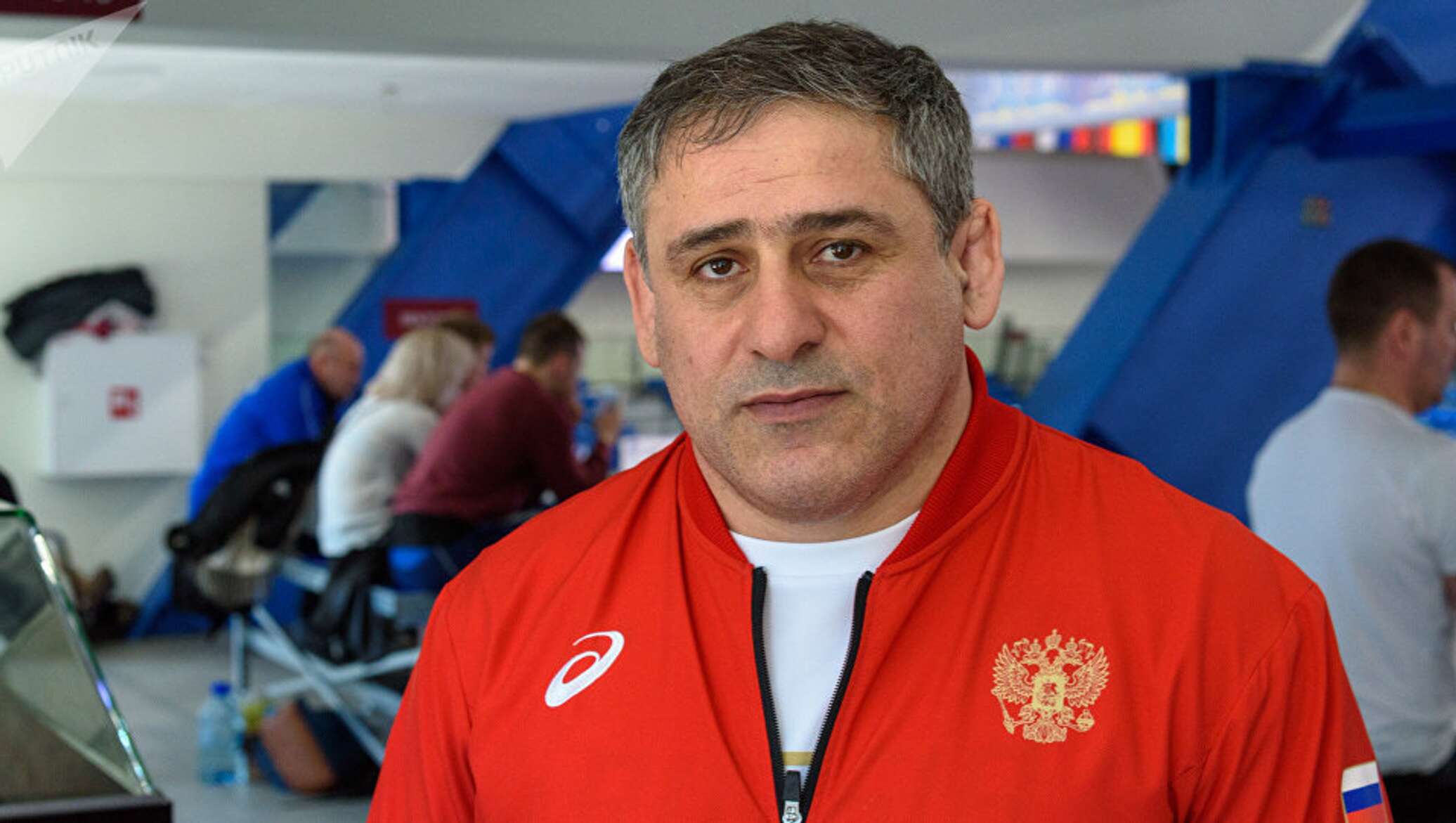
The most celebrated name in the quartet is Gogi Koguashvili, and the statistics that accompany him are staggering. The Russian-Georgian wrestling legend is a five-time World Champion claiming titles in 1993, 1994, 1997, 1998 and 1999 and an Olympic bronze medallist from the 1992 Barcelona Games, where he competed for the Unified Team. He subsequently represented Russia at the 1996, 2000 and 2004 Olympics, accumulating a competitive record that places him among the true greats of Greco-Roman wrestling. His coaching career included a stint as head coach of the Russian national Greco-Roman team. India has historically struggled in Greco-Roman wrestling at the international level, and Koguashvili's appointment is a direct attempt to address that gap with someone who understands the discipline from the inside out. Tactically astute and reputedly highly disciplinarian, he is expected to bring structural rigour and classical technique to India's Greco wrestlers.
https://bynakedfact.com/collections/sports-collection
Kosei Akaishi's arrival to lead the women's programme brings a different but equally distinguished pedigree. The Japanese coaching legend is a two-time Olympic medallist as an athlete winning silver at the 1984 Los Angeles Games and bronze at the 1992 Barcelona Olympics and competed at three consecutive Games across a career of remarkable longevity and consistency. He was most recently employed by JSW Sports at their facility in Bellary, Karnataka, and the WFI arranged his early release from that contract to bring him into the national setup. Akaishi's coaching philosophy is defined by the hallmarks of Japanese wrestling technical precision and mat discipline. In a women's programme that has produced Olympic and Commonwealth medals in recent years, his methodical, technique-first approach could elevate India's best female wrestlers to the next level of international competitiveness.
Shako Bentinidis is perhaps the most familiar face in Indian wrestling circles, and his reappointment to a national role feels like something of a homecoming. The Georgian-born coach a three-time Olympian who competed for both Georgia and Greece across three Games, and a European Championships bronze medallist in 2008 made his mark on Indian wrestling between approximately 2018 and 2021 as personal coach to Bajrang Punia. Under Bentinidis, Bajrang claimed the Asian Games gold in 2018 and the Olympic bronze at Tokyo 2020 the two biggest results of Bajrang's career. He also worked with freestylers Jitender and Sandeep Mann during that period, developing a reputation as a technique specialist with the ability to sharpen individual wrestlers to their absolute peak. His familiarity with Indian wrestlers, Indian conditions and the specific demands of the Asian wrestling circuit makes him an immediately effective appointment as Men's Freestyle head coach.
The appointment of Ian Butler as High Performance Director represents perhaps the most structurally significant decision of the four. The American a former US University champion, two-time World medallist and Pan-American Games silver medallist who also competed in MMA at the Bellator level brings a modern, systematic approach to athlete management that has been conspicuously absent from India's wrestling programme. As founder and head coach of the Silverback Wrestling Club in Anaheim, California, and a coach to USA and Canadian national teams, Butler has operated within one of the world's most professionalised wrestling environments. His mandate at WFI is to bridge the gap between coaching inputs and competition outcomes overseeing centralised planning, athlete monitoring, sports science integration and performance benchmarking across both the men's and women's camps.
Structurally, Butler's role as HPD represents a significant shift in how India's wrestling programme will function. He will coordinate between the women's camp at the Indira Gandhi Stadium in Delhi and the men's setup, which is expected to relocate from its current base in Lucknow to Sonepat in Haryana for improved facilities. All four foreign coaches will work in tandem with Indian coaches under Butler's supervision — a collaborative model that the WFI believes will avoid the abrupt departures and cultural friction that have characterised some of India's previous foreign coaching tenures.
The WFI began this process back in September 2025, when applications were invited from coaches across all wrestling disciplines. Candidates were shortlisted and interviewed on April 20 and 21, 2026, with the final selections confirmed almost immediately thereafter. Salaries have been set at USD 7,000 per month for each coach a commitment that reflects the seriousness of India's Olympic aspirations.
The timeline ahead is demanding. The 2026 Asian Games loom as the first major test for this new coaching structure, and the 2028 Los Angeles Olympics where India will hope to translate years of development into podium finishes represent the ultimate goal. With four of the world's most experienced wrestling minds now pointing their expertise in India's direction, the question is no longer whether India has the coaching talent to compete at the highest level. The question is whether the infrastructure, the selection processes and the athlete pipeline can match the ambition of the appointment.
From May 1, that ambition becomes reality. Indian wrestling's new era begins now.
Comments (0)
to post comments, replies, and votes.
Loading comments…