India Storm Into Junior Asia Cup Quarter-Finals After Another Seven-Goal Masterclass
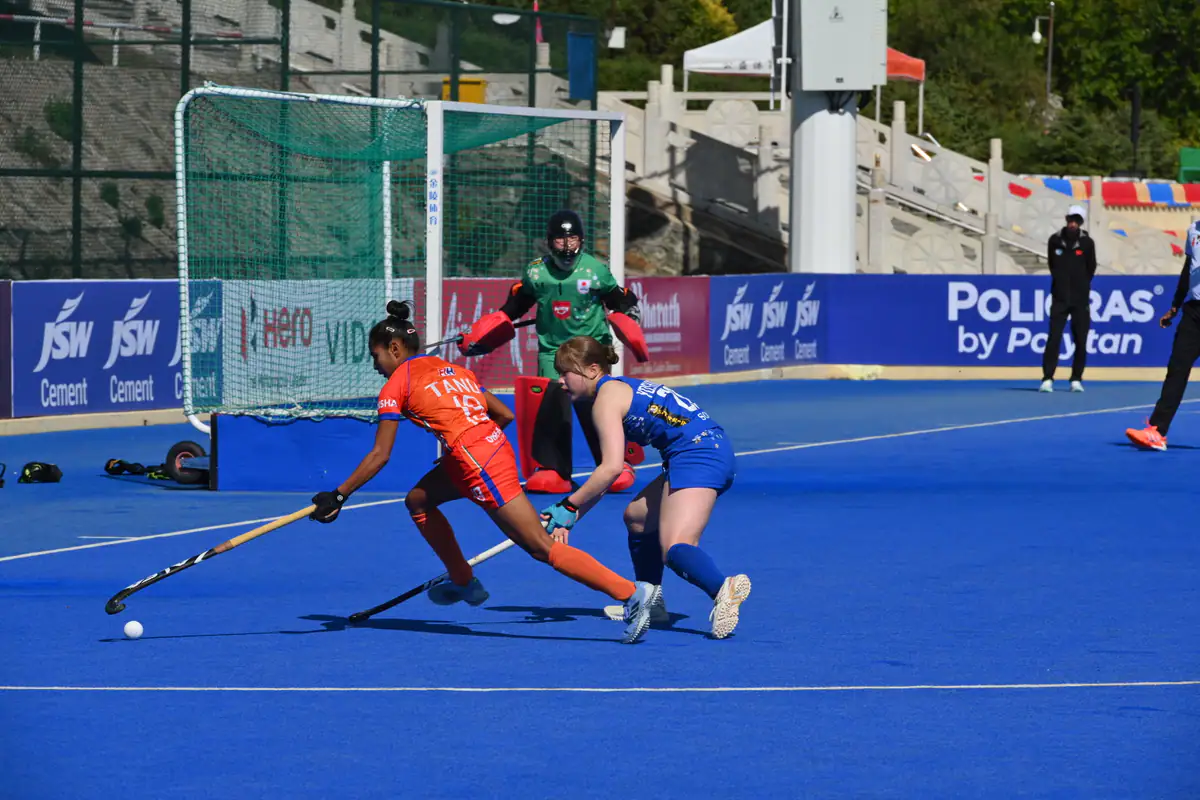
India sealed their place in the 2026 Women’s Junior Asia Cup quarter-finals with a dominant 7-0 win over Japan, making it three wins from three.
India's junior women are making a habit of turning important matches into one-sided affairs.
At the 2026 Women’s Junior Asia Cup in Moqi, China, the Indian Junior Women’s Hockey Team delivered another ruthless performance on Tuesday, dismantling Japan 7-0 to secure their place in the quarter-finals.
Three matches into the tournament, India have yet to put a foot wrong. Their campaign began with a 4-1 victory over Korea, followed by an extraordinary 11-1 demolition of Malaysia. Japan were expected to offer a sterner test, but India once again imposed their style early and never allowed their opponents to build enough momentum to threaten the result.
The win also keeps India perfect in the Elite Pool, with nine points from three matches.
More importantly, the performance showed that this Indian side has more than just an appetite for goals. It possesses the defensive discipline to control games when opponents attempt to fight their way back.
Japan barely had time to settle before India began asking questions. The breakthrough arrived in the fifth minute, when Krishna Sharma finished a promising attacking move to put India ahead. Rather than retreat after taking the lead, India continued to press.
That pressure produced another reward in the ninth minute. A Japanese defender committed a foul inside the circle, giving India a penalty stroke. Supriya took responsibility from the spot and calmly converted to double the advantage. At 2-0 down, Japan was already facing a difficult task. India made it even harder before the opening quarter was over. In the 14th minute, Purnima Yadav scored from open play, giving India a 3-0 advantage at the first interval.
It was an opening quarter that perfectly captured the Indian approach: aggressive without being reckless, clinical when opportunities appeared and relentless once Japan began struggling to escape their pressure.
The second quarter was noticeably more competitive. Japan pushed higher and showed greater attacking intent, attempting to disrupt India's rhythm and find a route back into the contest. For a brief period, India had to deal with a different kind of challenge.
But the Japanese pressure never translated into a goal. India's defensive unit remained organised, repeatedly closing down spaces and preventing Japan from turning possession into genuine scoring opportunities. At the other end, India continued to look dangerous, but neither team added to the score before half-time.
For Japan, a 3-0 deficit at the interval at least offered the possibility of a comeback. India had other plans.
Five minutes that ended the contest
Whatever Japan hoped to achieve in the third quarter disappeared rapidly. Japan once again started aggressively, searching desperately for their first goal. But India's defence held firm, and once possession turned over, the Indian attack moved into another gear.
The decisive spell began in the 41st minute. Geeta Yadav found the back of the net with a field goal to make it 4-0. Four minutes later, she struck again, completing her brace and taking India to 5-0. Japan was suddenly facing a near-impossible deficit. And India was not finished.
Just one minute later, Purnima Yadav scored again to complete her own brace. The Indian forward's second goal of the afternoon made it 6-0 and effectively ended any remaining doubt about the outcome. Three goals in five minutes had transformed a comfortable Indian lead into a complete rout.
The response was particularly impressive because Japan had begun the quarter with attacking ambition. India absorbed that pressure before punishing their opponents at the other end. There was still one more goal to come.
India continued to play on the front foot in the final quarter rather than simply protecting their six-goal advantage. In the 50th minute, Sanika Chandrakant Mane added her name to the scoresheet, scoring her first goal of the match to make it 7-0.
From there, India managed the remainder of the contest without allowing Japan a way back.
The final whistle confirmed another comprehensive victory and, with it, India's qualification for the quarter-finals.
China now stands between India and the top spot.
India have already achieved their immediate objective, but their Elite Pool campaign is not over. The defending momentum will be tested again on September 9, when India face China in their final pool match. China currently has six points from two games, meaning the contest carries significance beyond simply completing the group stage. The result will determine who finishes at the top of the pool.
For India, it is another opportunity to test themselves against a strong opponent before the knockout rounds begin. The numbers so far are striking.
Four goals against Korea. Eleven against Malaysia. Seven against Japan. That is 22 goals in three matches, with only two conceded. Yet perhaps the most encouraging aspect is the variety in India's performances. They have shown they can score in bursts, defend leads and respond when opponents increase the pressure.
The quarter-final place is secured. The perfect record remains intact. But India will not want to stop there.
The China match offers one final chance to sharpen their game before the tournament enters its decisive phase. And if the first three matches are any indication, the rest of Asia will have plenty of reasons to take notice of this young Indian side.
Comments (0)
to post comments, replies, and votes.
Loading comments…