India Women Reach Asian Handball Championship Quarter-Finals Despite Narrow Defeat to Uzbekistan
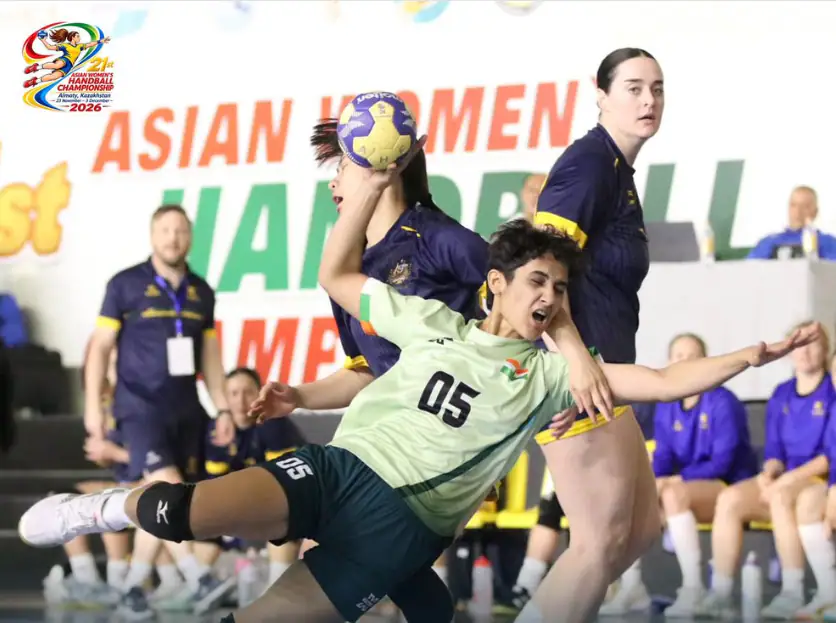
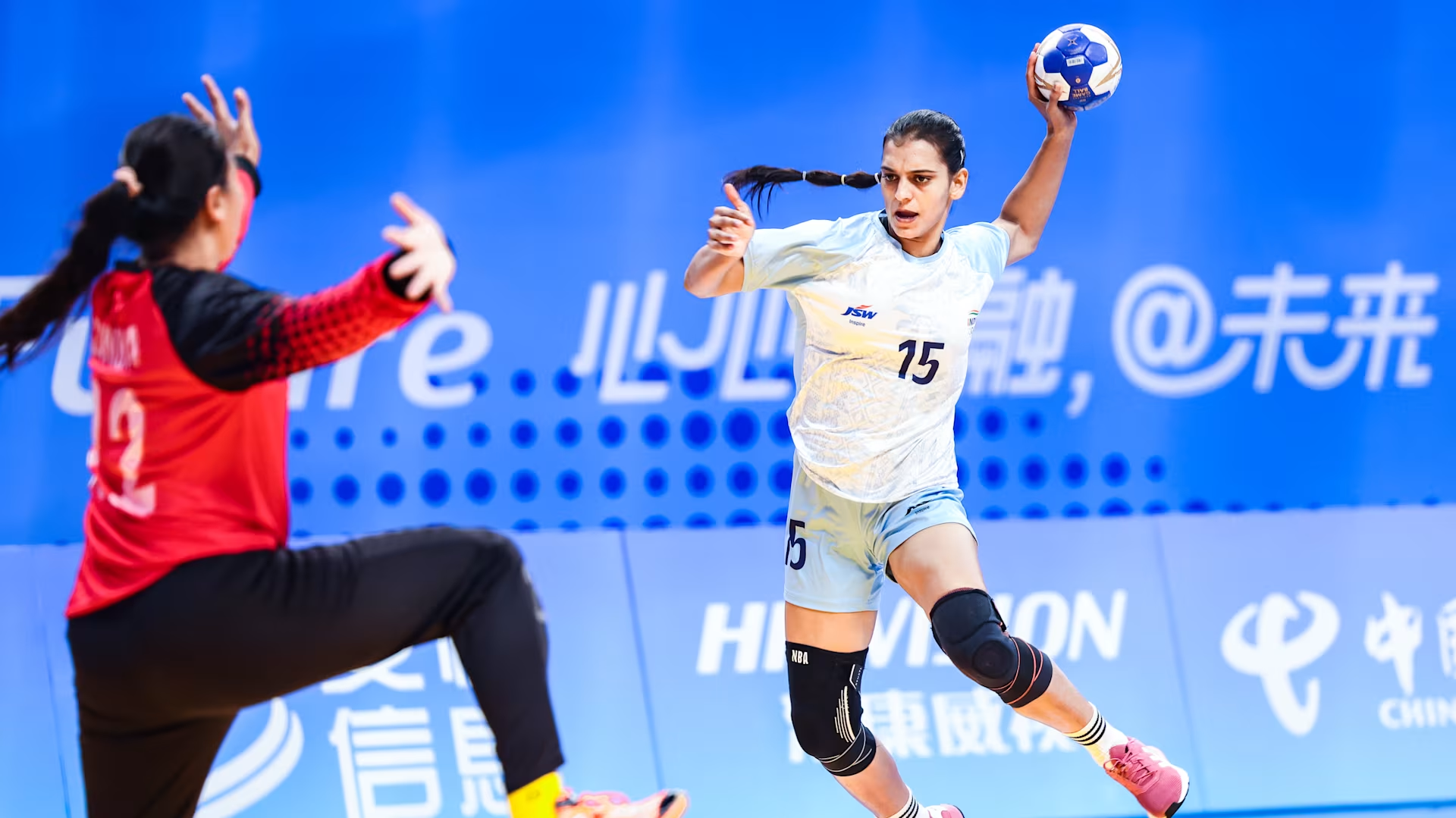
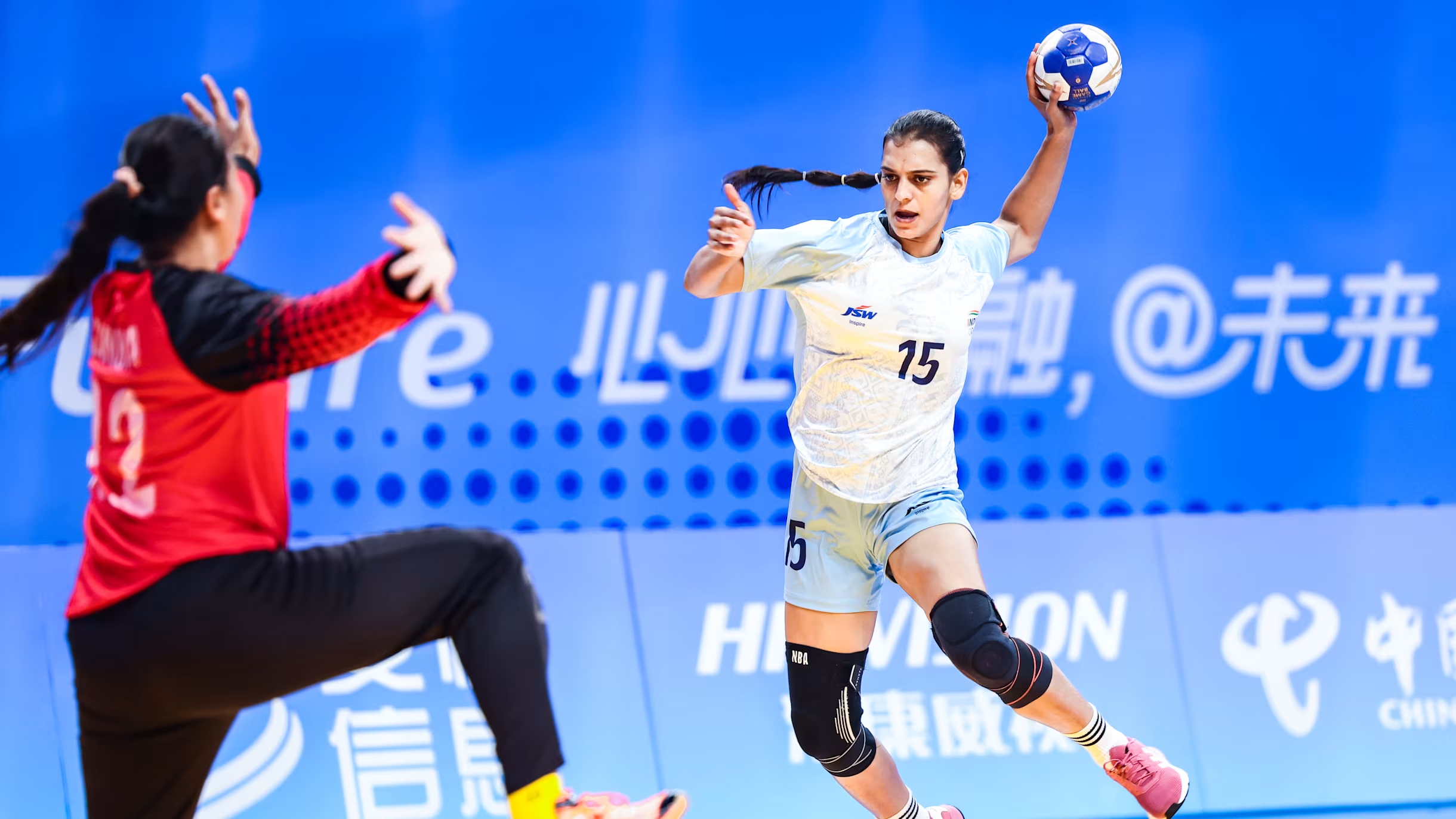
India's women's handball team secured a place in the quarter-finals of the 21st Asian Women's Handball Championship 2026 in Almaty, Kazakhstan, despite suffering a narrow 26–28 defeat against Uzbekistan in their final group-stage fixture.
While the result ended India's preliminary-round campaign on a losing note, the team progressed to the knockout stage, keeping its hopes alive in a tournament that carries significant qualification implications for the 2027 World Championship.
The result also brought individual recognition for Bhawana Sharma, who scored 10 goals against Uzbekistan to take her tournament tally to 36. She is currently the leading scorer of the championship, underlining her importance to India's attacking structure.
India's next opponent in the quarter-finals is expected to be Japan, although the final knockout pairing remains subject to confirmation.
India began its campaign with an encouraging performance against Australia, registering a convincing 28–19 victory. The nine-goal margin reflected India's ability to build an advantage and maintain control across the contest.
The result gave the team an important start in the group stage and put it in a position to compete for a quarter-final berth. It was also an opportunity for India's attacking players to establish rhythm before facing stronger opposition in the remaining fixtures.
The second meeting with Australia also ended in a 28–19 Indian victory, according to the match updates supplied. The team demonstrated its scoring ability and secured another important result in the preliminary phase.
South Korea expose India's defensive vulnerabilities
India's third match brought a significant step up in opposition against South Korea, one of the established powerhouses of Asian women's handball. South Korea secured a comprehensive 36–17 victory, using organised defence, efficient finishing and contributions from across the squad.
India initially showed resistance, recovering from an early 3–0 deficit to draw level at 6–6 in the 14th minute. However, South Korea gradually took control through a combination of attacking variety and defensive pressure.
The Korean side led 19–11 at half-time after establishing a seven-goal advantage in the closing stages of the first period. The gap widened further after the break, with South Korea scoring six consecutive goals during a decisive passage to move ahead 28–13.
India managed only six goals in the second half, highlighting the difficulty of breaking down South Korea's defensive organisation. Bhawana Sharma and Priyanka Thakur were India's leading scorers in the match, contributing four goals each. South Korea, meanwhile, had 11 different players on the scoresheet, demonstrating the depth of its attacking options.
Cha Cha-yeon led the Korean scoring with seven goals, while Kim Min-seo added six from six attempts. Goalkeepers Park Sae-young and Jeong Jin-hee combined for 12 saves, limiting India's opportunities and playing a major role in the 36–17 result.
The victory confirmed South Korea's progression to the quarter-finals after winning all three of its group matches. India, meanwhile, entered its final fixture with Uzbekistan needing a strong result to consolidate its knockout-stage position.
Bhawana Sharma leads the scoring charts
The contest against Uzbekistan proved much closer. India lost 26–28, falling short by just two goals in a match that could have significantly influenced the final group standings.
Despite the defeat, Bhawana Sharma delivered an outstanding individual performance, scoring 10 goals. Her contribution took her total to 36 goals in the tournament, making her the leading scorer at this stage of the championship.
Her scoring form has been one of India's most important positives. Against South Korea, she had already shared India's scoring lead with Priyanka Thakur, and her 10-goal performance against Uzbekistan demonstrated her ability to shoulder a substantial attacking responsibility against competitive opposition.
For India, the challenge now will be to ensure that the attacking burden does not fall too heavily on one player. Greater scoring contributions from the supporting line-up, alongside improved defensive coordination, will be important in the knockout rounds.
India's progression to the quarter-finals is an important achievement, but the level of difficulty is set to increase. Japan are the likely opponents in the next round, presenting another demanding test for the Indian team.
The championship runs until December 3 in Almaty, with four qualification places available for the 2027 World Women's Handball Championship in Hungary. The stakes therefore extend beyond the continental title, with teams competing for a place on the global stage.
India will need to address the defensive issues exposed against South Korea, improve its efficiency in converting attacking opportunities and find more consistent support for Bhawana Sharma.
The narrow defeat to Uzbekistan will be disappointing, particularly after the team's encouraging start against Australia. However, reaching the last eight gives India another opportunity to measure its progress against Asia's leading handball nations.
With Bhawana Sharma leading the tournament's scoring charts on 36 goals, India have an attacking player capable of influencing the quarter-final. The next challenge is to turn that individual output into a collective performance strong enough to take the team further in the championship.
Comments (0)
to post comments, replies, and votes.
Loading comments…