India’s Forgotten Football Golden Era: When a Good Generation Hid a Weak System
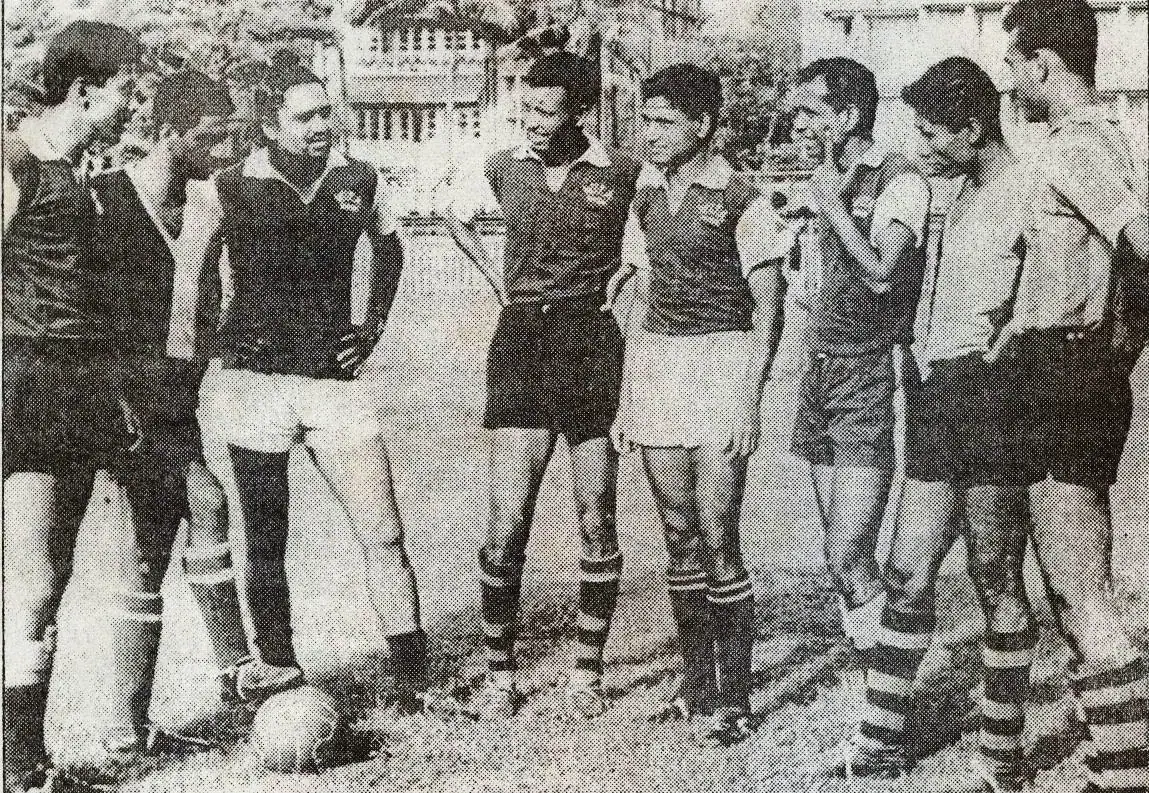
India’s football history is often discussed through the lens of decline. The national team’s struggles in recent decades have become so familiar that it is easy to forget there was a time when India was not merely competitive in Asia but one of the continent’s leading football nations.
Between 1951 and 1964, India built a remarkable international record. The national team won the 1951 and 1962 Asian Games gold medals, finished fourth at the 1956 Melbourne Olympics, and reached the final of the 1964 AFC Asian Cup. Those achievements are not minor milestones. They represent one of the strongest sustained periods in Indian football history.
Yet the more important question is not why India succeeded then. It is why India failed to turn that success into a system capable of producing similar generations again and again.
India's football rise after independence was built around a particularly talented generation and the extraordinary influence of coach Syed Abdul Rahim. Rahim, who managed the national team from 1950 until his death in 1963, brought tactical discipline, physical conditioning, and positional flexibility to the side. His influence helped India compete against opponents with greater international experience and established the team as a serious force in Asian football.
The results followed. India won the inaugural Asian Games football gold on home soil in 1951, defeating Iran 1-0 in the final. Five years later came perhaps the most famous performance of the era: India defeated hosts Australia 4-2 in the quarter-finals of the 1956 Melbourne Olympics before eventually finishing fourth.
Neville D'Souza's hat-trick in that match remains one of the defining moments of Indian Olympic football. India remained competitive at the 1960 Rome Olympics, drawing with France and narrowly losing to Hungary. Then came another Asian Games triumph in 1962, when India defeated South Korea 2-1 in Jakarta. Two years later, India finished runners-up at the 1964 AFC Asian Cup.
For a country still finding its identity in the years after independence, these performances gave Indian football genuine continental stature.
The problem was that India's football success did not develop into an institutional structure. Rahim was more than a coach. He was a tactician, talent identifier, and organizer who brought together players from different regional centers. His influence was so significant that the system around him became heavily dependent on his individual expertise.
He even introduced the 4-2-4 formation to India during the mid-1950s, ahead of Brazil's global popularization of the system at the 1958 World Cup. His teams worked on technical drills, positional movement, and tactical flexibility rather than relying purely on individual ability. But those methods were not converted into a national coaching curriculum or a sustainable player-development pathway.
When Rahim died in 1963, Indian football lost the individual who had held much of that knowledge together. There was no comparable institutional framework ready to reproduce his methods, develop the next generation, and maintain India's tactical evolution. This is the central lesson of India's Golden Era. A great generation can make a weak system look strong.
The Domestic Structure Was Not Preparing Players for the Future
India's domestic football structure also failed to keep pace with international football. For much of the twentieth century, domestic competition revolved around tournaments such as the Durand Cup, Santosh Trophy, IFA Shield, and Rovers Cup. These competitions had enormous historical value, but they did not provide the sustained national league environment necessary for consistent player development.
Matches were frequently played over 70 minutes rather than the international standard of 90 minutes. Teams could also be eliminated quickly from knockout competitions, limiting the number of meaningful competitive matches available to players. That created a fundamental mismatch. Indian players could produce extraordinary performances in individual tournaments, but the domestic ecosystem was not consistently exposing them to the physical demands, tactical complexity, and match volume required at the international level.
At the same time, grassroots development remained heavily dependent on traditional football centers such as West Bengal, Goa, Kerala, and Hyderabad rather than a coordinated nationwide scouting and academy network.
The most revealing comparison is not necessarily with Europe or South America. It is with Japan. During the 1950s and 1960s, Japan regularly lost to India. But Japan eventually built a long-term football structure around youth development, coaching education, school football, and professional leagues. The Japanese Football Association later developed its 100-Year Plan, introducing structured coaching pathways and connecting national teams, youth development, and coach education through an integrated framework.
India did not build an equivalent system during the decades when its Golden Era could have provided the foundation. The result was predictable.
Once the exceptional generation disappeared, there was no equally strong pipeline behind it.
Perhaps India's most consequential mistake was not recognizing that international success had created an opportunity to institutionalize football. The 1950 World Cup withdrawal is symbolic of that broader problem. India had been offered a place in the tournament after other Asian teams withdrew, but the AIFF ultimately cancelled participation. The decision reflected administrative priorities, logistical difficulties, limited resources, and a perception that the Olympics remained more important.
Missing that tournament also meant missing an opportunity to enter a rapidly changing global football environment. As football became increasingly professional, tactical, and commercial, India remained tied to older structures. Meanwhile, other nations invested in youth systems, coaching education, professional leagues, and institutional planning.
India's early football success should not be dismissed as a fluke. The players were good. The coaching was innovative. The results were real.
But the mistake was assuming that sporting excellence automatically meant institutional strength. It did not. The 1951 Asian Games gold, 1956 Olympic fourth place, 1962 Asian Games triumph, and 1964 Asian Cup final appearance demonstrated that India could produce a team capable of competing with the best in Asia and beyond. What they did not demonstrate was that India had built a machine capable of producing another such team.
That distinction explains much of what followed. India did not lose its footballing potential overnight. It lost the ability to systematically reproduce excellence.
And that may be the most important lesson from the country's forgotten Golden Era: a talented generation can win championships, but only a functioning development system can sustain them.


Comments (0)
to post comments, replies, and votes.
Loading comments…