Inside Indian Football’s Talent Factory: How Steve Charles is Redefining Scouting at RFYC
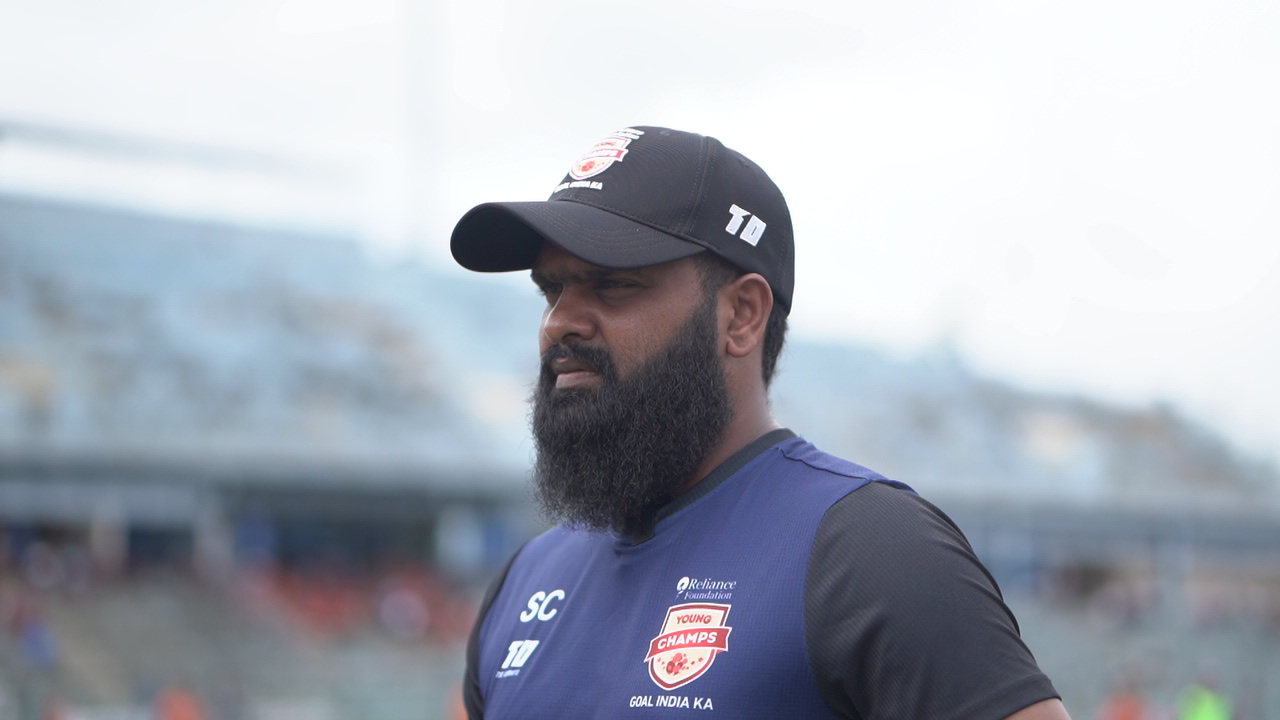
In Indian football, where conversations often revolve around players and coaches, one crucial layer remains largely invisible scouting.
It is the first filter, the silent engine that determines who even gets a chance to enter the system. At the Reliance Foundation Young Champs (RFYC), that responsibility sits with Steve Charles, a former professional footballer turned Head of Scouting, whose work has helped shape one of the most sophisticated talent identification ecosystems in the country.
In a detailed interaction, Charles offers rare insight into how scouting operates in India, what the system gets right, and more importantly, what it still lacks.
For Charles, scouting is not just observation it is projection.
“I think scouts are the unsung heroes,” he says early in the conversation. “There is a lot of effort, thought and expertise which goes into scouting, especially kids. It’s not just about how a player performs in one game. It’s about talent identification and projection.”
This distinction is critical. At the youth level, scouting is less about current output and more about future potential how a player might evolve physically, technically, and psychologically over time. Charles is clear that this nuance is still underdeveloped in India, where scouting is often treated as an extension of coaching rather than a specialised discipline. “In India, we just see it as a coach can scout. It’s not explored that much,” he explains.
Building a National Scouting Network
At RFYC, scouting is neither ad hoc nor short-term. It is a structured, multi-layered process that runs across the year. Charles oversees a network of 27 regional scouts spread across key footballing regions in India. These scouts are not casual observers they are trained, inducted, and aligned with the academy’s philosophy before they begin work.
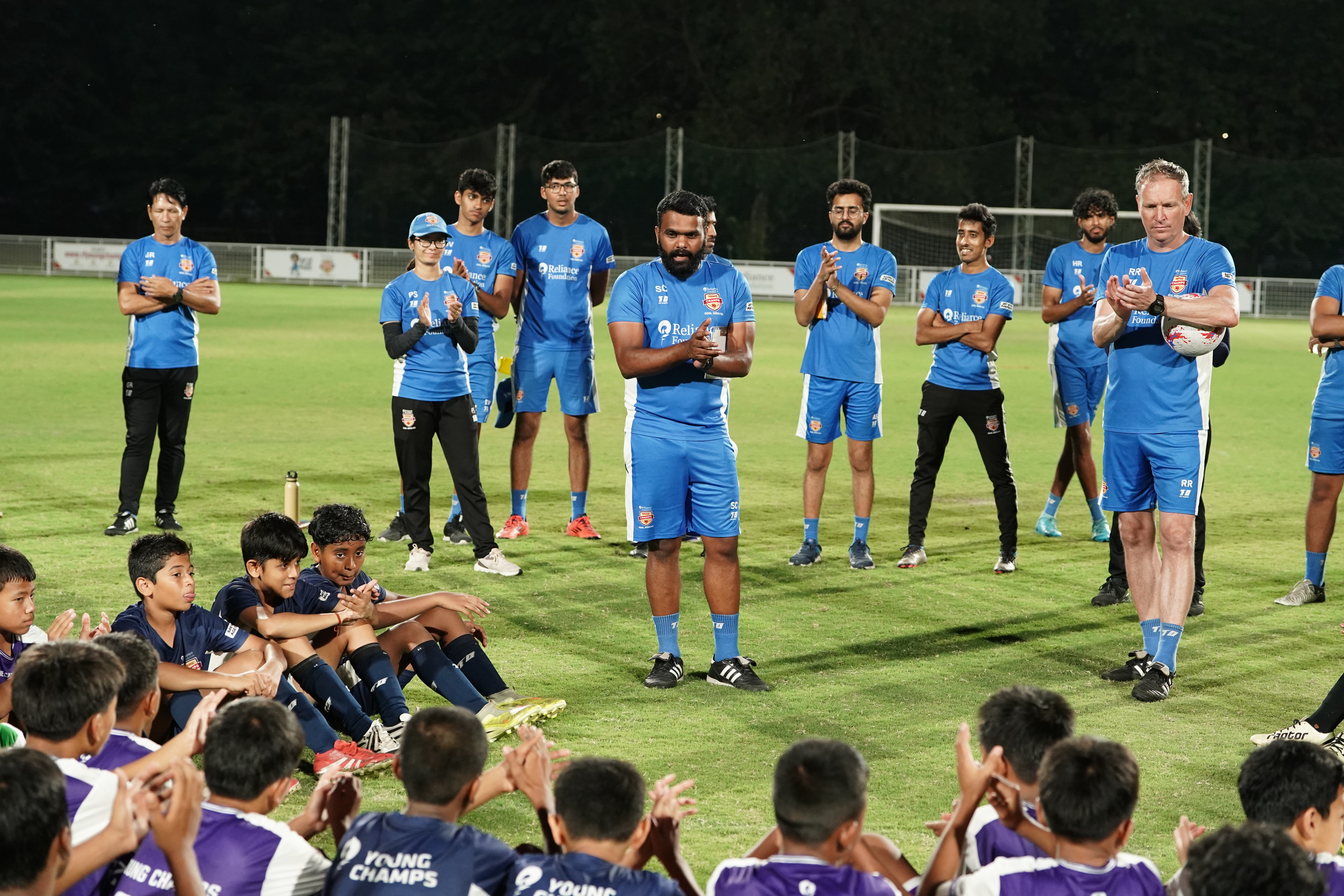
Each scout is expected to watch players multiple times, often in different environments school tournaments, local leagues, and academy setups before recommending them.
“Every player who comes to Young Champs is watched at least two times by me and at least two times by regional scouts,” Charles explains.
This extended evaluation cycle, which can last up to eight months, is designed to eliminate one-off performances and ensure consistency in assessment.
Contrary to popular belief, standout moments or flair alone do not define talent. For Charles and his team, technique remains the most important attribute.
“Technique is utmost important for us,” he says. “People think technique means skills, but passing, receiving, decision-making those are all technical qualities.”
Beyond technique, the evaluation expands into multiple dimensions Physical metrics (movement, adaptability, athleticism), Psychological readiness (handling pressure, leaving home) & Social adaptability (adjusting to a residential setup)
This holistic approach reflects RFYC’s broader philosophy “child first, player second” where development extends beyond football. Despite his optimism about talent, Charles identifies a structural gap that continues to hold Indian football back.
“There is never a shortage of talent in India,” he says. “Technically and physically, our boys can compete. The missing gap is the competition structure.” This is a recurring theme. While academies like RFYC are building high-performance environments, the broader ecosystem lacks sufficient competitive exposure for young players. To bridge this, Reliance has invested in multiple grassroots and youth competitions, attempting to create match environments that replicate international standards.
Beyond Selection: The Human Side of Scouting
One of the most distinctive aspects of RFYC’s system is what happens after a player is identified. Scouting, in this context, is not a transaction it is the beginning of a relationship. From the first interaction with a scout, players and their families are guided through a structured process that includes multiple evaluation phases and even a three-day induction program before final selection.
Importantly, the entire process is free of cost.
“The player doesn’t have to pay anything from local trials to coming to Mumbai,” Charles notes.
This removes a significant barrier in Indian sports, where financial constraints often limit access to opportunities. While RFYC has adopted structured processes and data flows, Charles remains clear that scouting cannot be reduced to numbers alone. There are templates, reporting structures, and video analysis systems, but final decisions still rely heavily on human judgment.

Scouts are encouraged to maintain an “open lens” to identify talent beyond rigid metrics. This balance between structure and intuition is what allows the system to capture “whispering talent” players who may not stand out physically but possess exceptional football intelligence.
For Charles, success as a scout is not limited to producing professional footballers.
“Yes, when a player signs a professional contract, that’s success,” he says. “But also when you see a boy turning into a man.”
He recounts stories of players he has tracked from childhood to professional football moments where they return, confident and composed, representing clubs in national competitions. These transitions, both sporting and personal, form the core of RFYC’s impact.
Tackling Age Fraud and Systemic Challenges
One of the more complex issues in Indian youth sports is age fraud. Charles acknowledges it as a systemic challenge but frames it primarily as a moral issue rather than a purely administrative one. RFYC addresses it through prolonged scouting cycles, document verification, and what he describes as the “eye test” developed through years of observing player behaviour across age groups.
“If you do your due diligence thoroughly, you can identify and flag these issues,” he explains.
The broader RFYC model, as detailed in the institutional report, represents a significant shift in how youth football is structured in India. From a five-star AIFF accreditation to a fully residential high-performance setup, the academy has created a pipeline that has already produced dozens of professional players across ISL clubs. At the heart of this system is scouting a process that determines not just who enters the academy, but who gets a chance to dream.
https://www.indiasportshub.com/articles/indian-football-u17-s-continental-struggles-continue
In many ways, scouting is the most consequential yet least visible part of football development. For Steve Charles, it is both a responsibility and an opportunity to identify potential, to shape pathways, and ultimately, to change lives. As Indian football continues to evolve, systems like RFYC’s scouting model offer a blueprint not just for identifying talent, but for building it with intent, structure, and patience.
And it all begins with someone watching closely.
Comments (0)
to post comments, replies, and votes.
Loading comments…