Bilquis Mir Supreme Court Ruling: Asian Games Clearance
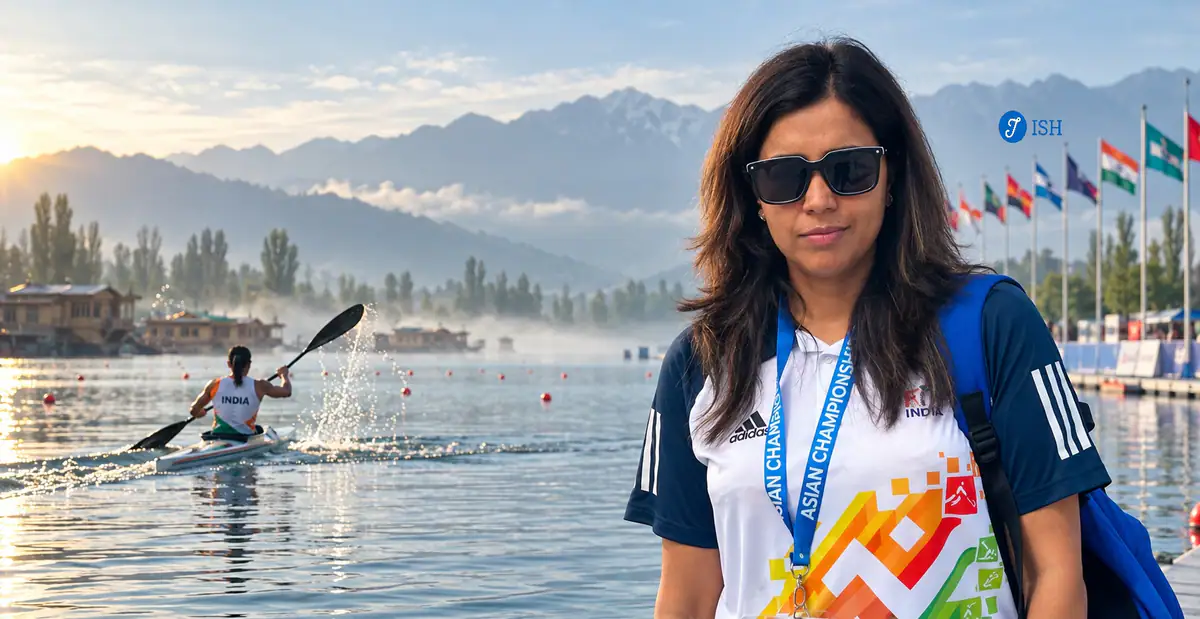
The Supreme Court clears coach Bilquis Mir for the 2026 Asian Games, ruling that pending departmental inquiries cannot block national sports representation.
The Supreme Court of India delivered a landmark judgement on September 10, 2026, in Indian Kayaking and Canoeing Association v. Union Territory of Jammu and Kashmir and Others
The Aqua Queen of Dal Lake and the Administrative Impasse
Bilquis Mir, celebrated locally as the aqua queen of Dal Lake in Srinagar, has spent decades breaking barriers in Indian water sports
In February 2026, the Indian Kayaking and Canoeing Association selected Mir to serve as chief coach for the national team's Asian Games preparatory camp and nominated her as an International Technical Official for the Games
Even after the High Court issued an interim order on May 6 directing provisional clearance, administrative inertia persisted
Legal Principles Established by the Supreme Court
A Supreme Court bench comprising Justice Aravind Kumar and Justice Vipul M. Pancholi overturned the subsequent High Court Division Bench decision that had upheld the government order
The judges also held that a pending departmental inquiry cannot serve as an automatic, inflexible disqualification against national service
The Chronology of Bilquis Mir
1996 to 2009: Bilquis Mir begins canoeing and kayaking at Dal Lake in Srinagar, rises through domestic ranks, and becomes the first female canoeist from India to compete at the Mol ICF Sprint Racing World Cup in Szeged, Hungary, in 2009.
2010 to 2015: She serves as the head coach of the Indian national kayaking and canoeing team, mentoring athletes for international competitions.
Service Background and 2023: Employed as a Physical Education Teacher in the Jammu and Kashmir Department of Youth Services and Sports, she faces an anonymous complaint that triggers an Anti-Corruption Bureau inquiry into her appointment conditions and physical education degree.
July to August 2024: Mir makes history as the first Indian female jury official at the Paris Olympic Games.
July 2025: The High Court of Jammu and Kashmir and Ladakh quashes the Anti-Corruption Bureau First Information Report against her, characterizing the criminalization of a technical qualification dispute against an international sports icon as an unwarranted witch-hunt.
February 3, 2026: The Indian Kayaking and Canoeing Association selects Mir to lead the national team's coaching camp from February 15 to September 30, 2026, for the Asian Games in Nagoya, Japan. She is also appointed as an International Technical Official for the Games and selected as Chief Finish Line Judge for the Canoe Sprint World Cup in Hungary (scheduled for May 8 to 10, 2026). The federation formally writes to the Jammu and Kashmir administration requesting her deputation.
March 1 and April 2, 2026: With no reply from local authorities, the federation sends urgent reminders emphasizing that preparation for the Asian Games is time-sensitive, but the administration remains completely silent.
April 30, 2026: Facing persistent administrative inaction, the federation files a writ petition before the High Court of Jammu and Kashmir and Ladakh seeking an order to compel the authorities to issue a No Objection Certificate (NOC) and relieving letter.
May 6, 2026: A Single Judge bench of the High Court issues an interim order directing the Jammu and Kashmir administration to grant provisional permission to Mir at her own risk and cost so she can coach the national squad and officiate in Hungary.
May 8 to 10, 2026: Despite the binding interim court order, the administration fails to process her relieving paperwork, forcing Mir to miss the Canoe Sprint World Cup in Hungary.
May 14, 2026: Mir files a formal representation noting that the Hungary assignment has been permanently lost due to administrative delays and pleads for immediate clearance to join the ongoing national coaching camp.
June 19, 2026: More than a month after the Hungary event concludes, the Jammu and Kashmir government issues Government Order No. 25-JK(YSS) of 2026, formally rejecting her NOC and travel permission by citing pending departmental inquiries and incomplete vigilance clearances.
July 13 to July 28, 2026: High Court contempt hearings proceed before the Single Judge, who expresses deep concern that the administration treated a matter of national sporting pride like routine red tape and orders senior departmental officials to appear.
August 3 to 4, 2026: As the national camp gets underway in Bhopal, the regional administration appeals against the Single Judge's interim order, and a Division Bench takes up the matter for final hearing.
August 11, 2026: The Division Bench dismisses the federation's petition, ruling that government employees have no absolute right to deputation and concluding that the earlier procedural delay became irrelevant once the formal rejection order was issued on June 19.
September 10, 2026: The Supreme Court of India overturns the Division Bench verdict and quashes the June 19 rejection order. The bench rules that delayed decisions cannot erase constitutional obligations of timely consideration under Article 14, establishes that pending inquiries cannot act as automatic disqualifications for national service, expunges adverse remarks against Mir, and orders the administration to issue her relieving order and NOC on or before September 15, 2026, to accompany the Indian team to the Asian Games.
Precedents and Governance Challenges
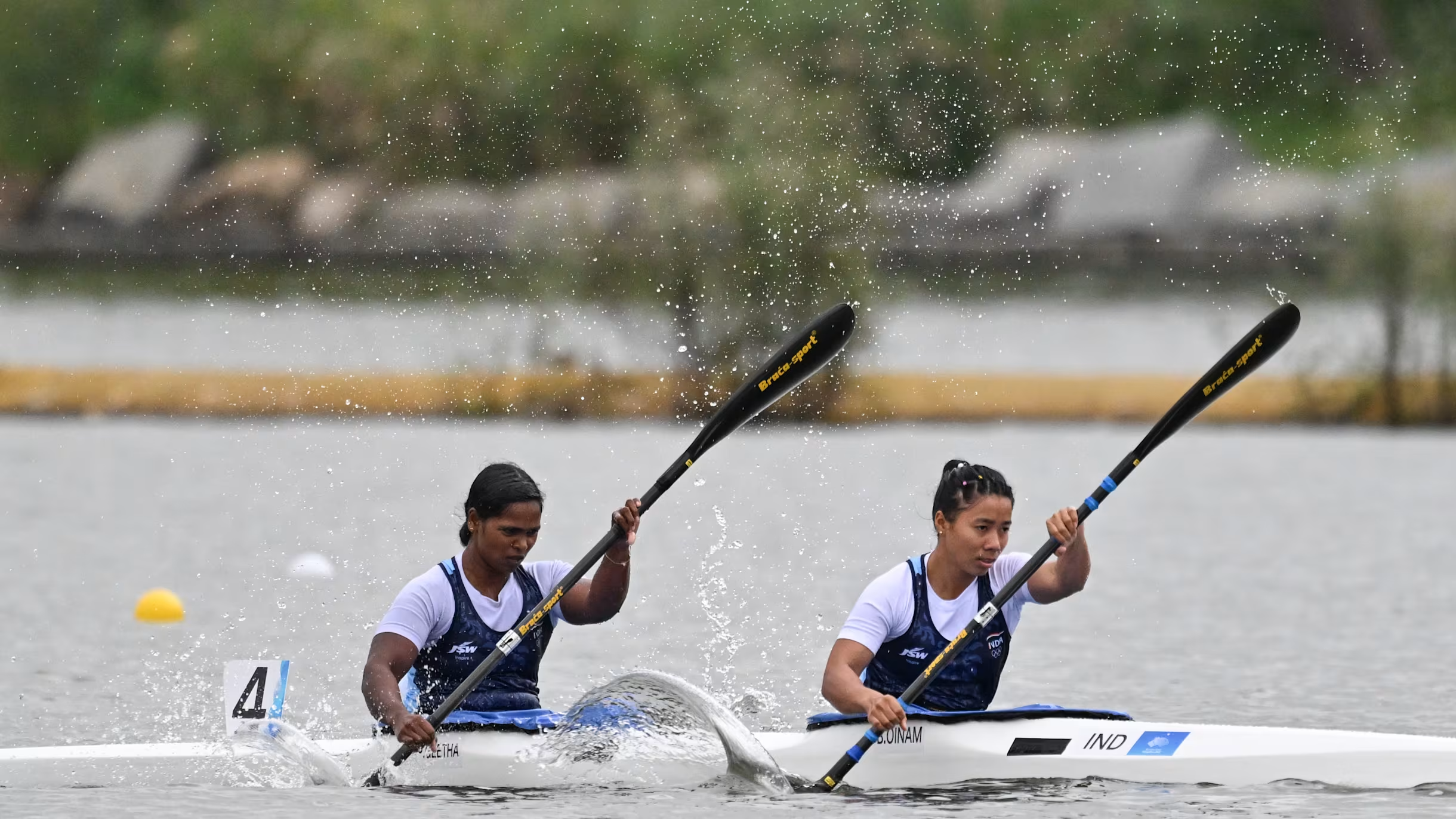
The case underscores the difficulties faced by emerging sports such as kayaking and canoeing, where India has achieved only two Asian Games bronze medals in history, first at Hiroshima in 1994 and later at Hangzhou in 2023
This friction is widespread across Indian sports
What Lies Ahead
Beyond providing immediate relief to Bilquis Mir, the Supreme Court preserved an essential policy directive requiring the Union Ministry of Youth Affairs and Sports to formulate a binding, enforceable framework
Comments (0)
to post comments, replies, and votes.
Loading comments…