Jana Kulan: India’s new women’s volleyball coach
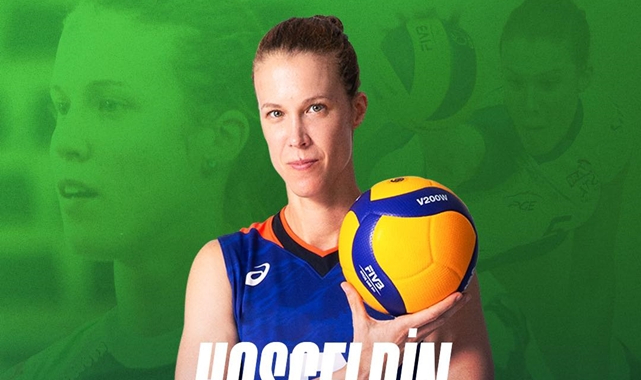
India’s women’s volleyball setup has entered a new phase with the appointment of Jana Kulan as the head coach.
The Slovak-born Azerbaijani brings a diverse background as both an elite player and a developing high-performance coach, marking a shift in approach for Indian volleyball at the international level.
Her appointment is significant not just because she is the first foreign coach of the Indian women’s volleyball team, but also because of the profile she brings combining top-level playing experience with modern coaching education and international exposure.
Jana Kulan was born on July 7, 1987, in Bratislava, Slovakia. Standing at 1.98m, she built her reputation as a powerful outside hitter. Her early development came through the European system, where she trained with Slávia UK Bratislava, a club known for its structured youth programmes. A key step in her career came when she moved to the United States, joining the University of Louisville on a volleyball scholarship. During her college years, she developed into a high-impact player, combining physical ability with improved tactical understanding.
After her collegiate stint, Kulan moved into professional volleyball, playing across multiple leagues including Russia, Azerbaijan, Japan, Turkey, Poland, and China. This exposure to different systems and styles helped shape her understanding of the game from a global perspective.
Kulan later represented Azerbaijan at the international level, becoming a key part of their national team setup. Her most productive years came during her time in Japan’s V.League, where she established herself as one of the leading scorers in the competition. One of the defining moments of her career came when she scored 60 points in a single match a world record in women’s volleyball. This performance highlighted her endurance, consistency, and ability to perform under pressure.
Across her professional career, she consistently featured among the top scorers in leagues known for high-level competition. Her ability to adapt to different playing environments remains one of her strongest attributes.
Kulan’s move into coaching followed a structured pathway rather than an abrupt shift. She began formal coaching education through FIVB programmes, where she worked under established mentors and developed her philosophy. Her approach is rooted in modern coaching principles, focusing on game-based training, athlete development, and communication. She places emphasis on creating match-like scenarios during training rather than relying heavily on repetitive drills.
She also believes in a process-driven model, where performance improvement is prioritised over immediate results. This aligns with current trends in high-performance sport, particularly in team-based disciplines.
Before her appointment with India, Kulan had already gained coaching experience across different levels. She has worked in the Czech Republic with youth and senior teams, handling both men’s and women’s squads. This versatility reflects her technical understanding of the game beyond gender-specific roles. She has also been associated with clubs in Turkey, one of the strongest volleyball ecosystems globally. Additionally, she has contributed as an instructor in FIVB coaching programmes, helping develop coaching structures in emerging volleyball regions.
Her involvement in the Women in Sport High-Performance (WISH) programme, supported by the International Olympic Committee, further highlights her trajectory as a coach being groomed for elite roles.
Kulan’s coaching philosophy is built around a few key principles:
Game-like training environments to improve decision-making under pressure
Player-centric development, focusing on long-term growth
Communication and team culture, ensuring clarity between players and staff
Adaptability, based on opponent and match conditions
Her experience across different leagues allows her to bring a hybrid approach, combining European tactical discipline with Asian defensive systems and American conditioning models.
For India, the appointment signals an attempt to modernise its approach to women’s volleyball. The team has historically struggled to maintain consistency at the continental level, and the introduction of a foreign coach suggests a focus on structural improvement.
Kulan’s international exposure could help Indian players adapt to higher levels of competition. Her emphasis on fitness, tactical awareness, and structured training could address key gaps in the current setup. Another important factor is her experience working in development systems. India’s talent pool at the grassroots level is growing, and a coach with experience across youth and senior pathways can help bridge that transition.
One of the immediate challenges for Kulan will be the limited preparation time ahead of upcoming tournaments, including regional competitions like the CAVA Championship. Adjusting to a new system, understanding player profiles, and implementing tactical frameworks within a short period will test both the coach and the team.
Jana Kulan’s appointment marks a new direction for Indian women’s volleyball. With a background that combines elite playing experience and structured coaching education, she brings a different perspective to the setup.
Her success will depend on how quickly her methods can be implemented and how effectively the team adapts to a new system.
Comments (0)
to post comments, replies, and votes.
Loading comments…