Judo World Championships: Harsh Singh’s Breakthrough Run Ends Against World No. 5 Ahmad Yusifov
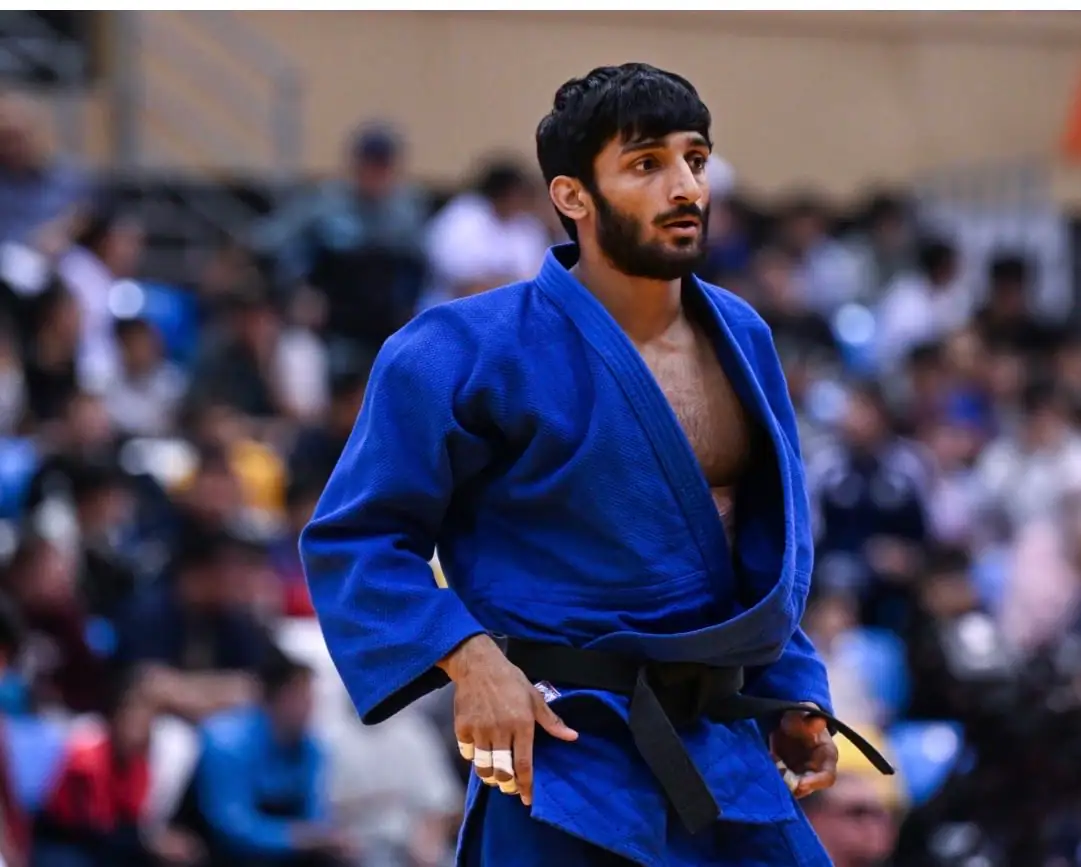
India’s Harsh Singh produced one of the standout performances of his campaign at the Judo World Championships in Baku, Azerbaijan, reaching the Round of 16 in the men’s 60 kg category after defeating two higher-ranked opponents.
Ranked 83rd in the world, Harsh began his campaign by upsetting Australia’s Pedro Carlos Antun Neto, ranked 40th, in the opening round. He then followed it up with another statement victory over Bahrain’s Ruslan Poltoratskii, ranked 20th, to reach the Round of 16. His run finally came to an end against home favourite and world No. 5 Ahmad Yusifov of Azerbaijan.
The result nevertheless marked an important performance for the Indian judoka, who entered the World Championships well outside the leading group in the rankings but repeatedly overcame opponents positioned significantly higher than him.
The opening-round contest immediately put Harsh on the front foot against a significantly higher-ranked opponent. Facing Antun Neto, ranked 40th in the world, the Indian produced a waza-ari victory to move into the Round of 32. The 43-place ranking difference made the result particularly significant. Harsh arrived in Baku ranked 83rd, while the Australian entered the tournament as the No. 40 judoka in the division.
Rather than simply surviving the opening round, Harsh secured the win through a scoring action that gave him the advantage needed to progress. It also set the tone for what became a difficult section of the -60 kg draw.
Second Upset Takes Harsh into the Pre-Quarterfinals
The next challenge was even tougher on paper. Harsh faced Bahrain’s Ruslan Poltoratskii, ranked 20th in the world. The 63-place difference between the two judokas represented another major ranking upset.
Once again, Harsh prevailed by waza-ari. The victory sent him through to the pre-quarterfinals and meant that the Indian had defeated two opponents ranked substantially higher than him in successive rounds. For Harsh, the progression from world No. 83 to the Round of 16 represented a major statement on the World Championship stage. It also gave India a notable run in one of judo’s most competitive weight categories.
The reward for Harsh’s two victories was a Round of 16 meeting with Azerbaijan’s Ahmad Yusifov. Yusifov represented an entirely different level of challenge. The Azerbaijani was listed as the world No. 5 judoka in the supplied results and entered the contest as the home favourite.
After defeating the world No. 40 and world No. 20, Harsh was unable to produce a third consecutive upset. Yusifov defeated the Indian in the Round of 16, bringing Harsh’s impressive World Championships campaign to an end. The result meant Harsh finished among the last 16 judokas in the men’s -60kg division, despite beginning the tournament ranked 83rd.
A Significant Opportunity After Asian Games Omission
Harsh’s performance also takes on added significance because he was not selected for India’s Asian Games team. That omission meant the World Championships provided an important opportunity for the Indian to make his case on a major international stage. He responded by defeating two higher-ranked opponents and advancing deep into the draw. The victories over Antun Neto and Poltoratskii were particularly notable because both came against judokas ranked substantially above him.
From world No. 83, Harsh first eliminated the No. 40-ranked Australian before overcoming the No. 20-ranked Bahraini. His progression effectively transformed the ranking gap from a potential disadvantage into one of the defining stories of his campaign. His eventual defeat against Yusifov also came against the highest-ranked opponent he faced.
Harsh arrived in Baku with an established record at the Commonwealth level, having been described in the supplied material as a Commonwealth Games champion. The World Championships, however, presented a significantly different test, with the world's leading judokas concentrated in the draw. Harsh's response was emphatic.
Two waza-ari victories against higher-ranked opponents took him from the opening round into the final 16. While he could not extend the run against Yusifov, the campaign demonstrated his ability to compete against judokas far above him in the rankings. The biggest takeaway is the consistency of his performances. The first upset could have been dismissed as an isolated result, but the victory over Poltoratskii confirmed that Harsh was capable of producing another result against a much higher-ranked opponent.
His campaign ended with a defeat to the world No. 5, but not before Harsh had established himself as one of the Indian judokas to watch at the international level. For an athlete ranked 83rd entering the competition, reaching the Round of 16 at the World Championships after two major upsets represents a significant step forward.
The next challenge for Harsh will be to convert this breakthrough into consistency against the world's elite. In Baku, he showed that the ranking beside his name does not necessarily define the level at which he can compete.
Comments (0)
to post comments, replies, and votes.
Loading comments…