Dakar 2026 Youth Olympics: India’s Khushbu Rajakbhai Set for Judo Challenge as 96 Athletes to Compete
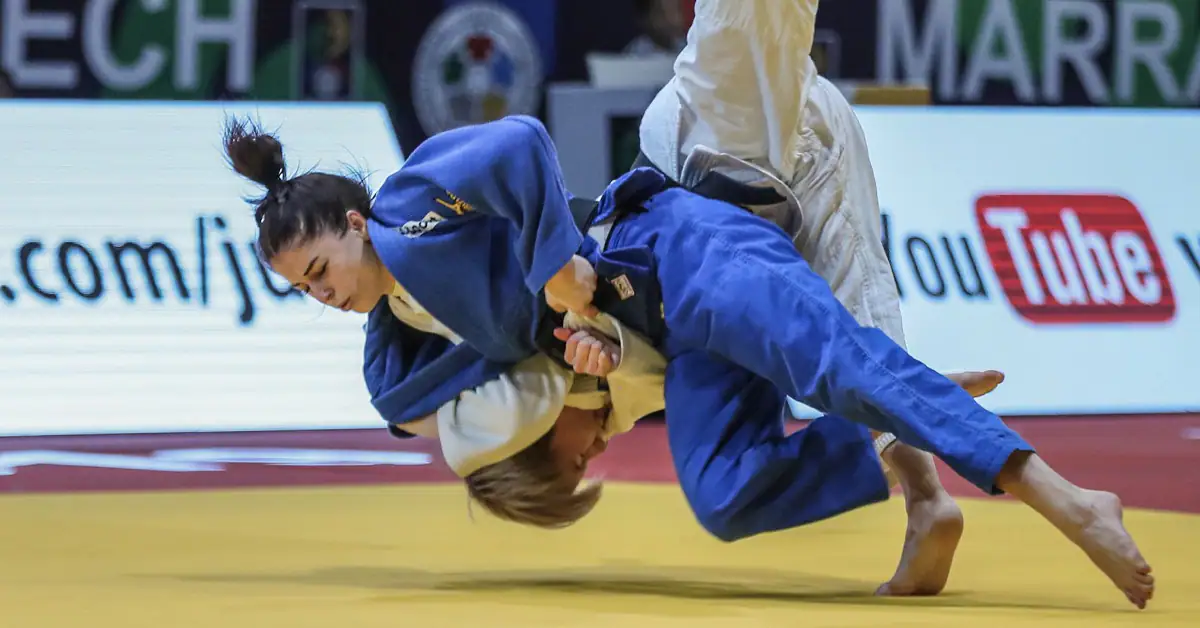
India’s Khushbu Rajakbhai Darjada is the fourth seed in women’s 44kg judo at Dakar 2026, where 96 judoka will compete across eight medal events.
India’s Khushbu Rajakbhai Darjada will compete in the women’s 44kg category at Dakar 2026, where 96 judoka from 95 delegations will contest eight medal events from November 1 to 3.
The judo competition at the Dakar 2026 Youth Olympic Games will bring together 96 of the world’s most promising young athletes, with India represented by Khushbu Rajakbhai Darjada in the women’s 44kg category. The final list of selected athletes, published on October 6, marks an important milestone ahead of the Games, which will become the first Olympic sporting event staged on African soil.
Judo will be contested from November 1 to 3 as part of the Youth Olympic Games, scheduled to run from October 31 to November 13. The competition will feature 48 young women and 48 young men across eight individual weight categories, providing emerging athletes with an opportunity to compete on an international Olympic stage.
For India, attention will centre on Darjada, who enters the women’s 44kg field as the fourth seed, according to the supplied participant list. Her world ranking is listed as 36, placing her among the seeded athletes in a category featuring competitors from Europe, Africa and Asia.
Darjada is listed among the 12 participants in the women’s 44kg competition. She will face a field that includes Germany’s Jolina Reinhold, the top seed and world-ranked No. 2; Tunisia’s Ranim Ben Sliman, the second seed and world-ranked No. 5; and Morocco’s Abir Bouazzaoui, the third seed and world-ranked No. 11.
South Korea’s Yuju Kwak, Indonesia’s Sashenka Fatimah and Kyrgyzstan’s Aaisha Kyialbekova are also seeded in the category. The remaining participants are Algeria’s Dounia Berrahoual, Ghana’s Bernice Mawunena Akakpo, Guinea’s Mamaisata Camara, Malawi’s Happiness Mtukula and Lebanon’s Teressa Chayeb.
Darjada’s fourth seeding places her behind Reinhold, Ben Sliman and Bouazzaoui in the initial order. However, the supplied list does not include the completed draw or individual match schedule, so her opening opponent and precise route through the competition cannot yet be established from the available information.
The category’s international spread reflects the Youth Olympic Games’ objective of providing young athletes from different sporting systems with access to a major global competition.
Dakar 2026: A Landmark for the Olympic Movement
The 2026 Youth Olympic Games will be the fourth edition of the Summer Youth Olympics, following Singapore in 2010, Nanjing in 2014 and Buenos Aires in 2018. The event was established by the International Olympic Committee to combine elite youth sport with education, cultural exchange and the promotion of Olympic values.
The guiding principle, “Learn, Share, Act”, encourages young competitors to develop beyond their sporting performances and engage with different cultures and communities.
Dakar 2026 carries particular significance because Senegal will become the first African nation to host an Olympic sporting event. Under the motto “Africa welcomes, Dakar celebrates”, the Games will place young African athletes and the continent’s sporting ambitions at the centre of the Olympic programme.
For the judoka travelling to Senegal, the competition will therefore offer more than the opportunity to win a medal. It will also provide an international platform to experience the Olympic environment and compete against athletes from a broad range of countries.
The judo programme will feature four men’s categories and four women’s categories, with 12 athletes competing in each division. The men’s events will be held at under-55kg, under-66kg, under-81kg and under-100kg. The women’s competition will feature under-44kg, under-52kg, under-63kg and under-78kg.
The 96 places are divided equally between the two genders, with 48 athletes in each competition. Senegal is the only delegation listed as having two representatives, while the remaining delegations have one athlete each.
The compact three-day schedule means athletes will need to be ready to compete in a short, high-pressure tournament. In judo, tactical discipline, grip fighting, timing and the ability to capitalise on scoring opportunities can determine the outcome of a bout.
For Darjada, the challenge will be to convert her seeding into a strong performance against a field that includes several highly ranked opponents. Her world ranking and fourth seed provide useful context, but the outcome will ultimately depend on her performances on the mat.
Looking Back at India’s Youth Olympic Judo Medals
The 2018 Youth Olympic Games in Buenos Aires provide a notable reference point for India’s participation in youth judo. According to the supplied medal table, Tababi Devi Thangjam won silver in the women’s 44kg category, finishing behind Venezuela’s María Giménez. Kosovo’s Erza Muminoviq and Croatia’s Ana Viktorija Puljiz shared the bronze medals.
The 2018 women’s competition also saw Russia’s Irena Khubulova win gold in the 52kg category, Mongolia’s Lkhagvasürengiin Sosorbaram take silver and Cuba’s Nahomys Acosta and Uzbekistan’s Nilufer Ermaganbetova secure bronze.
At 63kg, Hungary’s Szofi Özbas won gold ahead of Tunisia’s Mariem Khlifi, while Belgium’s Alessia Corrao and South Korea’s Kim Ju-hee claimed bronze. Germany’s Raffaela Igl won the 78kg title, with Kazakhstan’s Margarita Gritsenko taking silver and Brazil’s Eduarda Rosa and Slovenia’s Metka Lobnik earning bronze.
Tababi Devi’s silver in the 44kg category offers a particularly relevant historical benchmark for India’s entry in the same weight class at Dakar 2026.
With the final athlete list confirmed, attention now turns to the competition itself. Darjada will represent India in a women’s 44kg field led by Germany’s Reinhold, with Tunisia’s Ben Sliman and Morocco’s Bouazzaoui also among the leading seeds.
The 2018 results demonstrate that Indian judoka have previously reached the Youth Olympic Games podium in this category. Dakar presents the next opportunity for India to pursue another medal at the youth level.
As the Games begin, Darjada’s challenge will be to navigate a competitive international draw and make the most of her place among the seeded athletes. Her performance will be an important part of India’s judo campaign at a historic edition of the Youth Olympic Games.
Comments (0)
to post comments, replies, and votes.
Loading comments…