Preview | India takes on South Korea in Davis Cup, Yuki Bhambri Doubtful
 Follow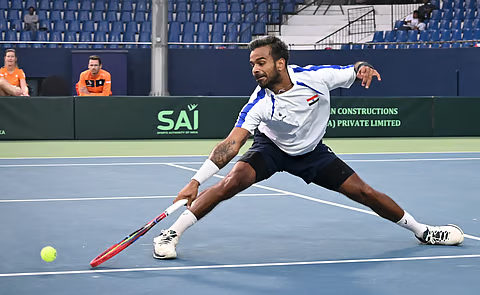
India will take on South Korea in a Davis Cup tie on September 18 and 19, with the Olympic Tennis Court in Seoul set to host what promises to be a closely contested encounter.
With both teams possessing proven singles players and India holding the stronger doubles depth, the tie could come down to how the opening singles matches unfold. India’s squad features Sumit Nagal, D.K. Suresh, Manas Dhamne, Yuki Bhambri and Sriram Balaji, while South Korea will rely on Soonwoo Kwon, Seongchan Hong, Hyeon Chung, Uisung Park and Jisung Nam. The playing conditions are expected to be slow to medium-paced, having been slowed down compared to last year, adding another tactical dimension to the contest.
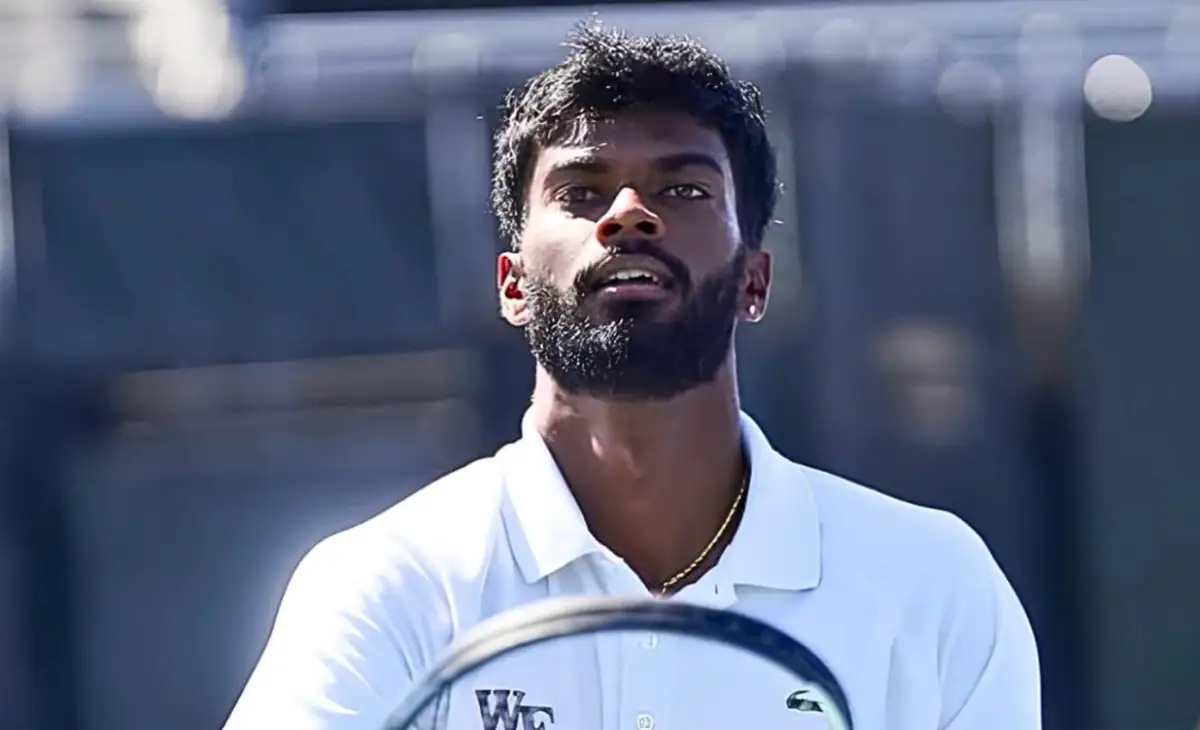
For India, much of the single's responsibility is expected to fall on Nagal and D.K. Suresh. Nagal appears to be entering the tie in particularly encouraging form. He has been performing well on the Challenger circuit and produced an impressive showing against Federico Coria at the US Open. He has also had the opportunity to rest and prepare specifically for the Davis Cup tie.
D.K. Suresh has also been building momentum. He recently secured his maiden ATP Tour main-draw victory, an important milestone that could provide additional confidence heading into his Davis Cup assignment. Like Nagal, Suresh has taken time away from competition to prepare for the tie, meaning both Indians should arrive fresh. South Korea’s singles challenge is likely to revolve around Soonwoo Kwon and Seongchan Hong. Kwon, the more established name of the two, did not enjoy the best US swing and suffered a worrying fainting episode during his US Open match against Dusan Lajovic. His current form therefore raises some questions, although his experience and ability mean he cannot be taken lightly.
Hong presents a particularly interesting matchup. He recently returned to the competitive circuit after spending around a year and a half completing military service and showed his quality against Nikoloz Basilashvili at the US Open. Although he subsequently lost in the M25 Sapporo semifinals to Saitoh, he has demonstrated that he can compete at a much higher level when his game clicks.
The matchup between Hong and India’s leading singles players could prove decisive. Hong has a strong record against Nagal, leading their head-to-head 4-0, including a 3-0 record against him at the junior level. Their most recent meeting, at Indian Wells in 2024, was a close contest, suggesting that Nagal will have both a tactical and psychological challenge against the Korean.
Against Suresh, Hong could also be a difficult opponent. The slower conditions could favour both Nagal and Hong by giving them more time to construct points, but Suresh’s recent confidence could make the matchup unpredictable. India will need him to produce another performance above expectations. On balance, the singles contest looks extremely tight. Nagal and Suresh are both in reasonable form, while Hong is gradually rebuilding his match rhythm. Kwon’s recent struggles give India an opportunity, but his experience makes him a dangerous player to underestimate. Overall, India may have a slight edge, but there is little separating the two teams in singles.
The bigger advantage for India could come in doubles.
Yuki Bhambri and Sriram Balaji are India's primary doubles combination, although Bhambri’s availability remains uncertain for the tie. If he is unable to play, India still has strong alternatives. Anirudh Chandrasekar and Balaji have already shown their chemistry by winning a Challenger 125 title together, while a Suresh-Balaji combination could also be considered.
That depth gives India considerable flexibility. Even without Bhambri, the Indian camp has multiple combinations capable of competing at a high level.
South Korea is expected to rely on Uisung Park and Jisung Nam. The pair have experience together in the Davis Cup and have shown that it can win at the Challenger level, having recently claimed a Challenger 75 title. However, they have also suffered heavy defeats against stronger doubles combinations, and their overall level appears closer to the Challenger circuit than the highest tier of doubles. That makes doubles the clearest area where India should hold an advantage. With Balaji’s experience, multiple pairing options and the possibility of Bhambri being available, India has the tools to control this part of the tie. Despite playing away from home, India can reasonably be considered favourites in doubles.
The Korean crowd, however, could play a role. Playing in Seoul brings South Korea the obvious home advantage, and the atmosphere could become particularly important if the tie reaches a deciding rubber. India will have to remain composed in potentially hostile conditions while managing the pressure that comes with being the marginal favourite. Overall, this looks like a Davis Cup tie that could go deep into the weekend. South Korea has enough quality to challenge India in singles, particularly through Hong, while Kwon remains capable of producing a big performance. India, meanwhile, enters with better recent momentum from Nagal and Suresh and a significant advantage in doubles depth.
The margins are narrow, but India appears to have just enough on paper to come through. A 55-45 split in India’s favour feels appropriate: singles are close to 50-50, while doubles provides the difference.
If Nagal and Suresh can secure at least one singles rubber and India delivers on its doubles strength, the visitors should have a strong chance of leaving Seoul with the Davis Cup victory.
Comments (0)
to post comments, replies, and votes.
Loading comments…