Records Tumble as Karnataka Dominates the 79th Senior National Aquatic Championships
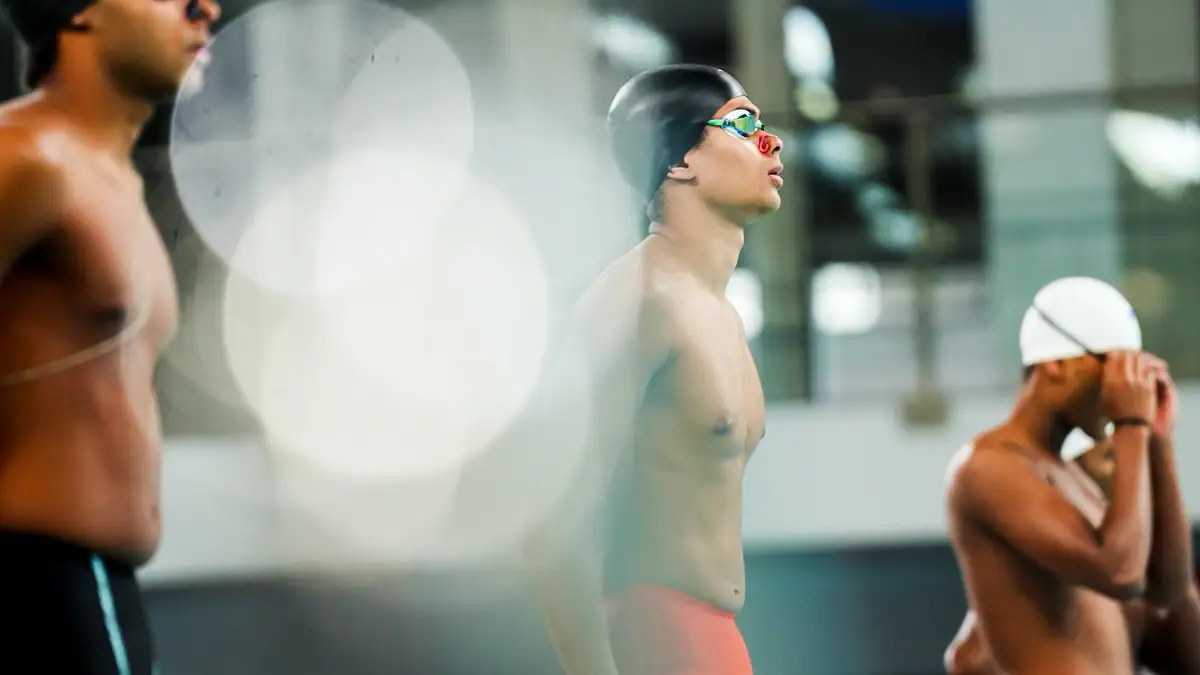
The pool at Ahmedabad’s Veer Savarkar Sports Complex told a powerful story over six days in June 2026.
The pool at Ahmedabad’s Veer Savarkar Sports Complex told a powerful story over six days in June 2026. Records that had stood for years, fell one after another. Young swimmers announced themselves on the national stage while veterans like Srihari Nataraj secured qualification for the Commonwealth Games and Asian Games.
Karnataka’s depth proved decisive once again, but the real headline was the breadth of talent emerging across states. The 79th Senior National Aquatic Championships delivered not just medals and times, but clear evidence that Indian swimming is accelerating. Indian swimming has travelled a remarkably long road, finding its formal institutional roots following the establishment of the Swimming Federation of India (SFI) in 1948. The pioneering gold-medal standard was set early by Sachin Nag, who claimed India’s first-ever Asian Games gold in the 100m freestyle at the inaugural 1551 New Delhi Games. Over subsequent decades, the sport witnessed individual flashes of brilliance from legends like Khajan Singh in the 1980s, followed by the modern era's vanguard including Virdhawal Khade, Sandeep Sejwal, and dual-Olympian Sajan Prakash.
Today, a new generation of elite athletes is consistently dismantling aging national marks, shifting the focus from merely competing domestically to registering direct qualifications for elite international meets. The championships opened with immediate drama. On 16 June, four national meet records fell in a single session, signalling that this would not be a routine edition.
Astha Choudhury (RSPB) shattered a 17-year-old women’s 200m butterfly mark with 2:18.37, bettering Arhatha Maghavi Kar’s 2009 standard by more than a second. In the men’s 200m individual medley, Vinayak Vijay (SSCB) clocked 2:04.13 to erase Shoan Ganguly’s year-old record. Aditi Satish Hegde (Maharashtra) produced a stunning 17:20.82 in the women’s 1500m freestyle, while Karnataka’s women’s 4×100m freestyle relay team , Nina Venkatesh, Tanishi Gupta, Rujula S and anchor Dhinidhi Desinghu , demolished the previous national mark by over eight seconds with a blistering 3:53.45.These opening-day heroics set the narrative arc for the week: individual brilliance feeding into team success, and long-standing barriers being dismantled.
The momentum never slowed. Over the following days, swimmers continued rewriting the record books in almost every stroke and distance.
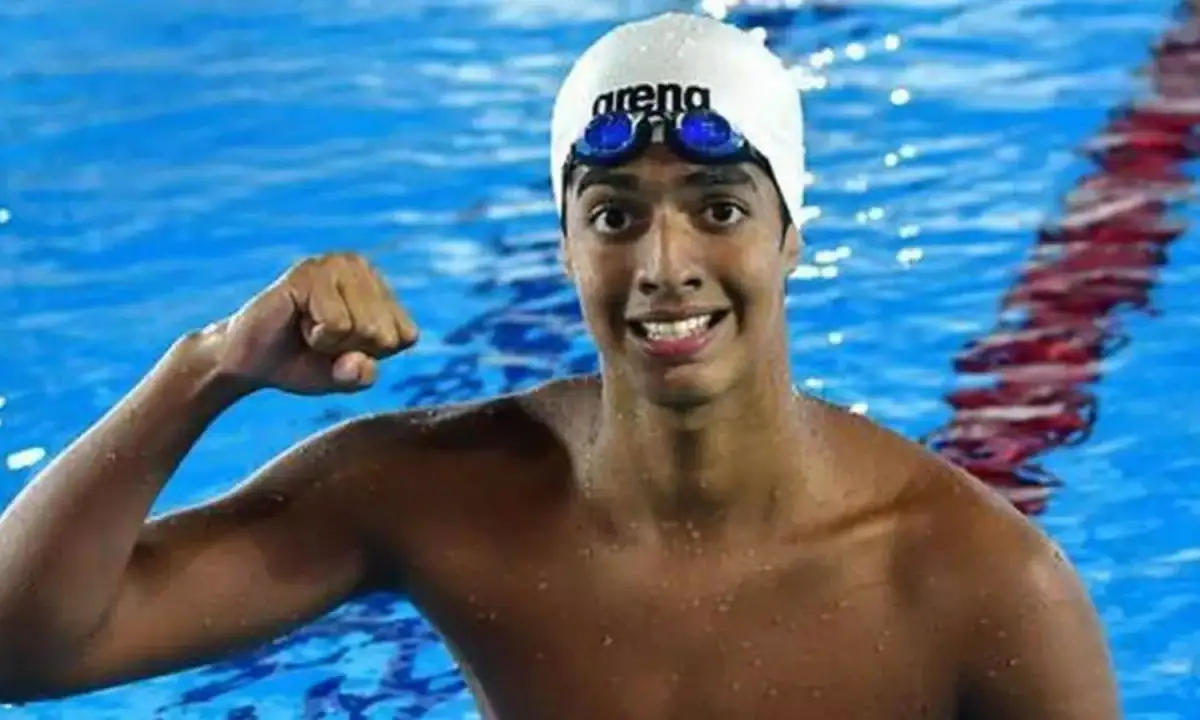
In distance freestyle, Aryan Nehra (Gujarat) dominated. He broke the men’s 800m freestyle national record with 7:59.36 , the first Indian to dip under eight minutes at this level , and followed it with a national record 15:14.88 in the 1500m, comfortably securing Commonwealth Games qualification. Vritti Agarwal ended a 15-year-old women’s 800m freestyle record (9:05.47), while Aditi Hegde’s 1500m swim stood as one of the meet’s defining distance performances.
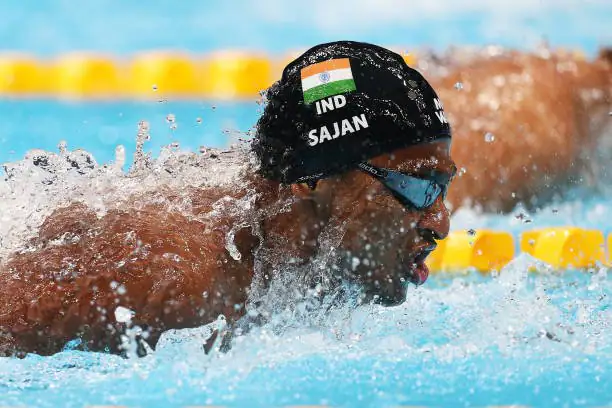
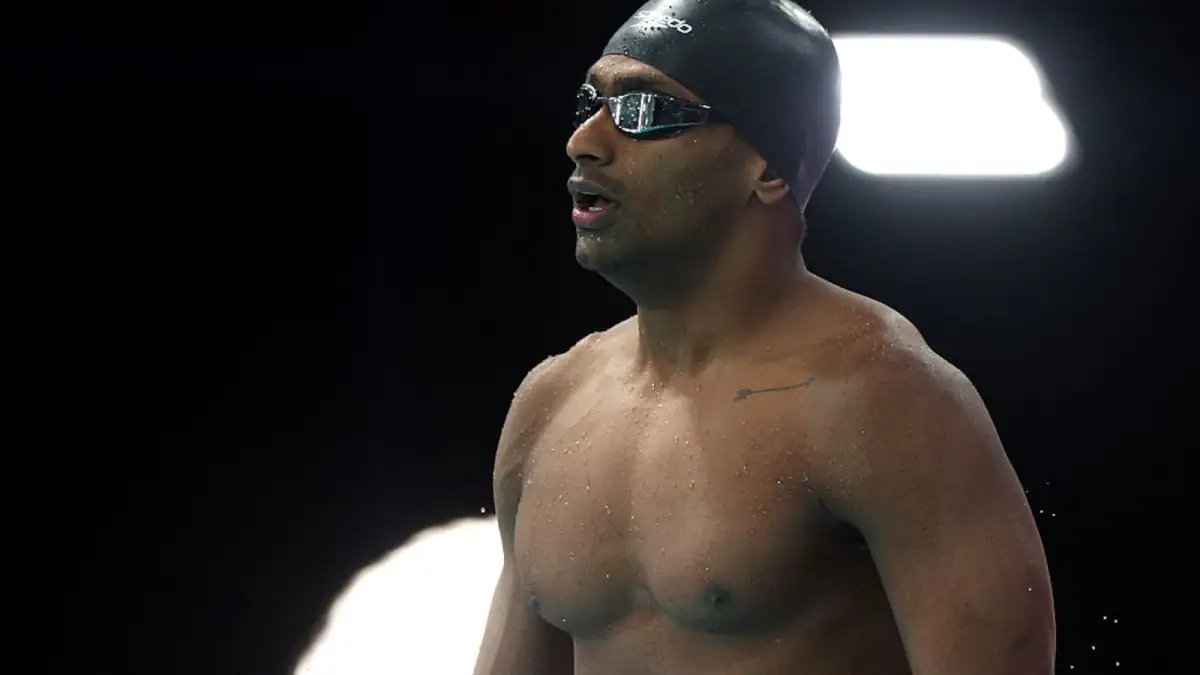
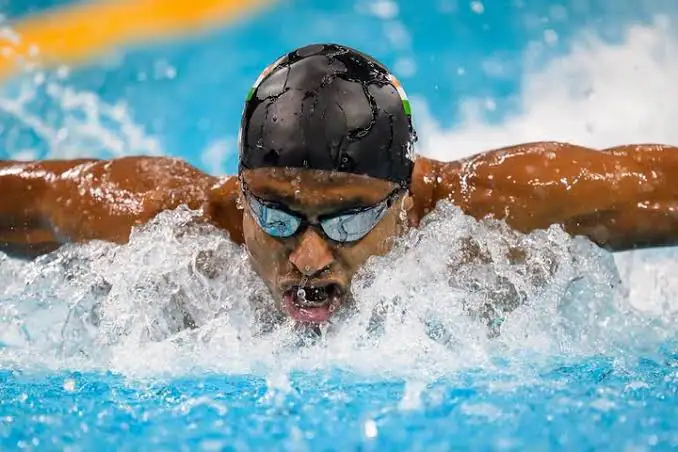
Sprint events produced their own fireworks. Srihari Nataraj (Karnataka) lowered the men’s 50m backstroke mark in the heats (25.21) before winning the final in 25.32 and booking his ticket to the Commonwealth Games. In butterfly, Nina Venkatesh (Karnataka) kept improving the women’s 50m butterfly mark, eventually touching 27.67. Benedicton Rohit (Tamil Nadu) broke the men’s 50m butterfly record twice in one day, finishing with 23.63. Rujula S (Karnataka) claimed the women’s 50m freestyle national record (26.23), and Tanishi Gupta added the women’s 100m butterfly mark (1:00.07).
Medley specialists also shone. Saanvi Deshwal (Maharashtra) set a new women’s 200m individual medley record (2:19.15), while Thanya Shadakshari (Karnataka) did the same in the 400m(4:56.78). Dhinidhi Desinghu continued her remarkable versatility with a Best Indian Time in the women’s 100m freestyle (56.57). Relays provided the perfect team narrative. Karnataka’s women’s 4×100m freestyle record on Day 1 was followed by another national mark in the mixed 4×100m freestyle relay (3:37.68). The women’s 4×100m medley relay also saw Karnataka push the boundaries.
By the final day, the message was unmistakable: Indian swimming standards are rising rapidly, and the gap between domestic and international levels is narrowing.
While individual records made headlines, team performances revealed the true strength of Indian swimming. Karnataka once again proved the dominant force, sweeping multiple relay titles and collecting a host of individual golds through athletes like Dhinidhi Desinghu, Nina Venkatesh, Tanishi Gupta, Rujula S, and Srihari Nataraj. Their success stems from years of systematic development , strong state programs producing both stars and reliable relay swimmers.
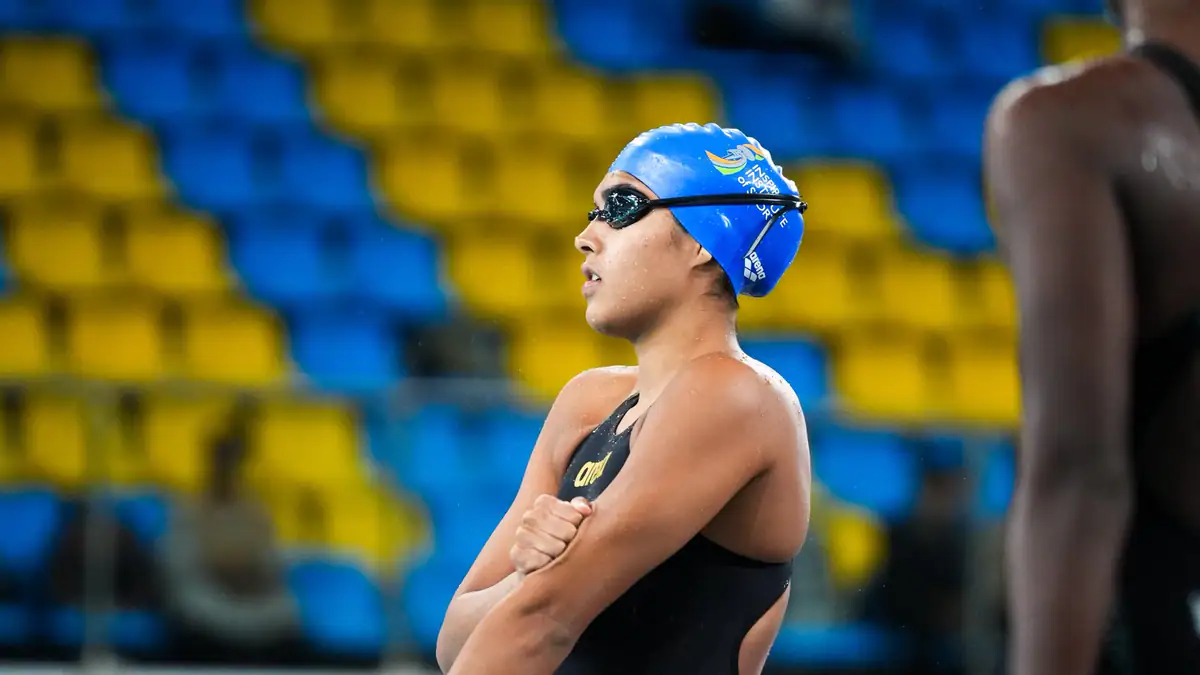
Yet the story was bigger than one state. Maharashtra delivered standout distance and medley swims from Aditi Hegde and Saanvi Deshwal. Tamil Nadu’s Benedicton Rohit announced himself as a sprint butterfly threat. Gujarat’s Aryan Nehra established himself as India’s premier distance freestyler. Telangana’s Vritti Agarwal ended a long-standing record. Even smaller contingents from Assam, Uttar Pradesh and Odisha contributed podium finishes and promising performances.
Several swimmers left Ahmedabad with more than medals. Srihari Nataraj and Aryan Nehra secured crucial Commonwealth Games and Asian Games berths. Others posted times that strengthened their cases for selection. The championships thus served their dual purpose: crowning national champions while preparing India’s squad for the international calendar.
https://www.indiasportshub.com/articles/aryan-nehra-the-quiet-rise-of-india-s-distance-swimming-star
The 79th Senior National Aquatic Championships will be remembered as a turning point. Records that once lasted for years are now falling within single meets. The emergence of versatile athletes like Dhinidhi Desinghu, the consistency of veterans like Srihari Nataraj, and the rise of distance specialists like Aryan Nehra and Aditi Hegde paint a picture of genuine progress.
Challenges remain , infrastructure, consistent high-level competition, and resources , but the trajectory is clear. Indian swimming is no longer just participating; it is competing with growing confidence.
As the athletes disperse to prepare for the Asian Games and Commonwealth Games, one thing is certain: the pools of Ahmedabad have set a new benchmark. The next chapter of Indian aquatics looks faster, deeper, and more exciting than ever.
Comments (0)
to post comments, replies, and votes.
Loading comments…