Renaissance of Indian Chess: Chronology to the 98th Grandmaster

Aswath S Clinches the Grandmaster Title: The 98th Indian Milestone
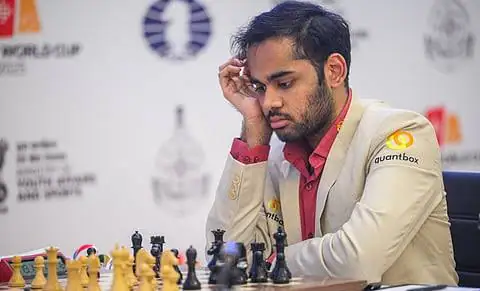
On July 8, 2026, 18-year-old International Master Aswath S secured his place in chess history by officially fulfilling all requirements to become India's 98th Grandmaster.
Aswath's journey to the pinnacle of chess titles has been characterized by consistent international breakthroughs. Born in Kanyakumari, Tamil Nadu, in 2008, he earned his International Master title in September 2023 by securing the silver medal at the Asian Junior Open Championship.
Upon the conclusion of the final round in Pune, Aswath's coach, Grandmaster Shyam Sundar M, praised the newly minted Grandmaster's character and work ethic, stating that Aswath is a highly hardworking and dedicated player who maintains complete focus, avoids social media distractions, and demonstrates exceptional determination.
The Chronological Ascent of India’s 98 Chess Grandmasters
The historical trajectory of India's Grandmasters showcases the geometric expansion of the sport within the country. The following chronological list records every Indian player who has achieved the Grandmaster title, compiled by their official order of achievement and the year their title was secured:
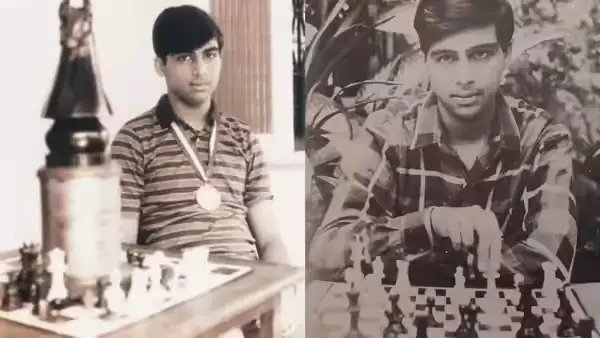
Viswanathan Anand (1988)
Dibyendu Barua (1991)
Praveen Thipsay (1997)
Abhijit Kunte (2000)
Krishnan Sasikiran (2000)
Pentala Harikrishna (2001)
Koneru Humpy (2002)
Surya Shekhar Ganguly (2003)
Sandipan Chanda (2003)
Ramachandran Ramesh (2004)
Tejas Bakre (2004)
Magesh Chandran Panchanathan (2006)
J. Deepan Chakkravarthy (2006)
Neelotpal Das (2006)
Parimarjan Negi (2006)
Geetha Narayanan Gopal (2007)
Abhijeet Gupta (2008)
Subramanian Arun Prasad (2008)
Sundararajan Kidambi (2009)
R. R. Laxman (2009)
Sriram Jha (2010)
Deep Sengupta (2010)
Baskaran Adhiban (2010)
S. P. Sethuraman (2011)
Harika Dronavalli (2011)
M. R. Lalith Babu (2012)
Vaibhav Suri (2012)
M. R. Venkatesh (2012)
Sahaj Grover (2012)
Vidit Gujrathi (2013)
M. Shyam Sundar (2013)
Akshayraj Kore (2013)
V. Vishnu Prasanna (2013)
Debashis Das (2013)
Saptarshi Roy Chowdhury (2013)
Ankit Rajpara (2014)
Chithambaram Aravindh (2014)
Karthikeyan Murali (2015)
Ashwin Jayaram (2015)
Swapnil Dhopade (2015)
S. L. Narayanan (2015)
Shardul Gagare (2016)
Diptayan Ghosh (2016)
Priyadharshan Kannappan (2016)
Aryan Chopra (2016)
Srinath Narayanan (2017)
Himanshu Sharma (2017)
Anurag Mhamal (2017)
Abhimanyu Puranik (2017)
M. S. Thejkumar (2017)
Saptarshi Roy (2018)
Rameshbabu Praggnanandhaa (2018)
Nihal Sarin (2018)
Arjun Erigaisi (2018)
Karthik Venkataraman (2018)
Harsha Bharathakoti (2018)
P. Karthikeyan (2018)
Stany G.A. (2018)
N. R. Visakh (2019)
Gukesh D (2019)
P. Iniyan (2019)
Swayams Mishra (2019)
Girish A. Koushik (2019)
Prithu Gupta (2019)
Raunak Sadhwani (2019)
G. Akash (2020)
Leon Luke Mendonca (2020)
Arjun Kalyan (2021)
Harshit Raja (2021)
Raja Rithvik R. (2021)
Mitrabha Guha (2021)
Sankalp Gupta (2021)
Bharath Subramaniyam (2022)
Rahul Srivatshav (2022)
Pranav V (2022)
Pranav Anand (2022)
Aditya Mittal (2022)
Koustav Chatterjee (2022)
Pranesh M (2023)
Vignesh N. R. (2023)
Sayantan Das (2023)
Prraneeth Vuppala (2023)
Aditya Samant (2023)
Rameshbabu Vaishali (2023)
Shyaam Nikhil P. (2024)
Srihari L R (2025)
Harikrishnan A Ra (2025)
Divya Deshmukh (2024)
Rohith Krishna S (2025)
Ilamparthi AR (2025)
V. S. Raahul (2025)
Aaryan Varshney (2026)
Aarav Dengla (2026)
Mayank Chakraborty (2026)
Aronyak Ghosh (2026)
Ethan Vaz (2026)
Harshavardhan G. B. (2026)
Aswath S (2026)
Socio-Economic Dynamics and the Regionalization of Indian Chess Talent
The progression of India's Grandmasters indicates a structural shift in how chess talent is nurtured, funded, and decentralized across the country. In the 25 years following Viswanathan Anand's breakthrough as India’s first Grandmaster in 1988, the nation produced a modest total of 35 Grandmasters.
This widespread geographical expansion has been accompanied by a shift in the economics of title acquisition.
The Regulatory Framework: FIDE Grandmaster Title Process and Criteria
The awarding of the Grandmaster (GM) title is governed by strict regulations established by the World Chess Federation (FIDE).
The FIDE Rating Threshold
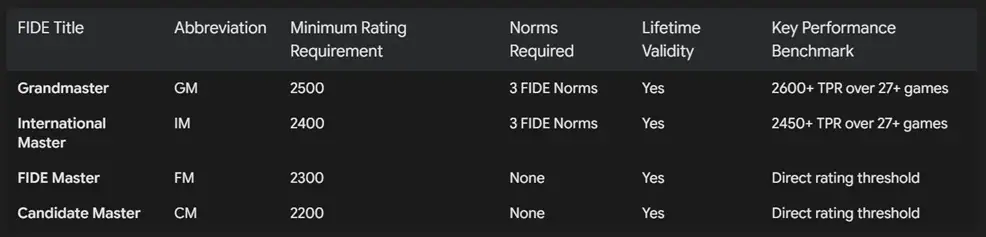
A player must achieve a classical FIDE rating of at least 2500.
The Grandmaster Norm Framework
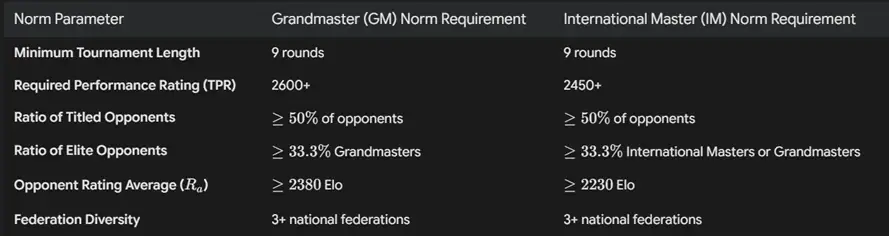
To secure the Grandmaster title, a player must typically obtain 3 separate Grandmaster norms in FIDE-approved tournaments.
Minimum Number of Rounds: The tournament must consist of at least 9 rounds of classical play.
Opponent Quality and Titles: At least 50% of the player's opponents must hold FIDE titles, such as Candidate Master, FIDE Master, International Master, or Grandmaster.
Opponent Rating Floor: The average rating of all opponents faced during the tournament must be 2380 Elo or higher.
Federation Diversity: The player must face opponents from at least three different national federations.
Tournament Performance Rating: The player must achieve a Tournament Performance Rating (TPR) of 2600 or higher over the course of the event.
Direct Grandmaster Title Awards
FIDE regulations provide specific pathways where the Grandmaster title can be awarded directly, bypassing the traditional norm requirement.
Achieving a finish in the final 16 (eighth-finals) of the FIDE World Cup.
Winning the FIDE Women's World Chess Championship outright.
Winning the FIDE World Junior Championship (Under-20 category) outright.
Winning the World Senior Championship in either the over-50 or over-65 divisions.
Winning an individual Continental Championship (e.g., European, Asian, Pan American, or African Championships).
Comparative Framework of FIDE Open Titles
The hierarchy of FIDE titles reflects a progressive escalation in rating and performance requirements. The following tables outline the structured criteria for the major open FIDE titles and contrast the specific norm requirements between the Grandmaster and International Master designations:
To illustrate the technical differences between the two premier norm-based titles, the following comparison highlights the specific parameters needed to secure individual Grandmaster and International Master norms:
The technical rigor of these standards ensures that the Grandmaster title remains highly prestigious, reflecting a level of play achieved by only a small fraction of chess players globally.
https://www.chessbase.in/news/a-recap-of-indian-chess-in-2025
Comments (0)
to post comments, replies, and votes.
Loading comments…