RFDL's Top Three Clubs Set for Japan Exposure Tour to Test India's Next Generation Against Elite Academies
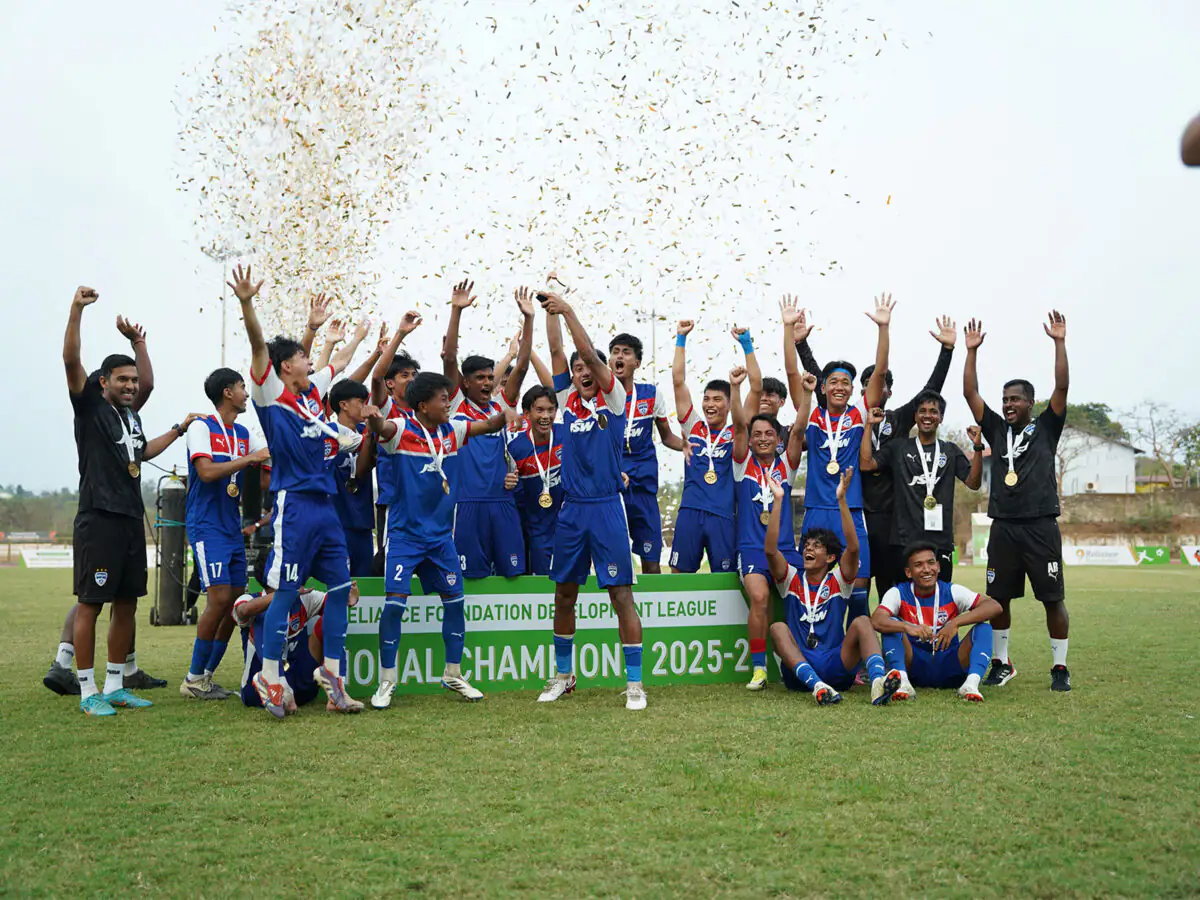
Three of India's best youth football teams are set for one of the biggest developmental opportunities in recent years as Bengaluru FC, FC Goa, and Punjab FC travel to Fukuoka, Japan, next week for a high-performance exposure tour against some of the country's leading football academies.
The tour will see the top three finishers from the recently concluded Reliance Foundation Development League (RFDL) compete against established Japanese clubs, including Avispa Fukuoka, Sagan Tosu, Giravanz Kitakyushu, and FC Baleine Shimonoseki. More than just a series of friendly matches, the initiative offers Indian football a direct comparison with one of Asia's strongest player development systems.
Alongside the matches, Indian coaches will also participate in football workshops, gaining first-hand insight into Japan's coaching methods, academy structures, and player development philosophy.
The opportunity comes as a reward for the standout performers in the latest RFDL season. League champions Bengaluru FC will lead the Indian contingent, accompanied by runners-up FC Goa and third-placed Punjab FC. All three clubs have invested heavily in youth development over recent years and have consistently produced players capable of graduating to senior football.
The exposure tour represents another important step in the RFDL's objective of creating a clear pathway from academy football to the professional game. Unlike domestic competition, facing Japanese opposition provides a completely different challenge in terms of tactical discipline, speed of play, technical execution, and decision-making under pressure. For many of these players, it will be their first opportunity to compete against elite overseas academies in a structured environment.
Japan has long been regarded as one of Asia's leading football development nations. Its academy system has consistently produced players capable of succeeding in the J.League and Europe's top leagues, while the national team has become a regular participant at the FIFA World Cup. For India's Under-21 players, the upcoming matches provide an opportunity to understand where they currently stand against one of the continent's strongest footballing ecosystems.
The clubs involved in the tour represent different levels of Japanese football but all operate within a culture that prioritizes technical excellence, tactical intelligence, and professionalism from a young age.
Facing teams like Avispa Fukuoka and Sagan Tosu will offer Indian players valuable lessons that cannot easily be replicated through domestic competition alone. While wins and losses will naturally attract attention, the real value of the tour lies beyond the final score.
Adding to Renedy's thoughts, FC Goa's Development Team Head Coach Israil Gurung stated, "Japan has developed into a powerhouse for football not just in Asia but globally as well, because of their strong grassroots program. It'll be a very good experience for our players when they travel to Japan and see the quality of football there. At FC Goa, we believe that this is a development phase and opportunities like these will only help the players grow."
Exposure tours are designed to accelerate learning by placing players in unfamiliar, high-quality environments where every aspect of the game demands greater precision. Japanese teams are renowned for their quick passing combinations, intelligent movement off the ball, disciplined defensive structures, and relentless work rate. For Indian players, adapting to that level of intensity will test their technical ability, fitness levels, tactical awareness, and mental resilience.
Equally important will be how quickly the teams can absorb feedback and implement tactical adjustments during the tour. These experiences often leave a lasting impact on young footballers as they prepare to transition into senior professional football. The visit is not limited to player development. Indian coaches traveling with the teams will participate in dedicated workshops aimed at understanding Japan's coaching methodologies and academy framework. This aspect of the program could prove just as significant as the matches themselves.
Ahead of the trip, their youth team head coach Praveen Kumar said, "The Japanese youth football system is properly structured. We went to the UK last time and had players like Pramveer and Md. Suhail who were part of the squad that time and had a great learning opportunity. Reliance Foundation is bridging the gap between youth football and senior level through competitions and exposure tours like this and I think we are going to have a good challenge and learning opportunity against tactically and technically sound teams in Japan."
Japan's football success has been built through decades of investment in coach education, structured player development pathways, and a unified football philosophy across age groups. Learning directly from Japanese coaches gives Indian staff an opportunity to observe training methodologies, session planning, player monitoring systems, and long-term development models.
The knowledge gained during these workshops can subsequently be applied within Indian academies, benefiting future generations of players. Indian football has increasingly recognized the importance of exposing young players to stronger international opposition. While domestic youth competitions such as the RFDL have significantly improved competitive standards, regular international exposure remains essential for closing the gap with Asia's leading nations.
Tours like this allow players to experience different football cultures, faster game speeds, and higher technical standards while also developing confidence through international competition.
For clubs, it also offers a chance to evaluate whether their academy programs are producing players capable of competing beyond Indian football.
The Japan tour reflects a broader shift in Indian football's development strategy, where success is measured not only by domestic trophies but also by preparing players for higher levels of competition. The RFDL has already established itself as one of India's premier youth competitions, and opportunities such as this add further value to the league by rewarding excellence with meaningful international exposure.
For Bengaluru FC, FC Goa and Punjab FC, the week in Fukuoka is about much more than results. It is an opportunity to measure themselves against one of Asia's footballing benchmarks, identify areas for improvement, and understand the standards required to compete consistently at the highest level.
If Indian football is to narrow the gap with the continent's leading nations, experiences like these will play an increasingly important role. The lessons learned in Japan both on the pitch and in the classroom, could help shape not only the futures of these young players but also the direction of youth development in Indian football for years to come.
Comments (0)
to post comments, replies, and votes.
Loading comments…