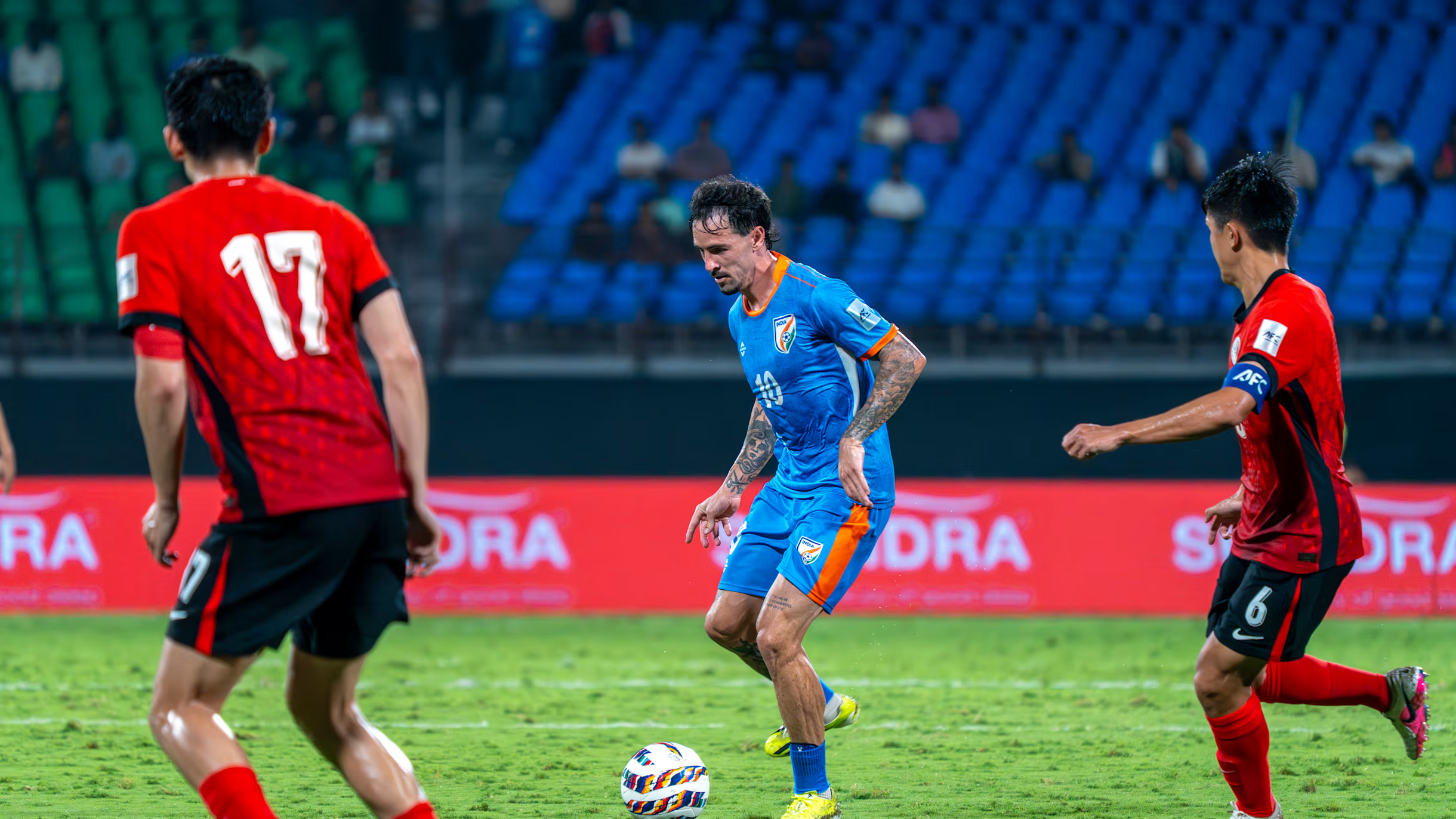
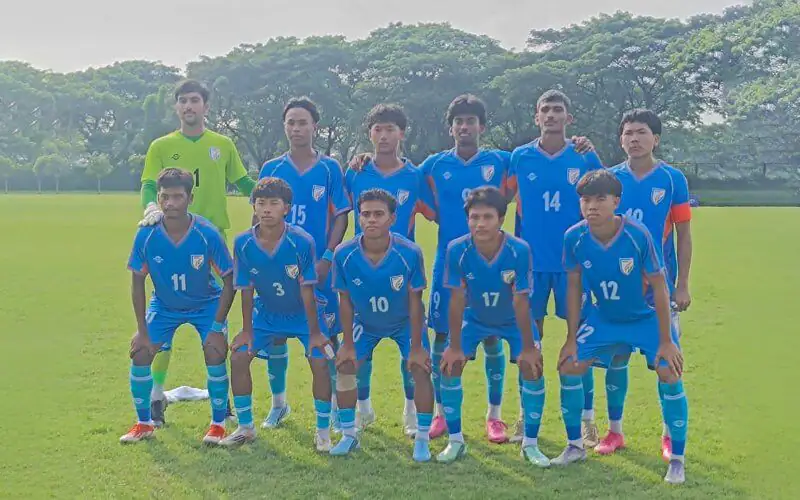
Road to LA 2028: Steps India’s U-23 Football Team Must Take to Reach the Olympics
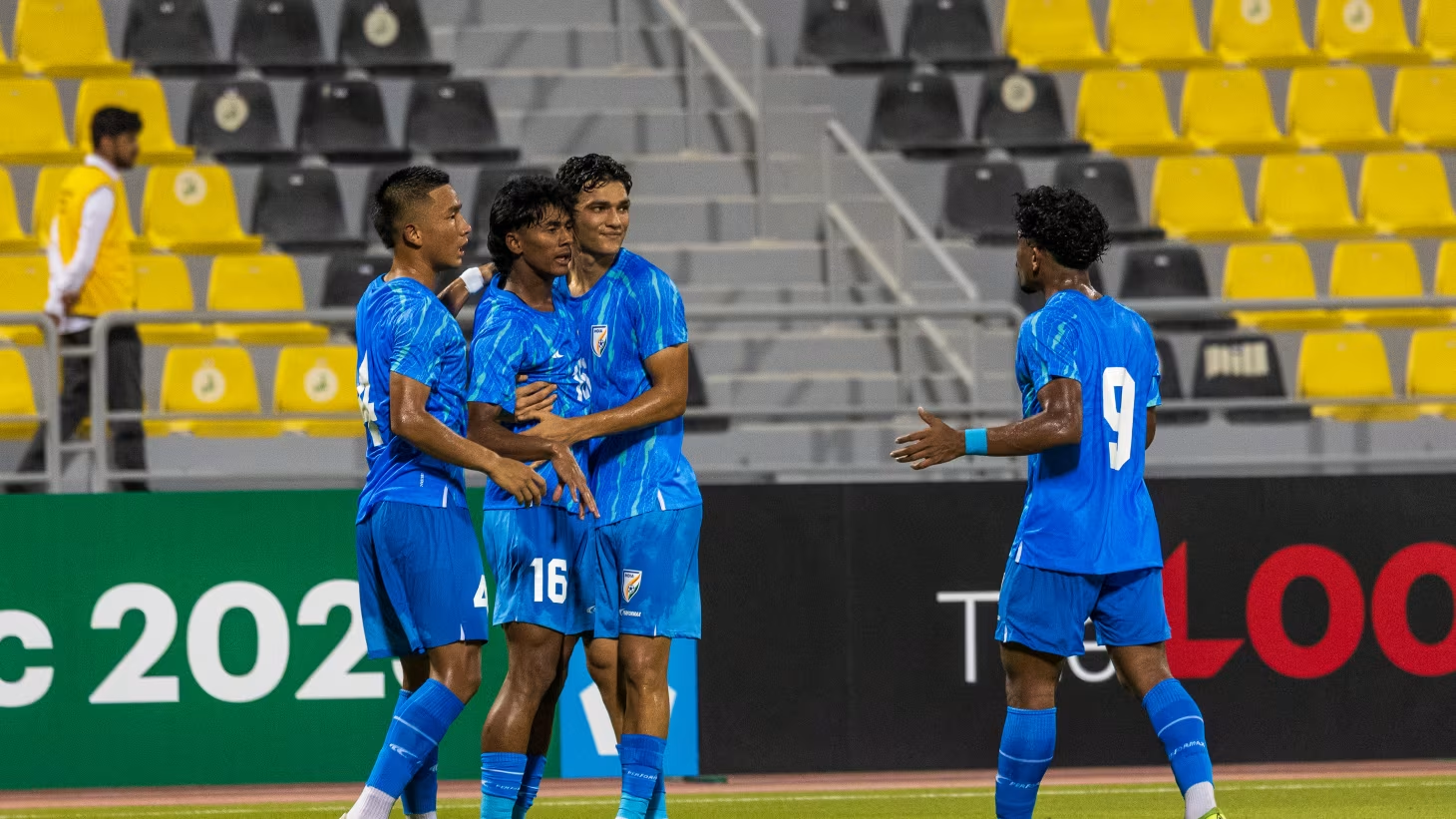
India’s journey towards the Los Angeles 2028 Olympic Games presents one of the toughest challenges in the country’s football calendar.
For the Indian men’s U-23 team, reaching the Olympics will require more than a successful qualifying campaign. They must first establish themselves among Asia’s leading youth teams, navigate a demanding continental knockout tournament and then compete against the world’s best at the Olympic stage. The pathway is particularly challenging because Asia is expected to have only two direct qualification places for the 12-team men’s Olympic football tournament at LA 2028, according to the qualification framework outlined in the supplied analysis. That leaves India with little margin for error against established continental powers such as Japan, South Korea, Uzbekistan, Saudi Arabia and Australia.
Here is how the road to Los Angeles could unfold for India.
Step 1: Qualify for the AFC U-23 Asian Cup
India’s first objective will be to negotiate the 2028 AFC U-23 Asian Cup qualifiers. The qualifying format typically features multiple groups, with group winners and the best second-placed teams advancing to the final tournament. India must either win its group or finish among the best runners-up to secure a place in the continental competition.
On paper, that is the first hurdle. In practice, it could be one of the most important. India have struggled to qualify for the AFC U-23 Asian Cup in recent editions. Their previous campaigns have exposed difficulties against stronger West and East Asian opponents, particularly when matches are decided by narrow margins.
The 2022 qualifying campaign offered a glimpse of what India could achieve. The team finished second in its group but missed qualification through the best-runner-up calculation. Subsequent campaigns did not produce the breakthrough required. For the 2028 cycle, India will need to be more consistent across all three group matches. Winning against lower-ranked opponents is essential, but taking points from the strongest team in the group could ultimately determine whether India advances.
Goal difference, defensive discipline and the ability to convert chances will be equally important. The first target is simple: reach the 16-team AFC U-23 Asian Cup finals.
Step 2: Finish in the top two of the Asian Cup group.
Qualifying for the continental tournament would be an achievement, but the real test begins in the finals. The AFC U-23 Asian Cup features 16 teams divided into four groups of four. Each team plays the other three in its group, with the top two advancing to the quarterfinals. India would therefore need to finish in the top two to remain in contention for an Olympic berth. This stage would place the Indian team against considerably stronger opposition.
Depending on the draw, potential opponents could include established youth teams from Japan, South Korea, Uzbekistan, Saudi Arabia, Iraq and Australia. These sides generally benefit from stronger youth-league structures, consistent international exposure and greater opportunities for young players to compete in high-intensity matches.
India must close that gap through better preparation, tactical organisation and greater composure under pressure. A strong start would be crucial. Losing the opening match could leave the team needing results against the group’s strongest opponents, while a victory could provide the confidence required to progress. The objective is not merely to participate in the tournament. India must reach the quarterfinals to keep the Olympic dream alive.
Step 3: Reach the Asian Cup final to secure Olympic qualification.
This is the most decisive stage of the entire pathway. Under the qualification framework described in the supplied analysis, Asia’s allocation for the 2028 men's Olympic football tournament has been reduced to two direct places. That means the two finalists at the AFC U-23 Asian Cup would secure qualification for Los Angeles.
India must therefore win its quarterfinal and semifinal. Reaching the semifinals alone would not be enough. A team that loses its semifinal would miss out on Olympic qualification, making the continental knockout rounds effectively two successive elimination matches with enormous consequences. The quarterfinal would be the first major pressure test. India would face a team that has already survived a demanding group stage, leaving little room for tactical mistakes.
Winning that match would take India into the last four, but the semifinal would carry an even greater prize: a place in the Asian Cup final and an Olympic berth. For Indian football, reaching that stage would represent a landmark achievement in the modern era.
It would also require a level of consistency that India's U-23 teams have yet to demonstrate across a full continental campaign.
If India qualified, the challenge would move from Asia to the global stage. The men's Olympic football tournament at LA 2028 is set to feature 12 teams, divided into three groups of four. The top two teams from each group, alongside the two best third-placed teams, would advance to the quarterfinals under the format described in the supplied analysis.
A top-two finish would guarantee progression, although a strong third-place campaign could also be sufficient. The Olympic tournament would present a different level of competition, with teams arriving from Europe, South America, Africa, North America and other regions. India would need to adapt quickly to different footballing styles, physical demands and tactical systems.
The group stage would also leave little time to recover from a poor result. With only three matches available, every point and every goal could influence qualification for the knockout rounds.
For a team making a rare Olympic appearance, managing pressure would be as important as technical ability. Reaching the Olympic quarterfinals would put India within touching distance of a medal opportunity. A victory in the last eight would guarantee a place in the semifinals, where the winners would compete for a place in the gold-medal match and the defeated teams would contest the bronze-medal match. At that stage, India would be among the final four teams in the competition, with a guaranteed opportunity to play for an Olympic medal.
That is an enormous ambition, especially considering India's limited experience in modern Olympic men's football. The country's historical Olympic football high point remains its fourth-place finish at the 1956 Melbourne Games. India has not appeared in the men's Olympic football tournament since the introduction of the underage format for Barcelona in 1992.
The gap between that history and the present-day qualification challenge is substantial.
What India must change to make the journey possible
The qualification pathway will ultimately be decided on the pitch, but India's chances will depend heavily on what happens before the tournaments begin. Young players need regular senior-level minutes, sustained national-team preparation and exposure to strong international opposition. A fragmented development pathway can leave talented players short of the tactical experience required to compete against Asia's best.
India must also develop greater depth across positions, improve defensive organisation and become more efficient in decisive moments. The qualification campaign cannot be treated as a short-term project assembled a few weeks before the tournament. It requires a structured programme connecting youth academies, domestic clubs and the national team.
India's route to LA 2028 can be summarised in three steps:
Qualify for the AFC U-23 Asian Cup.
Finish in the top two of the group stage.
Win the quarterfinal and semifinal to reach the Asian Cup final and secure Olympic qualification.
The ambition is clear, but the margin for error is narrow. With Asia's Olympic allocation reduced, India must first overcome its continental qualification barrier before it can dream of competing for a medal in Los Angeles.
The first milestone is not an Olympic quarterfinal or a medal. It is qualifying for the AFC U-23 Asian Cup and building a team capable of winning when the stakes are highest.
Comments (0)
to post comments, replies, and votes.
Loading comments…