Why Does the Indian Super League Still Have No VAR? Bhutan, SAFF and Super League Kerala Show the Way
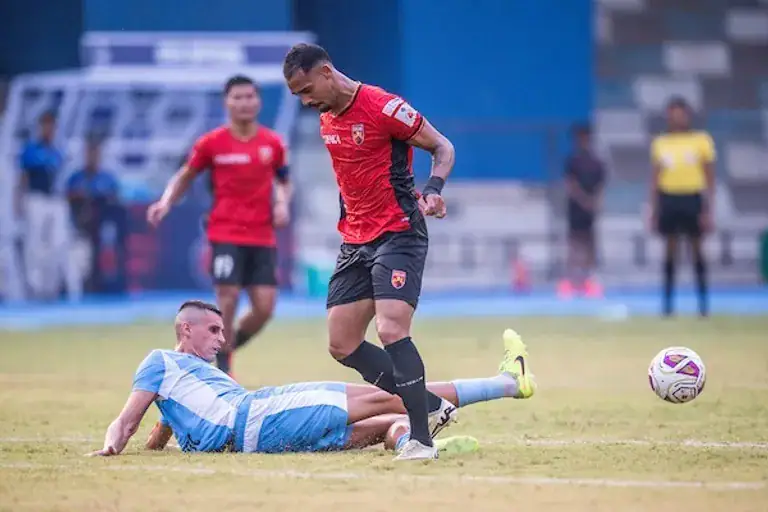
The Indian Super League (ISL) is the country’s premier football competition, but one major gap continues to undermine its credibility: the absence of video-assisted refereeing technology.
In a week when Remote VAR influenced crucial decisions at the 2026 SAFF Championship and Super League Kerala introduced Ref Cam, the ISL’s lack of even basic video-based officiating support has become increasingly difficult to defend.
The contrast is particularly striking because the technology being used across South Asia is not identical. Bhutan has experimented with an internet-based replay system, SAFF deployed Remote VAR for its knockout matches in Dhaka, and Super League Kerala has introduced referee body cameras. These developments do not mean that each competition has implemented full FIFA-certified VAR. However, they demonstrate that football authorities can take practical steps towards improving officiating and transparency.
For the ISL, the problem is not simply the cost of installing VAR. It is a combination of commercial instability, inadequate referee preparation, regulatory requirements and institutional inertia.
Bhutan's approach offers an example of cost-conscious experimentation. The Bhutan Football Federation introduced an internet-based video replay system in 2023 at an estimated cost of approximately Nu 4 million, or around ₹40 lakh. The system was designed to help officials review selected incidents, particularly penalties and potential red cards.
However, it is important not to describe this as a full FIFA-certified VAR installation. Bhutan's system uses only selected components, and the federation's own strategic plan continues to identify the introduction of a comprehensive video-assisted review system as an objective.
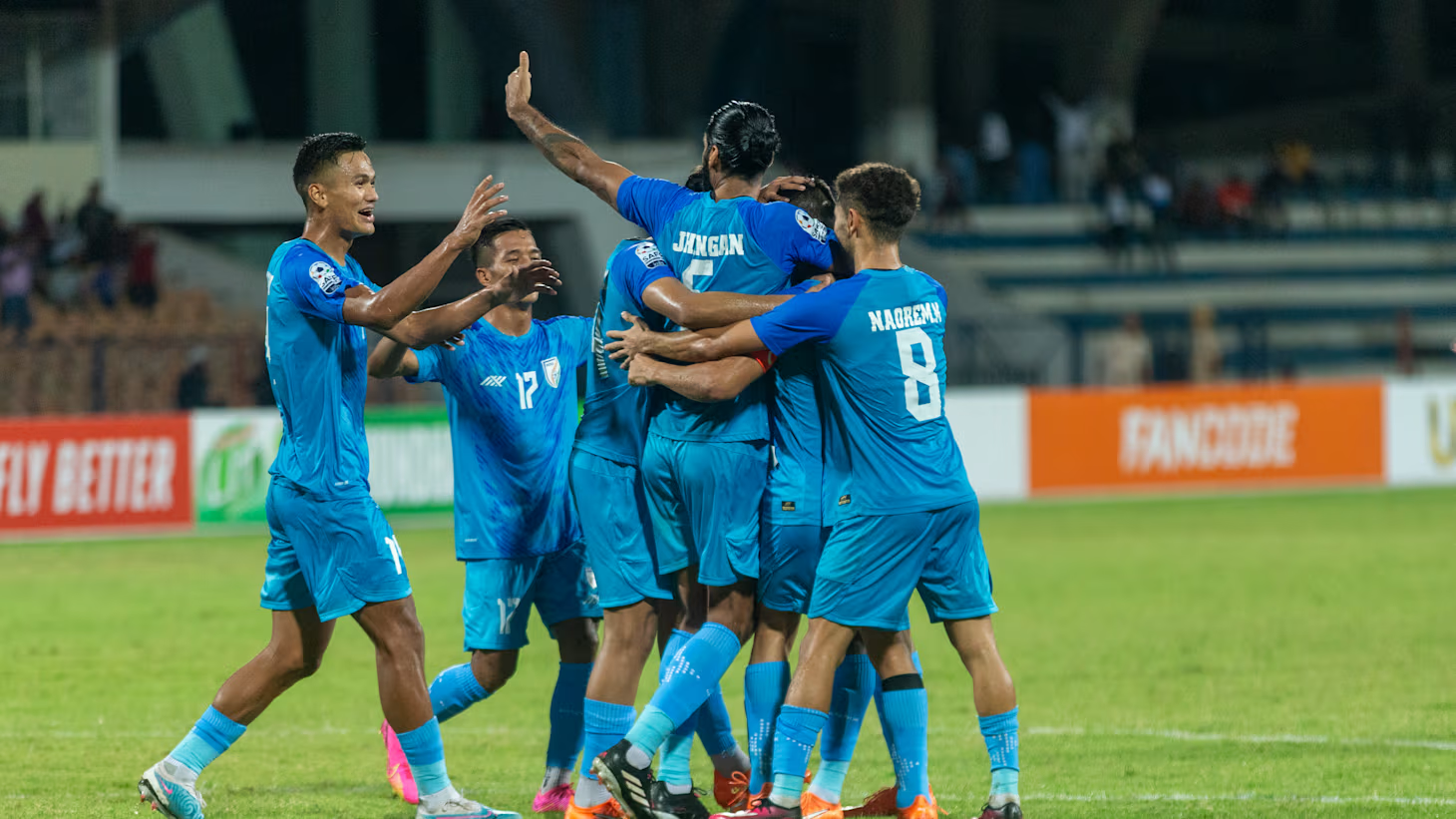
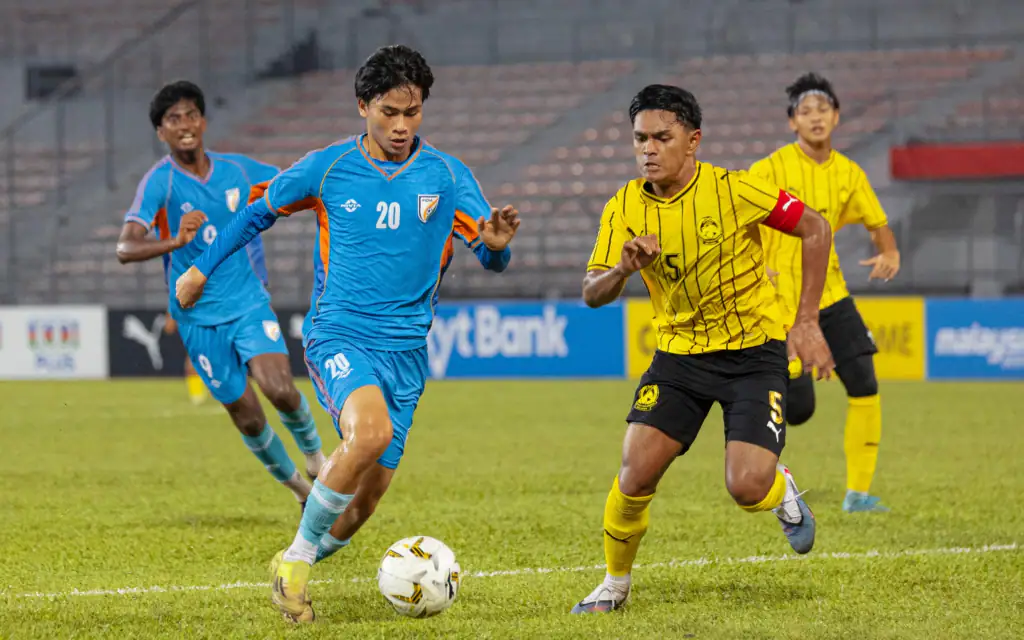
The 2026 SAFF Championship provided a more significant example. Remote VAR was used for the two semifinals and the final at Dhaka's National Stadium, with match footage transmitted to a central operations facility in Thailand. The deployment was organised through SAFF in collaboration with the AFC and AFF, using FIFA-certified VAR service provider Quality.
The technology had a direct impact. In the India-Bhutan semifinal, VAR overturned an offside decision to award Bhutan a goal and subsequently recommended that the referee cancel an incorrectly awarded penalty to India. In the final against Pakistan, a VAR review resulted in a straight red card for a missed stamping incident involving Brison Fernandes.
Super League Kerala has taken a different route. Its introduction of Ref Cam provides supporters with a first-person view of referees during matches. It is a broadcast and transparency innovation, not a decision-review system. Nevertheless, it offers a relatively accessible way to improve the viewing experience and help audiences understand the referee's perspective.
The distinction matters: none of these initiatives is directly equivalent to deploying full VAR across an entire ISL season. But each demonstrates a willingness to experiment.
Why the ISL has fallen behind
The irony is that the ISL had already planned to introduce video review. The AIFF's October 2025 commercial rights tender included a Football Video Support System from the 2025–26 season, with the possibility of upgrading to full VAR later. The proposal envisaged the commercial partner funding and managing the system, rather than placing the cost directly on clubs.
That plan collapsed amid the wider commercial and governance crisis surrounding Indian football. The initial tender attracted no bids, and subsequent disagreements over the commercial structure delayed the league's revival. Eventually, the AIFF and clubs agreed to a club-led Special Purpose Vehicle in July 2026 to operate the competition.
With the 2026–27 season approaching, the immediate priority became restoring the league's commercial structure, securing sponsorship and finalising broadcast arrangements. Officiating technology did not make it onto the list of urgent priorities.
The financial challenge is real. Estimates for full VAR implementation range from approximately ₹5–6 crore annually to as much as ₹12–13 crore in recurring yearly costs, depending on the technical model and infrastructure required. A first-year estimate has also reached ₹25 crore.
For a league rebuilding its commercial revenues, these are substantial commitments. However, the ISL does not necessarily need to begin with the most expensive option.
Money alone cannot solve the problem. FIFA requires competitions introducing official VAR to complete its Implementation Assistance and Approval Programme (IAAP). The process includes administrative preparation, technology testing, theoretical and practical training for video match officials, formal approval and ongoing monitoring. The complete process can take approximately 12–18 months.
India's shortage of VAR-trained officials is therefore a significant obstacle. The available federation reporting cited in the source indicates that none of India's 18 AFC Elite Panel match officials had completed VAR training as of early 2025.
This means that even if the ISL secured funding tomorrow, a FIFA-compliant system could not simply be switched on across the league immediately. The AIFF must begin building this capability, while the clubs and league management identify the financial model required to sustain it.
There are practical steps that do not require waiting for full VAR implementation. First, the ISL should introduce Ref Cam in partnership with its broadcast partners. It would not correct refereeing errors, but it could improve transparency and create engaging broadcast content.
Second, the league should explore Football Video Support (FVS), a coach-challenge system currently under FIFA/IFAB trials. Unlike conventional VAR, FVS does not require a team of Video Match Officials continuously monitoring the game. Coaches can request reviews for specific categories of decisions using a limited number of challenges. Any adoption would require the appropriate FIFA/IFAB approval.
Third, the ISL could explore Remote VAR for its most important knockout matches. The SAFF Championship has already demonstrated how match footage can be transmitted to a centralised facility, avoiding the need to establish a separate video operations room at every venue.
Alongside these initiatives, the AIFF should formally begin the FIFA approval process and invest in training Indian referees.
The ISL's situation cannot be compared directly with Bhutan's compact domestic competition, a three-match Remote VAR deployment in Dhaka or a state-level league introducing Ref Cam. A 13-club competition involving 163 matches across multiple venues has considerably greater operational and financial requirements.
But scale should not become an excuse for inaction. The ISL does not need to spend ₹25 crore immediately to demonstrate progress. It needs a phased plan: introduce Ref Cam, explore an approved FVS trial, consider Remote VAR for the playoffs and begin training officials for a future full VAR system.
The technology exists, regional examples are emerging, and supporters increasingly expect better officiating standards. The real question is whether Indian football's governing bodies and clubs are willing to treat this as a priority.
For a league that wants to position itself as the face of Indian football, modernising refereeing can no longer remain an item on the long-term wish list.
Comments (0)
to post comments, replies, and votes.
Loading comments…