India Stand Alone as South Asia’s Sole Representative at 2027 AFC U-17 Asian Cup
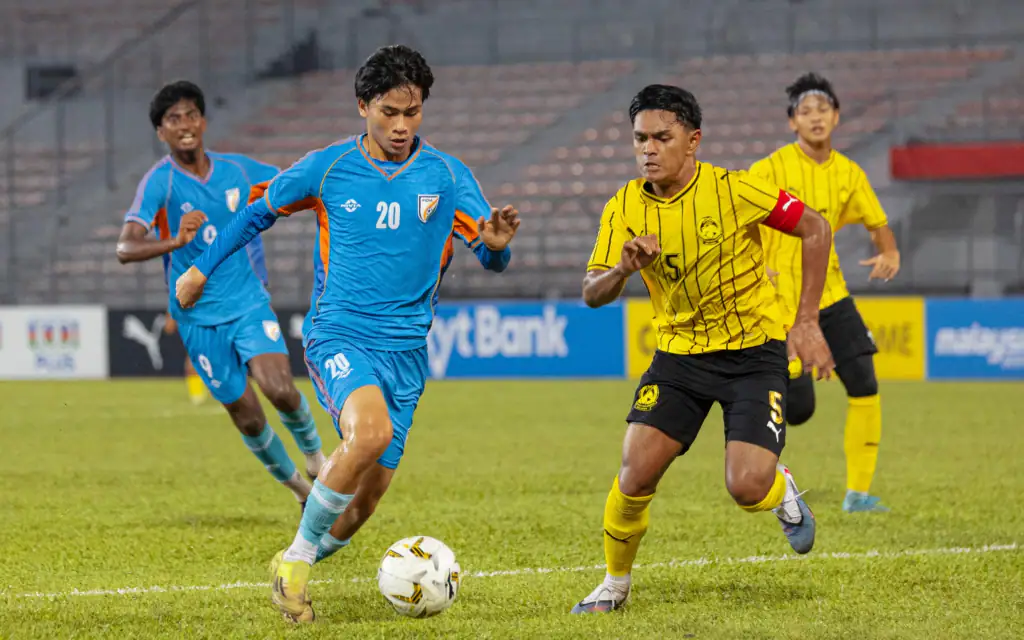
India will be the only South Asian nation competing at the 2027 AFC U-17 Asian Cup in Uzbekistan after an unbeaten qualifying campaign exposed the widening gap between the country’s youth football programme and the rest of the region.
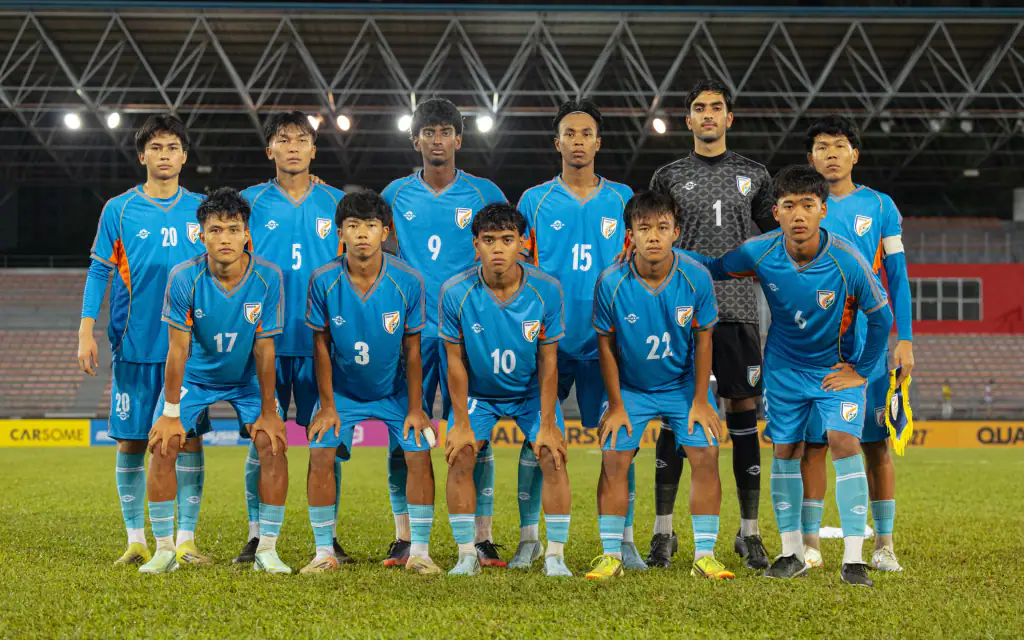
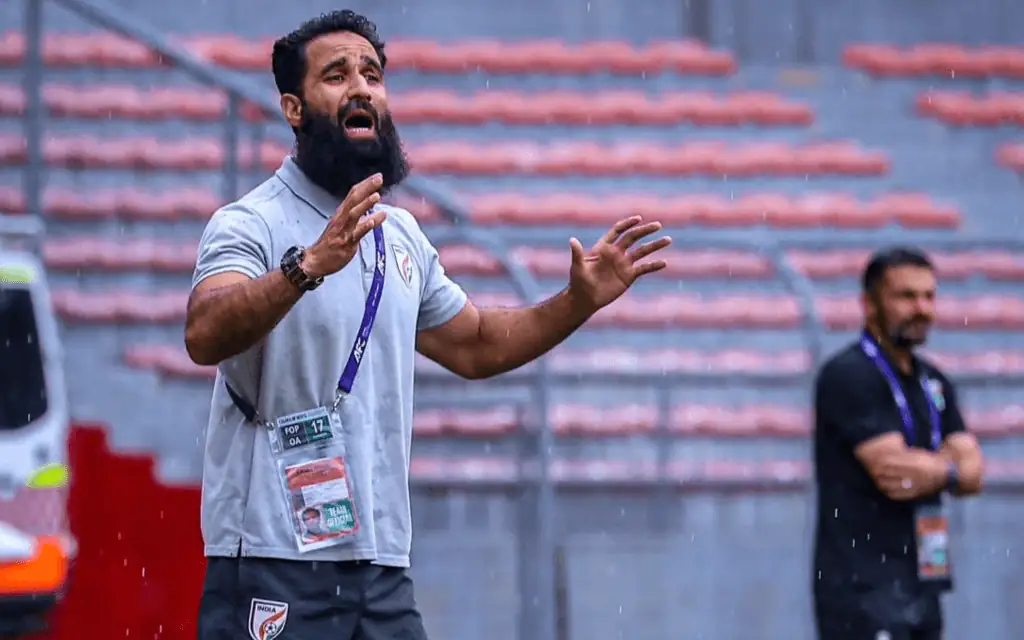
Head coach Mehrajuddin Wadoo’s side finished top of Group E with 10 points from four matches, recording three victories and a draw. India scored 20 goals and conceded just three, securing qualification for a second consecutive edition of the continental tournament.
The result leaves India as the sole representative of the South Asian Football Federation (SAFF) at the 16-team finals. Bangladesh and Pakistan finished third in their respective groups, while Bhutan, Sri Lanka and Maldives ended their campaigns without a point. Nepal did not participate following FIFA’s suspension of the All Nepal Football Association (ANFA).
India began their campaign with a 4-2 victory over Singapore on November 11, led by captain Dallalmuon Gangte’s hat-trick. Ristik Maity scored the other goal as the Blue Colts recovered from conceding twice to register their first win.
Three days later, India produced one of the most emphatic results of the qualifying competition, defeating Guam 12-0. Raj Singh Wahengbam scored four goals, while Gangte added another hat-trick. Seven different Indian players found the net in a dominant attacking display.
The most significant victory came against Palestine on November 17. India took an early lead through Kamgouhao Doungel, but Palestine equalised from the penalty spot. The contest changed after Palestine captain Yazan Khalifah was sent off, leaving his side with 10 players. Following a rain delay of more than two hours, India capitalised on the numerical advantage to secure a 4-1 victory through second-half goals from Mukundo Singh Ningthoujam, Gangte and Zoramdinthara Lalhunmawia.
India then needed only a draw against hosts Malaysia to confirm top spot. Wadoo’s side delivered a disciplined defensive performance to hold Malaysia to a 0-0 draw on November 20, completing the qualifying campaign unbeaten.
Gangte finished as India's leading scorer with seven goals, underlining his importance to the side. Wahengbam’s four-goal performance against Guam also highlighted the attacking depth available to Wadoo.
The campaign was not without controversy. During the Palestine match, an alleged racist gesture directed towards Gangte prompted the All India Football Federation (AIFF) to lodge a formal complaint with the Asian Football Confederation (AFC), requesting a review of the footage and appropriate disciplinary action.
Bangladesh and Pakistan fall short
Among the other South Asian teams, Pakistan produced the most competitive campaign despite missing out on qualification. Placed in Group D, Pakistan defeated Sri Lanka 3-1 and Laos 3-0, while holding Jordan to a 2-2 draw. Their only defeat came against group winners IR Iran, who secured a narrow 1-0 victory. Pakistan finished third with seven points, behind Iran and Jordan.
Bangladesh collected six points in Group C, beating Bhutan 4-0 and Macau 1-0. However, a 5-1 opening defeat against Syria and a 2-0 loss to hosts UAE left them third in the standings.
The campaigns of Bhutan, Sri Lanka and Maldives were considerably more difficult. All three finished bottom of their respective groups without a point. Bhutan conceded 18 goals, Sri Lanka 27 and Maldives 26, illustrating the competitive challenges facing these programmes.
Nepal’s absence was a separate consequence of its football administration crisis. FIFA suspended ANFA on June 24, 2026, citing unresolved third-party interference in the association’s administration. The suspension prevented Nepalese national and club teams from participating in FIFA and AFC competitions, ruling the country out of the qualifying campaign.
Although Nepal’s domestic administrative restrictions were revoked on November 19, the development came too late to restore its participation in the 2027 qualifiers.
India’s qualification also reflects a wider difference in preparation, infrastructure and competitive exposure. Eleven members of the Indian squad were drawn from the AIFF-FIFA-Odisha Talent Academy in Bhubaneswar. The residential programme combines football training with education, access to natural-grass pitches, sports science and injury-management support.
Wadoo’s team also benefited from a preparatory camp in Goa and international exposure through friendly matches against Myanmar and the UAE before the qualifiers.
India’s Pot 1 seeding for the qualifying draw provided an additional advantage, allowing the team to avoid some of the strongest contenders. However, the campaign still required India to negotiate a challenging group that included Palestine and hosts Malaysia.
The contrast with Bangladesh and Pakistan is particularly notable. Both teams demonstrated the ability to compete against lower-seeded opponents, but defeats against stronger opposition proved decisive in a format where only group winners advanced.
India has now qualified for consecutive editions of the AFC U-17 Asian Cup. The 2027 tournament will be its 11th appearance, with quarter-final finishes in 2002 and 2018 remaining its best performances.
Uzbekistan offers a bigger opportunity.
The 2027 AFC U-17 Asian Cup will feature 16 teams, comprising nine automatic qualifiers and seven group winners from the qualifying competition. Alongside India, the seven qualifying winners are Indonesia, Iraq, Syria, IR Iran, Yemen and Lebanon.
The tournament carries an additional incentive: the eight quarter-finalists will qualify for the 2027 FIFA U-17 World Cup in Qatar. Reaching the knockout stage will therefore be the immediate benchmark for India.
The challenge will be significantly tougher than the group-stage opposition faced in Malaysia. India will come up against established youth football programmes, including Japan, South Korea, Uzbekistan, Saudi Arabia and Australia.
For Wadoo and his players, the objective is to translate regional dominance into continental progress. India has established itself as South Asia’s clear benchmark at this level. The next test is whether that advantage can carry the team into the last eight of Asian football and secure a place on the global stage.
Comments (0)
to post comments, replies, and votes.
Loading comments…