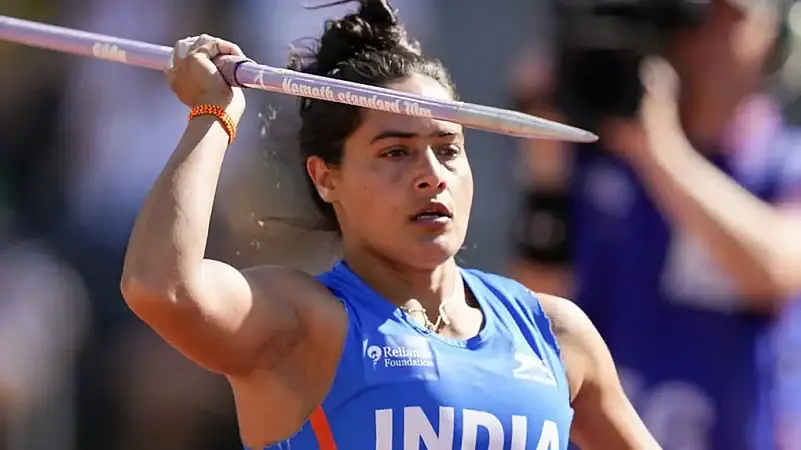
Sadhana Ravi and Basant Rewrite Record Books at Junior Federation Cup
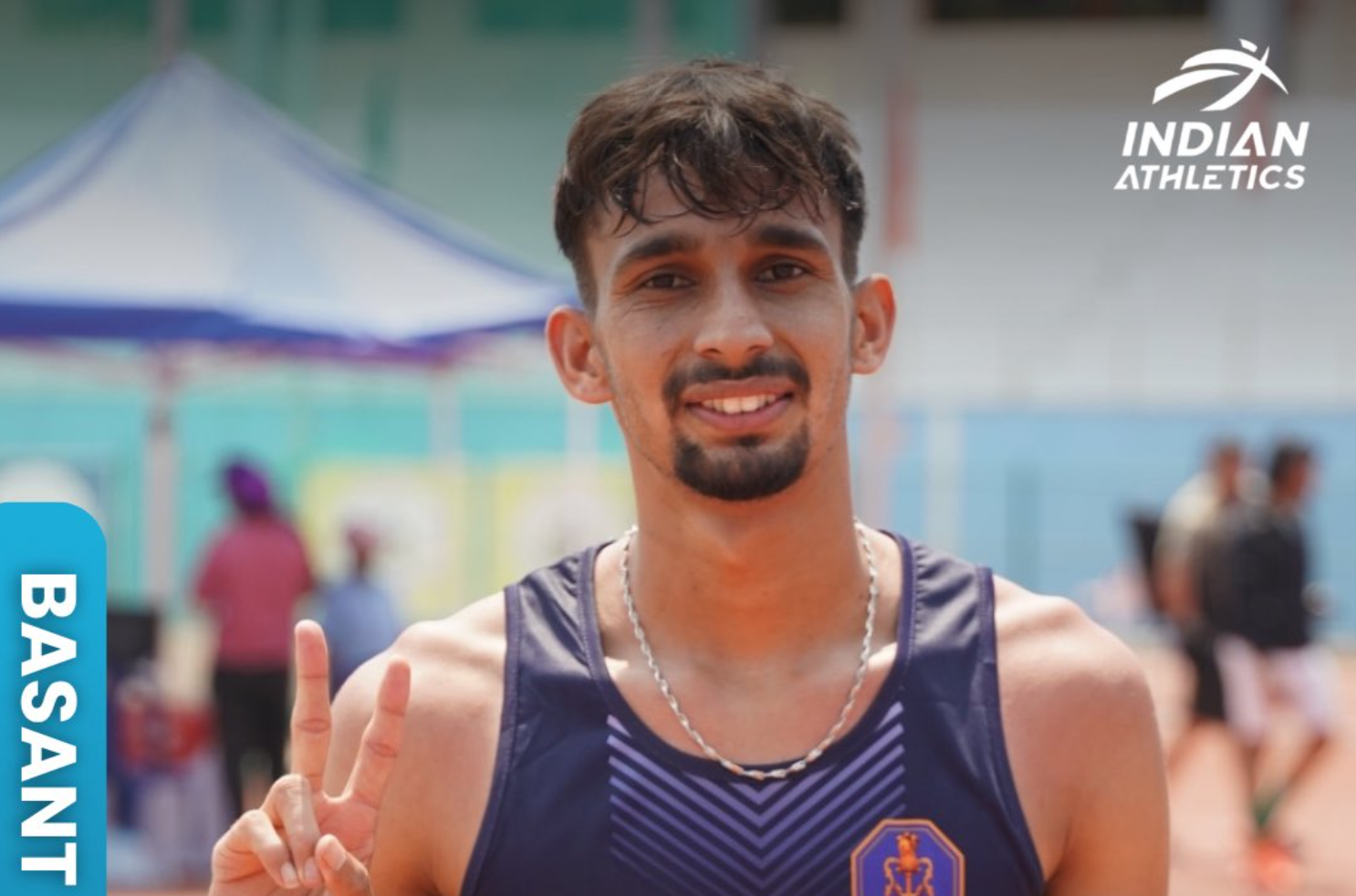
The Junior Federation Cup in Tumkur continues to produce performances that underline the rising standards in Indian athletics, with Sadhana Ravi and Basant delivering record-breaking efforts in the field events.
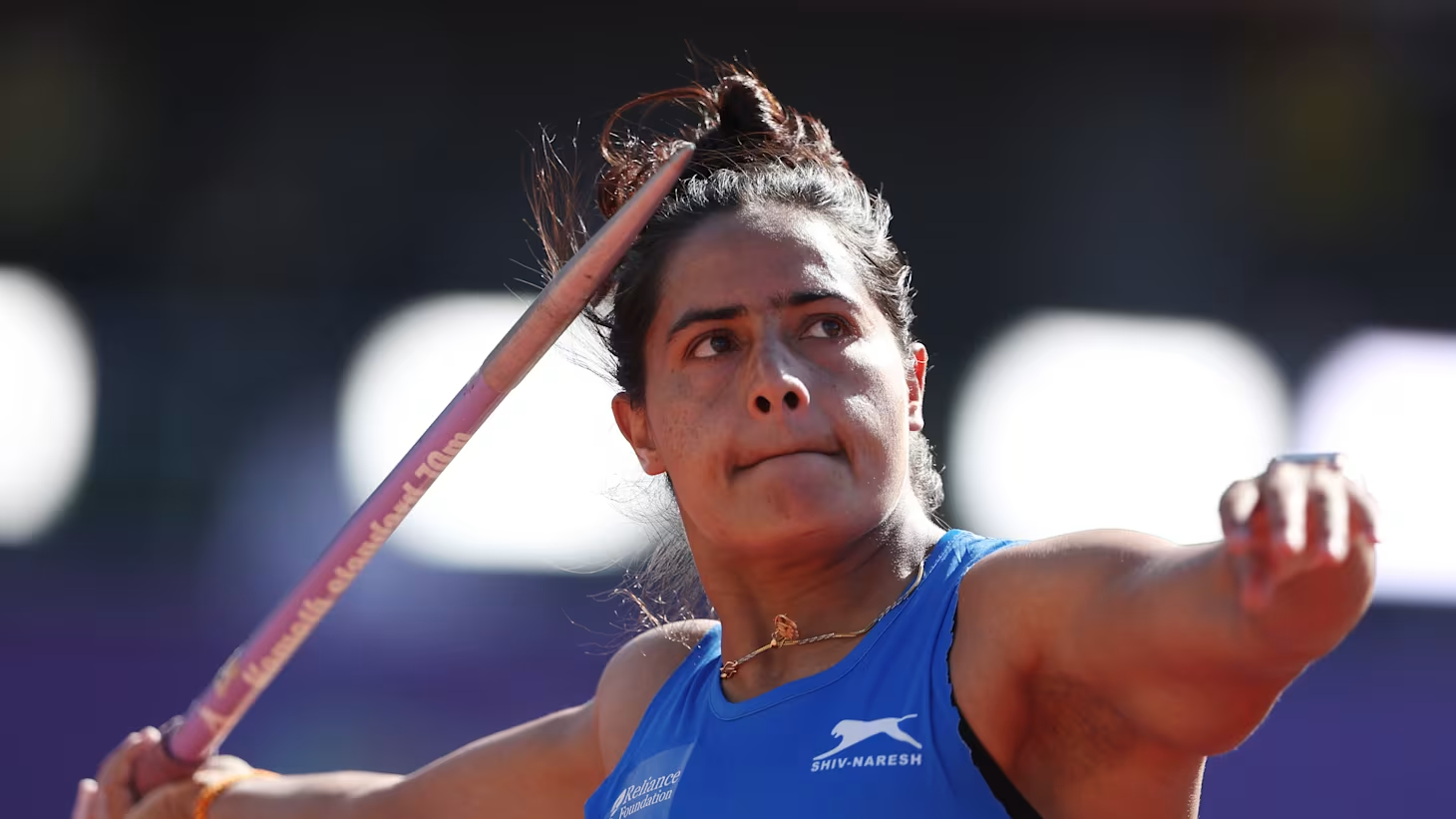
Both athletes not only secured gold medals but also breached the Asian U20 qualification standards, placing themselves firmly in contention for upcoming continental competitions. In the women’s triple jump, Sadhana Ravi produced one of the standout performances of the meet, registering a winning jump of 12.97m. The mark not only secured her the gold medal but also erased a long-standing meet record of 12.87m set by Gayathry back in 2009. Breaking a 17-year-old record at the junior level is significant, particularly in an event where technical precision and rhythm play a decisive role.
Sadhana’s jump comfortably cleared the Asian U20 qualification standard of 12.67m, reinforcing her status as one of India’s most promising horizontal jumpers. What makes her performance even more compelling is the consistency she has shown throughout the season. Earlier this year, she had already crossed the 13-metre barrier, recording a personal best of 13.08m at the Open Jumps meet. That mark currently ranks her second in Asia and inside the top 15 globally in the U20 category, placing her in a competitive bracket internationally. The ability to repeatedly produce jumps in the 12.9–13.0m range suggests a level of technical stability that is often difficult to achieve at this stage of an athlete’s career.
The final itself also reflected improving depth in the event. Jasleen Kaur, the Indian Series-3 U20 champion, finished second with a jump of 12.72m, also breaching the Asian qualification mark. Having two athletes cross the continental standard in the same competition highlights a positive trend in women’s triple jump, where India is beginning to build a competitive pool rather than relying on isolated performances.
Sadhana’s progression is particularly noteworthy because of her transition from the U18 to U20 category. As the 2025 U18 national champion, she has carried her momentum into the next level with minimal drop in performance, indicating a well-managed development pathway. The challenge ahead will be to convert these domestic performances into consistent results at the international level, where conditions and competition intensity differ significantly.
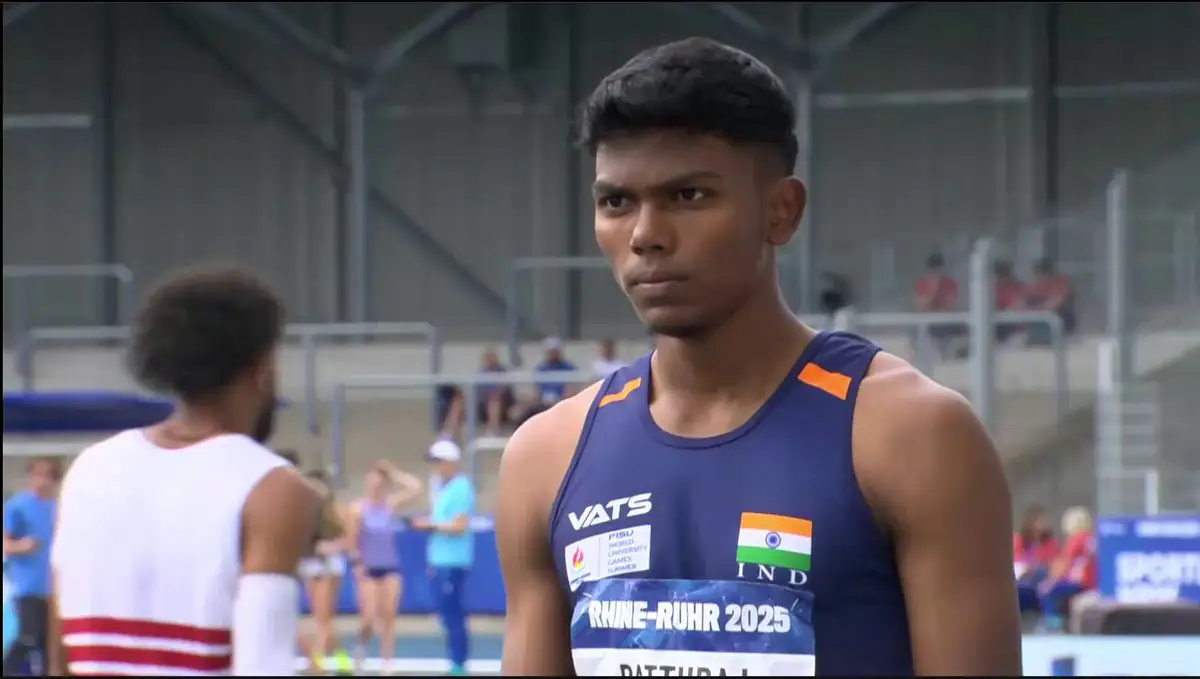
In the men’s high jump, Basant delivered an equally impressive performance, clearing 2.21m to win gold and set a new meet record. The jump surpassed the previous mark of 2.19m set by Ajay Kumar in 2015, marking an 11-year-old record being rewritten. Basant’s performance represented a substantial improvement over his previous personal best of 2.14m, highlighting a significant leap in his competitive level. High jump, unlike many other events, often sees incremental gains, making a seven-centimetre improvement particularly noteworthy.
He also breached the Asian U20 qualification standard of 2.11m with ease, positioning himself among the leading jumpers in the region. His 2.21m clearance currently ranks him second in Asia and fifth globally in the U20 category this season, placing him in elite company at the junior level.
What stood out in Basant’s performance was not just the record-breaking jump but also his attempt at 2.25m. While he was unable to clear the height, the fact that he came close indicates potential for further improvement. Athletes often test higher bars after achieving personal bests, and his attempt suggests that the ceiling for his performance may extend beyond the current mark. The high jump event demands a combination of speed, technique, and timing, and Basant’s execution across attempts reflected a growing level of maturity. Maintaining composure while progressively raising the bar is a key aspect of success in the event, and his performance demonstrated that capability.
Together, the performances of Sadhana Ravi and Basant highlight a broader trend within Indian athletics improving standards in field events at the junior level. Historically, Indian athletics has seen stronger representation in track events, but recent results suggest a shift toward more balanced development across disciplines. Both athletes now move into a phase where expectations will rise. Having breached continental standards and achieved high rankings within Asia, the focus will shift toward international competition, where consistency and adaptability become critical.
For Sadhana, the priority will be maintaining technical rhythm and translating her 13m-level jumps into competitive performances against stronger fields. For Basant, the challenge will be building on his new personal best while stabilising his performance above the 2.20m mark. The Junior Federation Cup has once again served as a platform for emerging athletes to announce themselves. With record-breaking performances and multiple qualifiers for continental events, the meet reflects a system that is gradually producing athletes capable of competing beyond the domestic stage.
If these performances are any indication, Indian athletics is not just identifying talent but beginning to nurture it with a level of consistency that could yield results at higher levels in the coming years.
Comments (0)
to post comments, replies, and votes.
Loading comments…