Soft Tennis vs Lawn Tennis: What Makes the Two Sports Different?
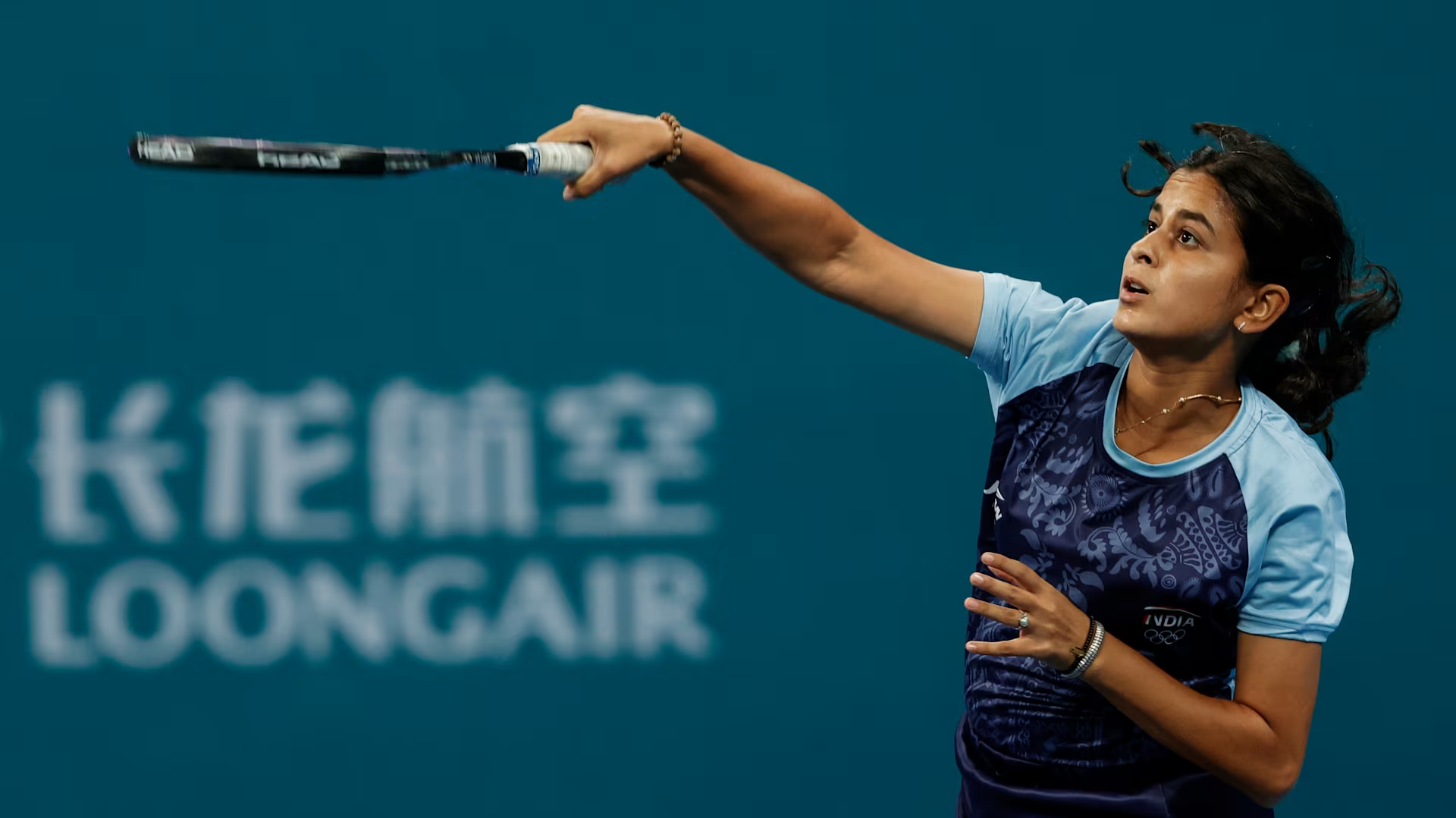
Soft tennis vs lawn tennis: understand the key differences in ball, racket, scoring, net height, techniques and tactics ahead of the Asian Games.
Soft tennis may look familiar to anyone who has watched lawn tennis. The court is almost identical; the players use rackets and a net, and the objective is to hit the ball into the opponent’s court.
But beneath those similarities lies a fundamentally different sport, shaped by its equipment, ball dynamics, scoring system and playing techniques.
As soft tennis features at the Asian Games, understanding these differences becomes particularly relevant for Indian sports fans encountering the discipline more closely.
Soft tennis originated in Japan during the late 19th century as an adaptation of Western lawn tennis. After the Meiji Restoration, Japan incorporated Western sports into its education system, with lawn tennis introduced through physical education programmes. However, imported tennis equipment was expensive and difficult to obtain. In 1884, Japanese educators began modifying the sport, replacing the traditional felt-covered tennis ball with a lightweight, hollow rubber ball that could be manufactured domestically. The change in ball design eventually led to lighter rackets and lower string tensions, creating a distinct version of tennis.
The sport subsequently developed a strong presence in Japan, South Korea and Chinese Taipei. The Asian Soft Tennis Federation was established in 1955, while the International Soft Tennis Federation followed in 1973. Soft tennis became a demonstration sport at the 1990 Asian Games before gaining official medal status at the 1994 Hiroshima Asian Games.
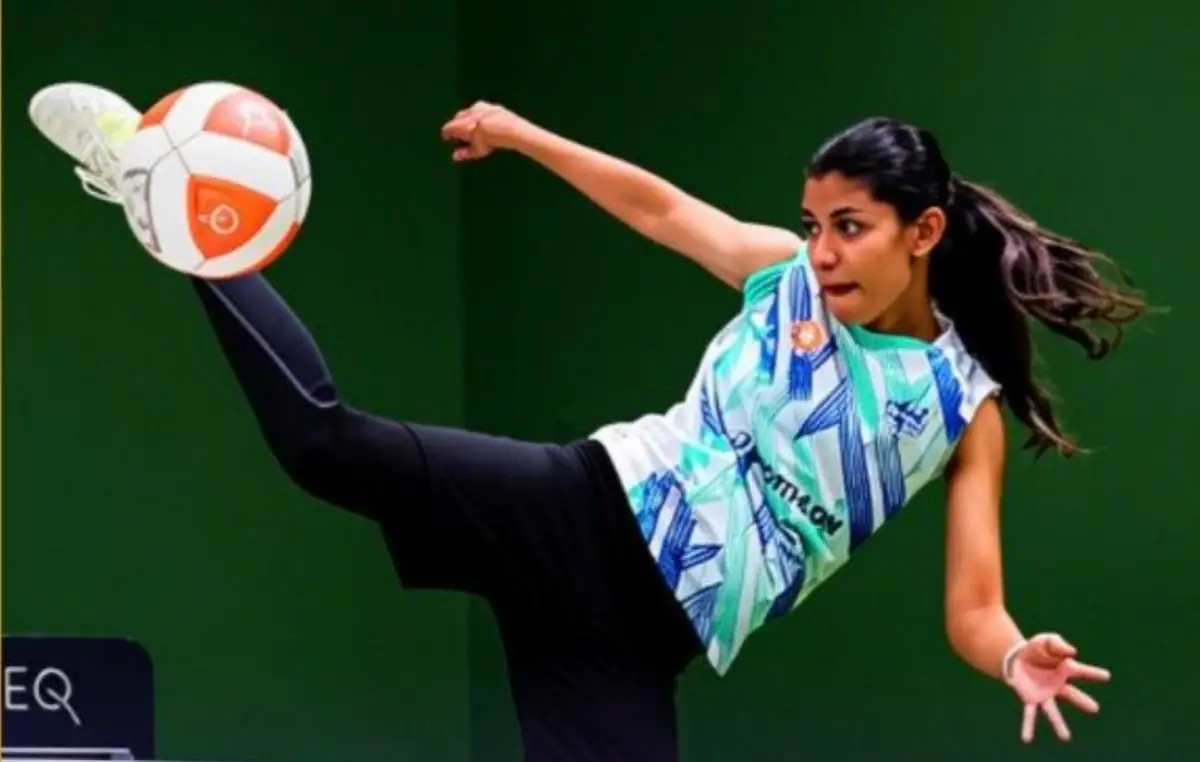
The biggest difference between the two sports is the ball. A standard lawn tennis ball weighs approximately 56 to 59.4 grams and has a pressurised rubber core covered by woven felt. An official soft tennis ball weighs only around 30 to 31 grams and is made from a lightweight, hollow rubber construction without the external felt covering.
Despite having a similar diameter, the soft tennis ball is therefore almost half the weight of its lawn tennis counterpart. It also behaves differently in the air and after bouncing. The lighter ball experiences considerably greater aerodynamic deceleration, meaning it loses speed more rapidly during flight. When it hits the court, its flexible rubber construction also absorbs a significant amount of energy, resulting in a lower and slower bounce.
This changes the entire rhythm of a rally.
Lighter Rackets, Lower Tension
The equipment is designed around the characteristics of the ball. Soft tennis rackets typically weigh around 200 to 260 grams unstrung, considerably lighter than adult lawn tennis rackets, which generally fall in the 280-to-340-gram range. Soft tennis also uses string tensions of approximately 20 to 30 pounds, compared with around 45 to 60 pounds commonly used in lawn tennis. The combination of a lightweight ball, a lighter racket and a more compliant string bed allows players to generate substantial spin and racket-head speed without requiring the same impact characteristics associated with lawn tennis.
The result is a sport where precision, spin and consistency become particularly important.
The Court Looks Similar, But the Net Is Different
One reason soft tennis can initially be mistaken for lawn tennis is that the court dimensions are essentially the same. Both use a court measuring 23.77 metres by 10.97 metres, with the singles court measuring 8.23 metres wide. The major structural difference is the net.
In lawn tennis, the net is 1.07 metres high at the posts but drops to 0.914 metres at the centre because of the centre strap. Soft tennis does not use that centre strap. Instead, the net remains approximately 1.06 to 1.07 metres high across its entire width.
That seemingly small difference has tactical consequences. Players cannot rely on the lower central portion of the net for flat, direct drives. They must generally generate sufficient vertical clearance, with topspin playing an important role in keeping the ball inside the court.
The scoring system is another major distinction. Lawn tennis uses the familiar 15, 30, 40 and game progression, with matches generally played as best-of-three or best-of-five sets.
Soft tennis uses numerical scoring 0, 1, 2, 3 and 4, and its match structure is considerably more compact. Single matches are generally played as best of seven games, meaning the first player to win four games takes the match. Doubles matches are best of nine games.
If a singles match reaches 3-3, the deciding game becomes the Final Game, with the first player to seven points, by a margin of two, winning the match.
Doubles introduces another unusual feature: partners alternate serving every two points within a game, requiring both players to contribute under pressure.
Perhaps the most surprising difference is how players hit the ball. Elite soft tennis players commonly use an extreme Western grip for baseline strokes and can use the same side of the racket face for both forehands and backhands. Rather than switching grips in the conventional manner associated with lawn tennis, players use forearm and wrist rotation to produce the required backhand action.
The light rubber ball also enables players to generate substantial topspin. Another distinctive technique is the underhand cut serve, which combines sidespin and backspin to produce a low, skidding and difficult bounce. In doubles, traditional tactics also feature specialised roles, with one player operating primarily from the backcourt and another stationed closer to the net.
Why Soft Tennis Matters at the Asian Games
Soft tennis has developed into a major sport across East Asia, particularly in Japan, South Korea and Chinese Taipei. Japan has an extensive youth pathway, with the sport widely embedded in school physical education and after-school sports clubs. Unlike lawn tennis, soft tennis is not part of the Summer Olympic programme, making the Asian Games its most prominent multi-sport international stage.
For viewers encountering it for the first time, the important takeaway is simple: soft tennis is not merely lawn tennis with a softer ball. Its equipment has created different ball physics, which in turn have shaped different strokes, tactics, scoring and physical demands. The shared court may make the sports look similar, but once the ball is in play, the differences become clear. Soft tennis has evolved into a specialised racket sport in its own right one with a distinct history, technical identity and competitive culture.
Comments (0)
to post comments, replies, and votes.
Loading comments…