Three World Championship Medals Put India’s Men’s Air Pistol Programme on the Map in LA 2028 Cycle
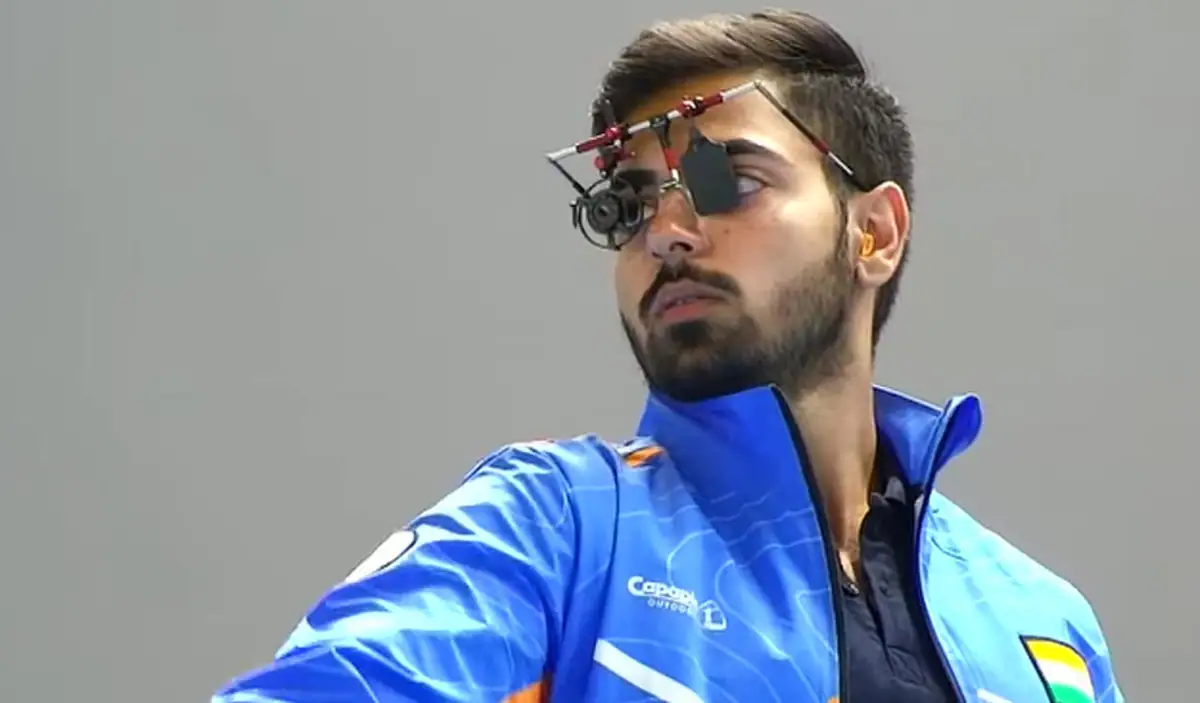
India has won three individual men's 10m Air Pistol medals across the 2025 and 2026 ISSF World Championships, with Samrat Rana, Varun Tomar and Jaypal Malviya leading the charge towards LA 2028.
Samrat Rana’s historic gold, Varun Tomar’s bronze and Jaypal Malviya’s silver across the 2025 and 2026 ISSF World Championships underline India’s growing strength in the 10m Air Pistol event, with Hu Kai providing the benchmark.
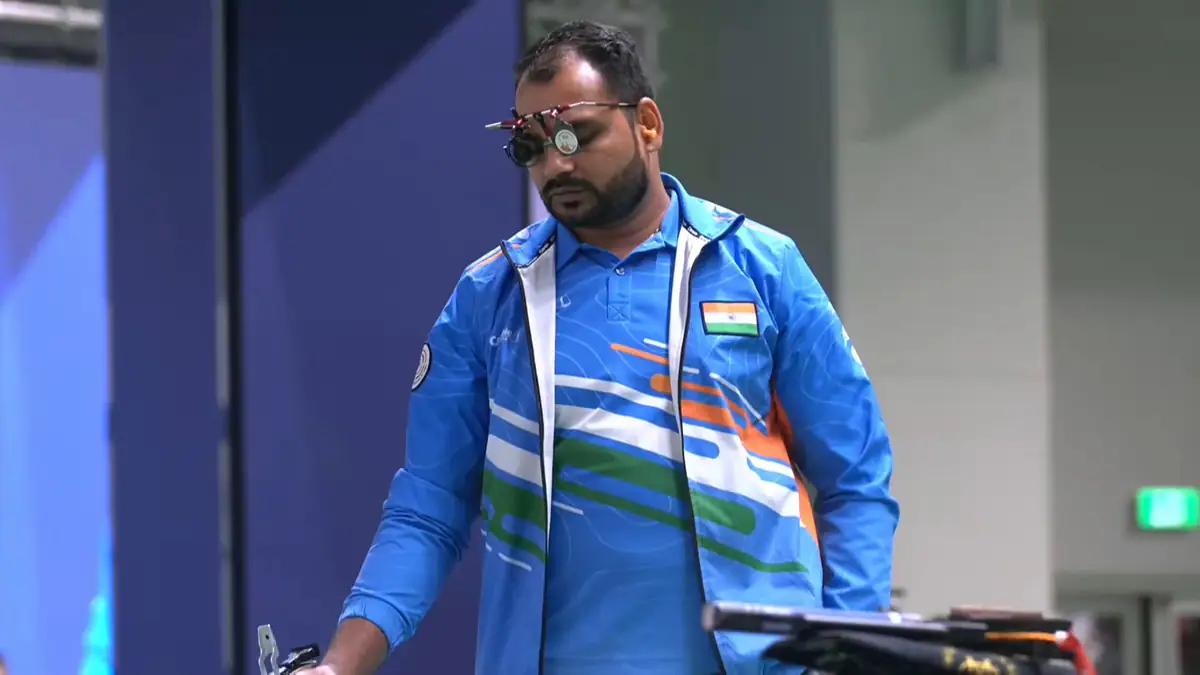
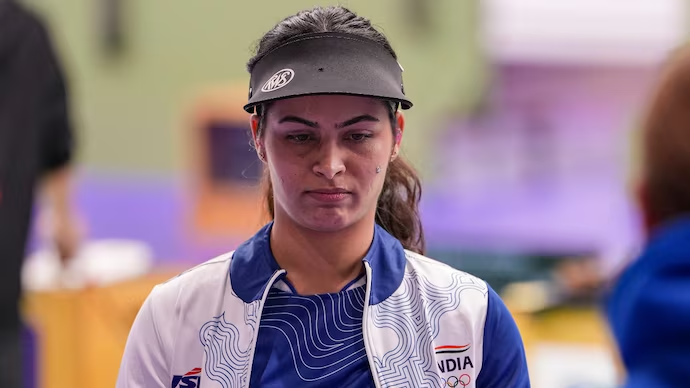
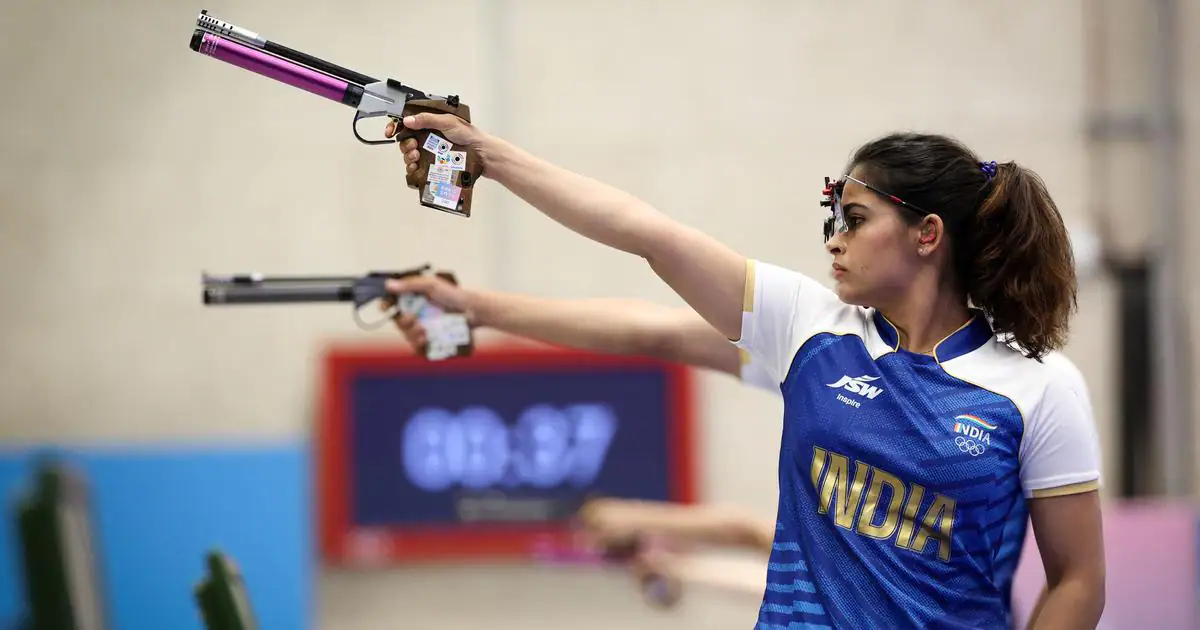
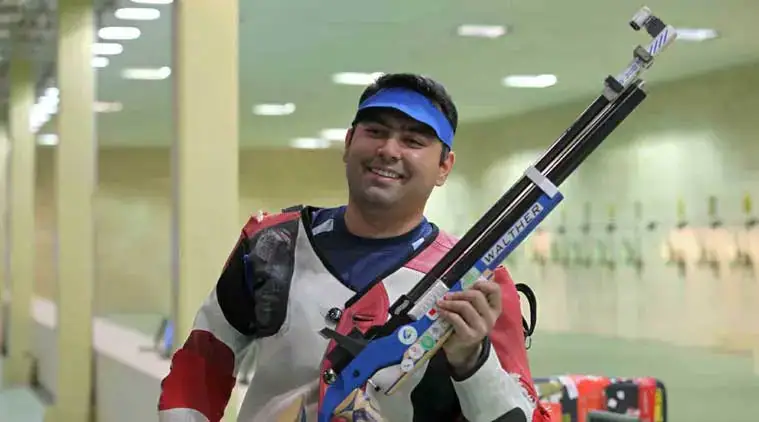
India’s men’s 10m Air Pistol shooters have made a powerful statement in the opening phase of the Los Angeles 2028 Olympic cycle, winning three individual medals across consecutive ISSF World Championships. Samrat Rana’s historic gold and Varun Tomar’s bronze at the 2025 edition in Cairo were followed by Jaypal Malviya’s silver at the 2026 championship in Doha, giving India a gold, silver and bronze in one of the sport’s most competitive Olympic disciplines.
The achievement is significant not simply because of the medal count, but because three different Indian shooters have reached the individual podium across two successive editions. It points to growing depth in the national programme and demonstrates that India can challenge the leading international performers in a discipline traditionally dominated by established shooting nations.
The rivalry with China’s Hu Kai has been a defining feature of this story. Rana defeated Hu in Cairo to become world champion, while Malviya finished behind the Chinese shooter in Doha to claim silver. Between those two performances, Varun Tomar’s bronze in Cairo gave India a second individual medal at the same championship.
The 2025 ISSF World Championship in Cairo provided the breakthrough. Hu Kai arrived as one of the strongest favourites after winning all four ISSF World Cup stages that year — Buenos Aires, Lima, Munich and Ningbo — besides securing the Asian Shooting Championship title.
India, however, entered the final with two strong contenders. Rana and Tomar both shot 586 out of 600 in qualification, finishing first and second respectively. Rana secured the top position through the countback, with 28 inner tens.
The eight-man final developed into a closely contested battle involving the two Indians and Hu. Tomar maintained his consistency through the elimination stages and secured bronze with a score of 221.7. It was a landmark result, giving India its first double individual podium in a single pistol discipline at an ISSF World Championship.
The fight for gold went down to the final two shots. Rana held a narrow lead before Hu moved ahead by 0.1 points after the 22nd shot. The turning point came on shot 23, when Hu recorded 9.5 while Rana responded with 10.2 to regain the advantage.
Hu applied pressure with a 10.8 on the final shot. Rana needed at least 10.3 to win the title and delivered a 10.6, finishing with 243.7 points against Hu’s 243.3.
At 20, Rana had become India's first individual senior world champion in an Olympic pistol discipline. His victory was accompanied by another gold in the men's 10m Air Pistol team event, alongside Tomar and Sharvan Kumar. Rana also won mixed team silver with Esha Singh.
For Tomar, the bronze was equally important. A Paris 2024 Olympian, he demonstrated that India had more than one shooter capable of reaching the podium in a major global final.
Doha 2026: Jaypal Malviya delivers another podium
The 2026 ISSF World Championship in Doha brought a different Indian contender into the spotlight. Unlike Cairo, the championship also served as the first qualification event for the Los Angeles 2028 Olympic Games, with three individual quota places available in the men's 10m Air Pistol event.
Reigning champion Rana did not make the Indian squad after the domestic selection process. His place was taken by Jaypal Malviya, a 31-year-old shooter competing in only his second international event.
Malviya justified his selection with a composed qualification performance of 585, placing third and advancing to the eight-man final. His six series scores were 97, 99, 97, 99, 97 and 96. The final featured another contest against Hu Kai, who was seeking to reclaim the world title after his defeat in Cairo. Malviya recovered from an early 9.2 and accumulated 100 points across his opening 10 shots.
His strongest passage came between shots 13 and 16, when he produced four consecutive inner tens: 10.6, 10.2, 10.7 and 10.8. The sequence brought him closer to Hu, particularly after the Chinese shooter registered an 8.4.
Malviya continued to challenge, responding to a 9.7 with a 10.7 and holding off Czechia's Jindrich Dubovy to secure silver with 242.2 points. Hu eventually won gold with 243.9, while Dubovy took bronze with 220.9.
The silver also carried major Olympic significance. Malviya secured India's first quota place for the Los Angeles 2028 Olympic Games across all sports at the Doha championship. The quota belongs to the National Olympic Committee rather than automatically guaranteeing the athlete a place in the final Olympic team, but it gives India an early qualification foothold.
The three Indian medalists represent different routes into elite shooting.
Rana's development began in Karnal, Haryana, where his father established a dedicated training setup, including a single-lane range. His success reflects the impact of sustained family support and structured training from a young age.
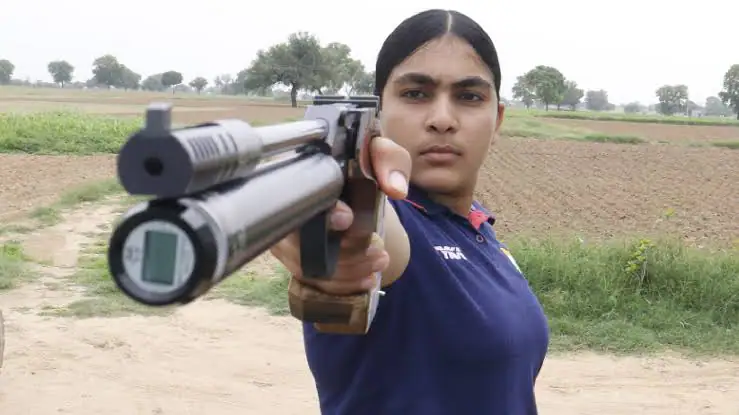
Tomar, from Baghpat in Uttar Pradesh, developed within the region's established shooting culture and gained valuable international experience, including his appearance at the Paris Olympics. Malviya's journey is perhaps the most unconventional. A farmer from Chhindwara, Madhya Pradesh, he began systematic air pistol shooting at 26 during the pandemic. He purchased a second-hand Walther pistol using personal savings and crop revenue before progressing through domestic competitions and earning national selection.
Their contrasting backgrounds demonstrate the breadth of talent emerging in Indian pistol shooting. The podium results are no longer dependent on one athlete or one development pathway.
Three individual World Championship medals in two editions provide a strong foundation, but translating that success into Olympic medals will require sustained performance. India's domestic selection system remains intensely competitive. Rana's absence from the 2026 squad, despite winning the world title a year earlier, illustrates how quickly national team positions can change. While competition for places can improve standards, managing training loads and maintaining the confidence of proven international performers will be important.
Malviya's early quota also gives the national programme more time to plan for Los Angeles. India will now look to build on that achievement and secure the remaining available quota in the discipline.
The results against Hu Kai offer another encouraging sign. Rana showed that the Chinese star could be beaten under pressure, while Malviya demonstrated that he could challenge him in a world final. Tomar's Cairo bronze added further evidence of India's competitive depth.
Across the 2025 and 2026 World Championships, India has collected the full set of individual medals: gold through Samrat Rana, bronze through Varun Tomar and silver through Jaypal Malviya.
The challenge now is to turn this World Championship momentum into Olympic success. With three different medalists already established in the LA 2028 cycle, India's men's 10m Air Pistol programme has given itself a strong platform from which to pursue that ambition.
Comments (0)
to post comments, replies, and votes.
Loading comments…