What Is Teqball? Everything You Need to Know About the Fast-Growing Sport Making Its Asian Games Debut
 Follow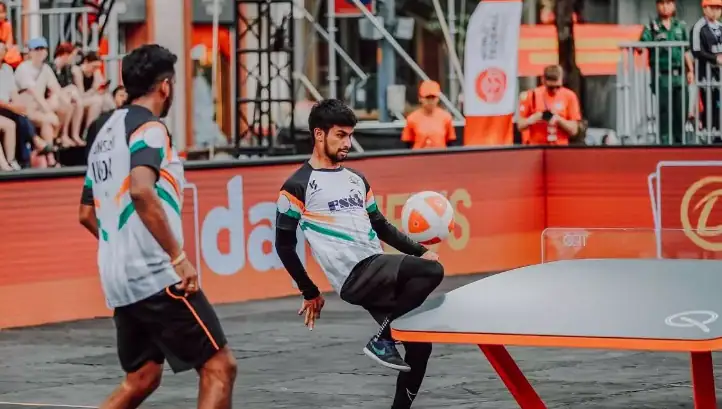
Teqball is one of the newest sports to enter the Asian Games programme, but its unique combination of football skills, table tennis-style rallies and freestyle techniques has already helped it build an international following.
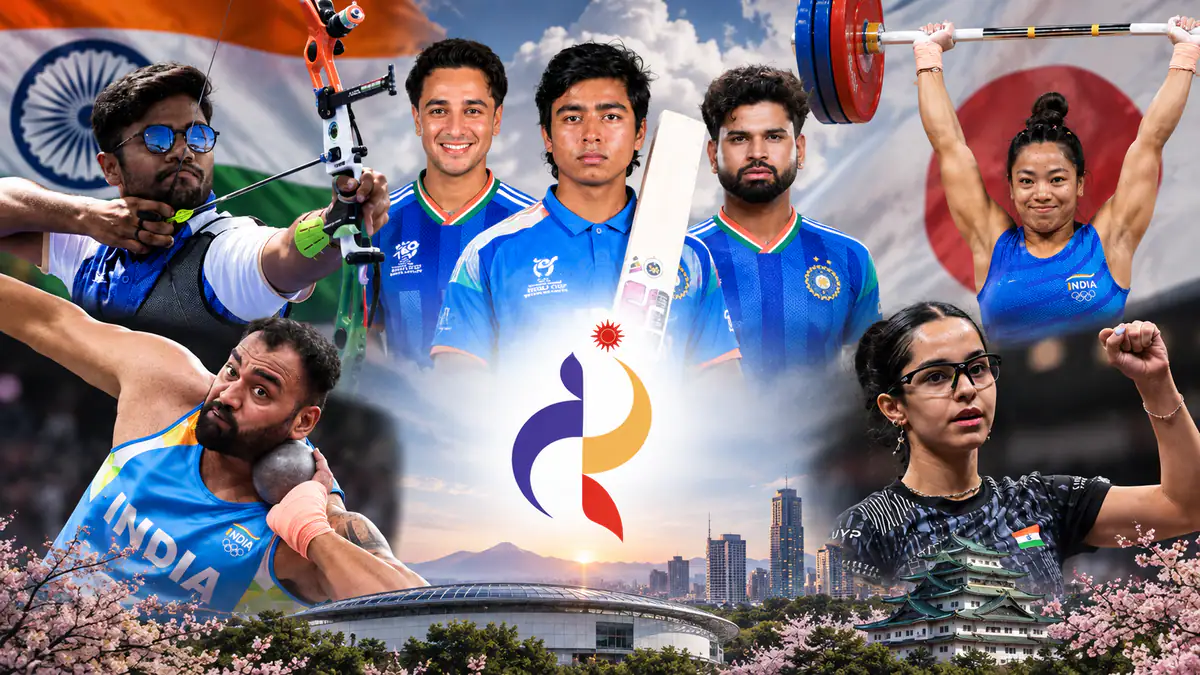
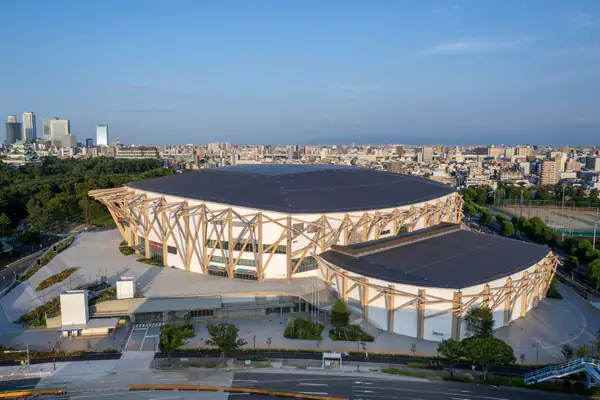
The sport will make its Asian Games debut at Aichi-Nagoya 2026, giving millions of viewers their first opportunity to see the unusual game on a major continental stage. India will also be part of this historic debut, with Declan Marshall Gonsalves, Mohamed Anas Imran Beg and Quimcy Dsouza representing the country.
But what exactly is teqball, and how is it played?
Teqball is a sport that combines elements of football and table tennis. It is played on a specially designed, curved table that looks broadly similar to a table-tennis table, but with a distinctive surface that changes the trajectory and bounce of the ball. The sport originated in Hungary, where three football enthusiasts developed the idea of playing football on a table. The first teqball table was produced in 2014, and the sport’s international governing body, FITEQ, was established three years later. Teqball was introduced to a wider international audience in 2016, with Brazilian football legend Ronaldinho among the prominent figures associated with its launch.
At its simplest, teqball can be described as football played across a curved table with a net separating the two sides. However, the sport requires considerably more than basic football skills.
How Is Teqball Played?
A teqball match is played using a football, rather than the lightweight ball used in table tennis. Players stand on opposite sides of the curved table and attempt to return the ball over the net and onto their opponent’s side. The major difference from football is that hands and arms cannot be used.
Instead, players can control the ball using their feet, thighs, knees, chest and head. The objective is to make a legal return while forcing the opponent into an error. The curved table is central to the sport. Because of its shape, the ball does not bounce in the same predictable manner as it would on a flat surface. Players therefore have to anticipate the rebound while maintaining their balance and controlling the ball precisely.
This makes teqball particularly demanding from a technical perspective. A player may need to combine football-style touches with quick reactions and precise positioning, while simultaneously reading how the ball will come off the curved surface.
Teqball can be played in singles and doubles. In singles, one player competes against another. In doubles, two-player teams compete against each other, adding another tactical dimension to the game.
Doubles requires communication and coordination between teammates because players have to alternate their touches. The three-touch limit means every player has to anticipate what their partner will do next and position themselves accordingly. The sport also has a mixed doubles discipline, where male and female athletes compete together.
At the Asian Games, five medal events are scheduled: men’s singles, women’s singles, men’s doubles, women’s doubles and mixed doubles.
What Is the Teqball Scoring System?
A teqball match can consist of a maximum of three sets. The first player or team to reach 12 points wins a set. However, if the score reaches 11-11, the set cannot be won by scoring the next single point. A player or team must establish a two-point advantage. Every rally begins with a serve, with service responsibility changing after every four points. Players then attempt to return the ball legally to the opposite side.
There are also restrictions on touches. In singles, a player can use a maximum of three touches before returning the ball. In doubles, the two teammates collectively have three touches.
Another important rule is that a player cannot use the same body part for two consecutive touches. This forces athletes to constantly vary their technique and makes extended rallies particularly challenging. A rally ends when a player fails to make a legal return, allows the ball to bounce more than once on their side, sends it outside the playing area or commits another fault.
The sport may look simple when viewed from a distance, but its combination of skills makes it highly technical. Players need excellent ball control, timing, balance, anticipation and accuracy. The curved table means they cannot simply rely on conventional football techniques. They have to understand how different parts of the table influence the ball's rebound.
In doubles, communication becomes equally important. Since teammates must alternate touches, they have to constantly adjust their positioning and anticipate each other’s movements. The compact playing area also means reactions have to be quick. A carefully controlled sequence of touches can suddenly turn into an attacking shot designed to make the opponent miss.
The Aichi-Nagoya 2026 Asian Games represent a major milestone for the sport.
Teqball will be contested from September 17 to 20, with all five medal events scheduled to take place. India's three-member squad will compete across three disciplines. Mohamed Anas Imran Beg will participate in men's doubles and mixed doubles, Declan Marshall Gonsalves in men's doubles, and Quimcy Dsouza in women's singles and mixed doubles. Beg and Gonsalves will also arrive with international pedigree, having won bronze at the 2024 World Teqball Championships, giving India its first medal at the competition.
As teqball takes its place alongside established Asian Games sports, Aichi-Nagoya will provide an important platform for a discipline that has developed from a Hungarian football-table concept into an international competitive sport. For Indian sports fans, it is also an opportunity to discover a game where football technique meets table-based precision, quick reactions and tactical intelligence.
Comments (0)
to post comments, replies, and votes.
Loading comments…