‘You Have to Fight for It’: Sjoerd Marijne’s Message as Indian Women’s Hockey Team Chases Asian Games Gold
 Follow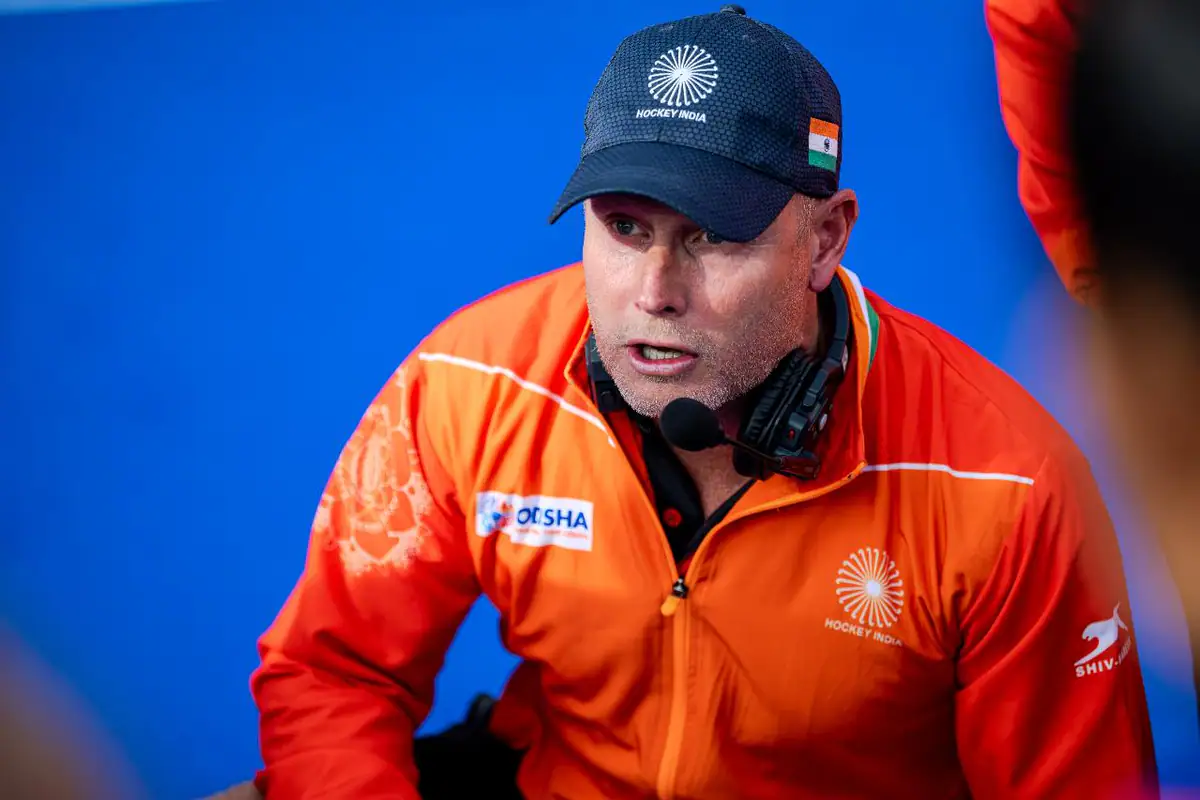
With just four days remaining before the Indian women’s hockey team begins its Asian Games 2026 campaign in Japan, Chief Coach Sjoerd Marijne has delivered a simple message to his players: past success means little once the next tournament begins.
After a historic fifth-place finish at the FIH World Cup 2026, India has quickly turned its attention towards a bigger opportunity — winning Asian Games gold and securing direct qualification for the LA 2028 Olympics.
An Asian Games title would also carry historic significance for Indian women’s hockey. India has won the women’s hockey gold medal at the Asian Games only once, in 1982. Marijne and his players are now hoping to end a 44-year wait for a second continental title.
The team arrived in Japan following a period of recovery and preparation after the World Cup. Marijne explained that the immediate priority was adjusting to the time difference while gradually increasing the intensity of training. “We were in Bangalore for active rest after returning from the FIH World Cup, and after landing in Japan, it is about adjustments to the difference in time and creating more intensity in the training sessions as we get near to the tournament,” Marijne said.
The preparation has been carefully managed by the support staff, with Dr Wayne Lombard overseeing the physical programme. Rather than simply increasing training loads, the focus has also been on recovery, strength work and monitoring the players’ readiness.
Lombard tracks factors such as how the players are feeling, how well they are sleeping and whether they are feeling fresh. That information helps determine the intensity Marijne can introduce during hockey sessions. “People think always it's about training more and more but a really important factor in this is the rest and what way you're doing the rest, but also the strength sessions,” Marijne explained.
The Indian team comes into the Asian Games with confidence after producing its best World Cup finish in 52 years. The fifth-place result included strong defensive performances against higher-ranked opponents and a notable 3-1 victory over Germany. However, Marijne has made sure that the World Cup achievement does not become a distraction.
Before leaving Bengaluru for Japan, he arranged a special dinner featuring Japanese cuisine for the players. It provided an opportunity for the team to reflect on what it had accomplished, while also drawing a line under the tournament. Marijne asked the players to identify their favourite memories from the World Cup before showing them a video featuring the team’s goals and memorable moments. The final slide of the presentation carried a simple message: “Road to Asian Games.”
For Marijne, the exercise was about celebrating the achievement before moving forward. “You have to close a chapter before you move to the next one,” he said. More importantly, he reminded his players that success cannot be assumed to continue automatically. “We took a moment to relive what we can be proud of, and I also told the players success is not guaranteed. You have to fight for it again and give even more.”
That mentality will be particularly important in Japan, where India will face another demanding tournament with the stakes extending beyond the medal itself. The squad remains unchanged from the World Cup, meaning the 11 World Cup debutants in the team will now enter the Asian Games with valuable major-tournament experience. Marijne believes their exposure to different playing cultures and styles can contribute to the team’s continued development.
At the same time, the coach is unwilling to allow the World Cup performance to create complacency. “I want more and more because if we stand still and think like we are there, that's the first stage when you stop improving,” he said. There will also be individual milestones during the tournament, most notably for captain Savita, who will become the most-capped Indian woman player when she plays her second match at the Asian Games. Marijne, however, believes such milestones will not distract the squad.
He described Savita as highly professional and focused on the team's objectives, adding that her teammates are motivated to work even harder for her. The philosophy within the squad is collective: milestones are celebrated together rather than becoming individual priorities. India’s defensive organisation will be another key component of its campaign. At the World Cup, the team demonstrated an ability to stay in games against higher-ranked opponents and then take advantage of opportunities, including the victory over Germany.
Marijne believes those performances have reinforced the team’s belief in its methods, but he also stressed that the system will only work if the players continue to execute the fundamentals. “The basics need to be good. The running, the intensity, all these small things,” he said. Interestingly, Marijne is not allowing preparations to become overly focused on specific opponents. Even with China expected to pose a significant challenge, the coach says he rarely uses the names of opposition countries during team talks.
“I must say, I hardly use the words 'China', 'Japan', 'Korea' or any other country during our team talks. We are really busy with ourselves,” he said.
The emphasis is therefore on controlling what India can control: its own intensity, execution, defensive structure and attacking opportunities.
For Marijne, the connection between the players, coaching staff, Hockey India and the Sports Authority of India remains central to the team's progress. He has also received comparisons with the famous “Chak De India” coaching character, something he says has been warmly received within the group.
“I feel very appreciated here in India,” Marijne said, adding that the players themselves sometimes speak about the “Chak De India” stories.
Now comes the real test. India enters the Asian Games with the confidence of a historic World Cup campaign but without the luxury of relying on past results. The objective is clear: compete for gold, end a 44-year wait for a second Asian Games title and secure a direct route to the LA 2028 Olympics.
Marijne’s message to the players is equally clear the World Cup chapter is closed, and another opportunity has begun.
Success is not guaranteed. They have to fight for it again.
Comments (0)
to post comments, replies, and votes.
Loading comments…