Arnav Paparkar Battles Into Junior French Open Second Round on Roland-Garros Debut

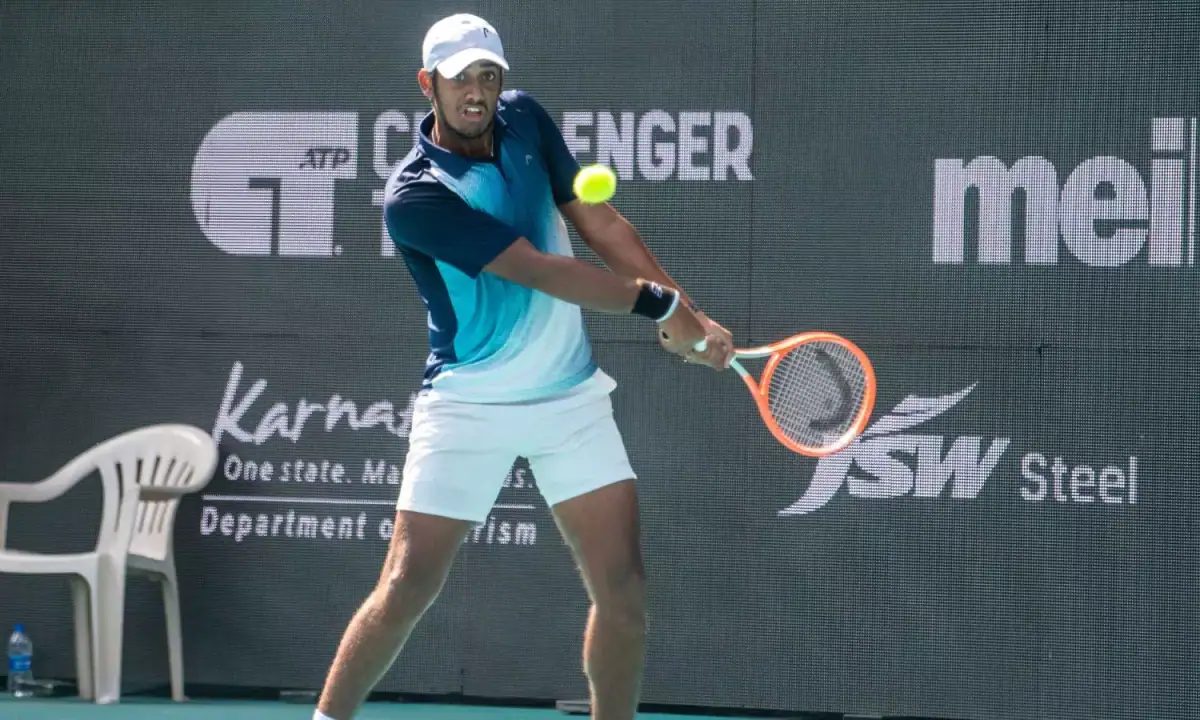
India's leading junior tennis player Arnav Paparkar made a winning start to his Roland-Garros campaign, producing a composed and mature performance to advance to the second round of the Junior French Open 2026.
Competing in the main draw of a Grand Slam for the first time, the Indian youngster defeated Germany's Vincent Reisach 7-6(4), 6-4 in the opening round, securing the first Grand Slam main draw victory of his career. The result marks another important milestone for Paparkar, who has steadily climbed the junior rankings over the past year and arrived in Paris as India's highest-ranked junior player.
Against a quality opponent ranked just behind him in the ITF junior rankings, the Indian showed resilience under pressure and displayed the mental strength needed to succeed on one of tennis' biggest stages.
The opening set proved to be the most critical phase of the contest. For much of the set, both players held serve comfortably and looked evenly matched from the baseline. However, the momentum appeared to swing in Reisach's favour when the German moved ahead and earned the opportunity to serve for the set at 5-4.
At that stage, Paparkar was facing the possibility of falling behind on his Grand Slam debut.
Instead, the Indian responded with one of the most important games of the match. Showing impressive composure, he broke back immediately to level the score and deny Reisach the chance to close out the set. The break not only kept Paparkar alive in the opener but also shifted momentum decisively.
From that moment onward, the Indian looked increasingly confident, while Reisach struggled to regain the initiative.
With neither player able to create further separation, the first set moved into a tiebreak. Such moments often reveal a player's temperament, particularly at junior level where nerves can play a significant role. Paparkar handled the situation superbly. The Indian remained aggressive without taking unnecessary risks and consistently forced Reisach into difficult positions.
His reward was a 7-4 victory in the tiebreak, giving him a one-set advantage after a hard-fought opening hour. Winning the first set after trailing at a crucial stage proved to be a massive psychological boost. Having escaped trouble, Paparkar now had the momentum firmly on his side.
The second set saw Paparkar build on that momentum. His baseline game became increasingly effective as the match progressed, with the Indian finding greater consistency from both wings. One of the standout features of his performance was his ability to construct points patiently on the clay courts of Roland-Garros. Rather than rushing points, Paparkar was willing to engage in longer rallies and gradually work his way into advantageous positions.
The strategy paid off.
He secured the crucial break that separated the players and then protected his own serve effectively. While Reisach attempted to fight his way back into the contest, Paparkar never allowed the German to gain significant momentum. Serving for the match, the Indian showed impressive composure to close out the contest 6-4 and complete a straight-sets victory.
The significance of the result extends beyond simply reaching the second round. This was Paparkar's first victory in a Grand Slam main draw, an achievement that represents an important step in his development. Grand Slam events offer a unique challenge, with greater attention, higher expectations and stronger competition than most junior tournaments.
To win on debut demonstrates that Paparkar is capable of handling those demands. Currently ranked No. 31 in the ITF junior rankings, he has been regarded as one of India's most promising tennis prospects for some time. His performance in Paris reinforces that belief.
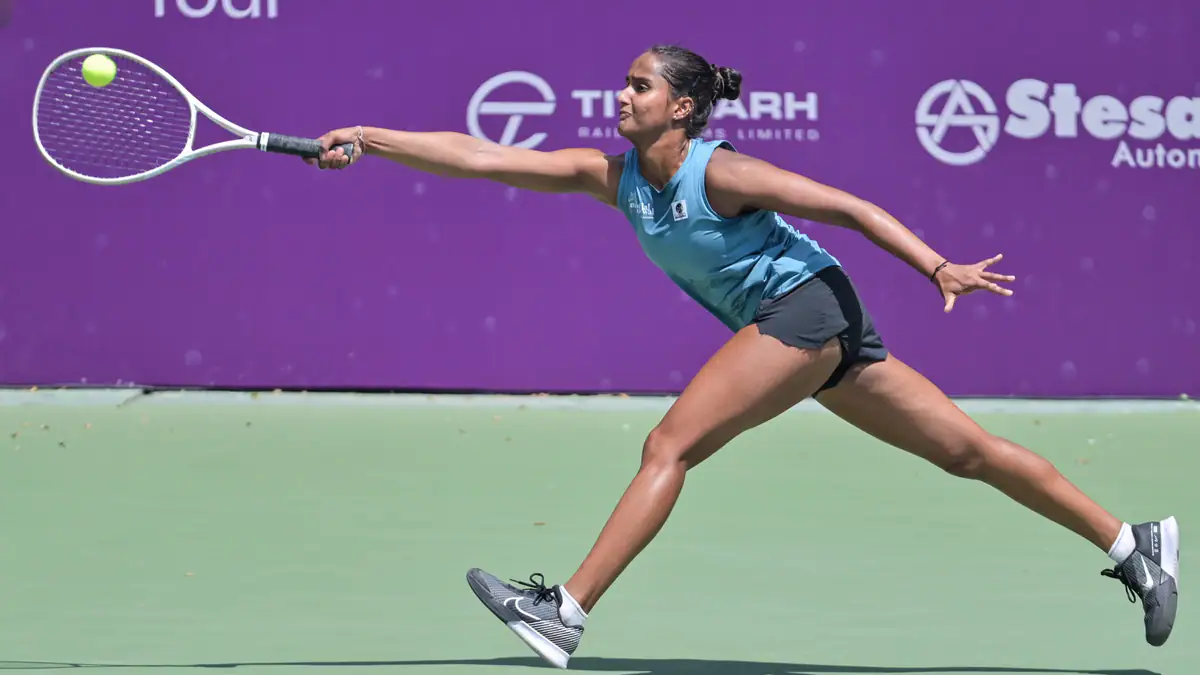
Paparkar's victory also adds to what has been an encouraging tournament for Indian junior tennis. Alongside Maaya Rajeshwaran Revathi's win in the girls' singles draw, India now has representation progressing in both junior singles competitions at Roland-Garros. Such results are important for the future of Indian tennis.
While established stars continue to compete on the professional circuit, the emergence of young players capable of succeeding at Grand Slam junior events provides optimism for the years ahead. Paparkar's success is another reminder of the talent currently developing within Indian tennis.
Tough Test Awaits
The challenge now becomes significantly harder. Paparkar will next face 15th seed Kuan-Shou Chen of Chinese Taipei, currently ranked World No. 17 in the ITF junior rankings. Chen enters the match as the higher-ranked player and one of the tournament's seeded contenders.
However, Paparkar's opening-round victory showed that he possesses both the game and temperament to compete at this level. His ability to recover from difficult situations against Reisach demonstrated resilience that will be essential against stronger opponents. Regardless of what happens in the next round, the Indian has already achieved an important milestone in Paris.
A first Grand Slam main draw win is a moment every young player remembers, and for Arnav Paparkar, it could be the beginning of a memorable Roland-Garros campaign.
After arriving in Paris as India's top junior, he has taken the first step towards justifying that status on one of the sport's biggest stages.
Comments (0)
to post comments, replies, and votes.
Loading comments…