South Korea Announces Squad for the Historic Davis Cup Final 8 Spot
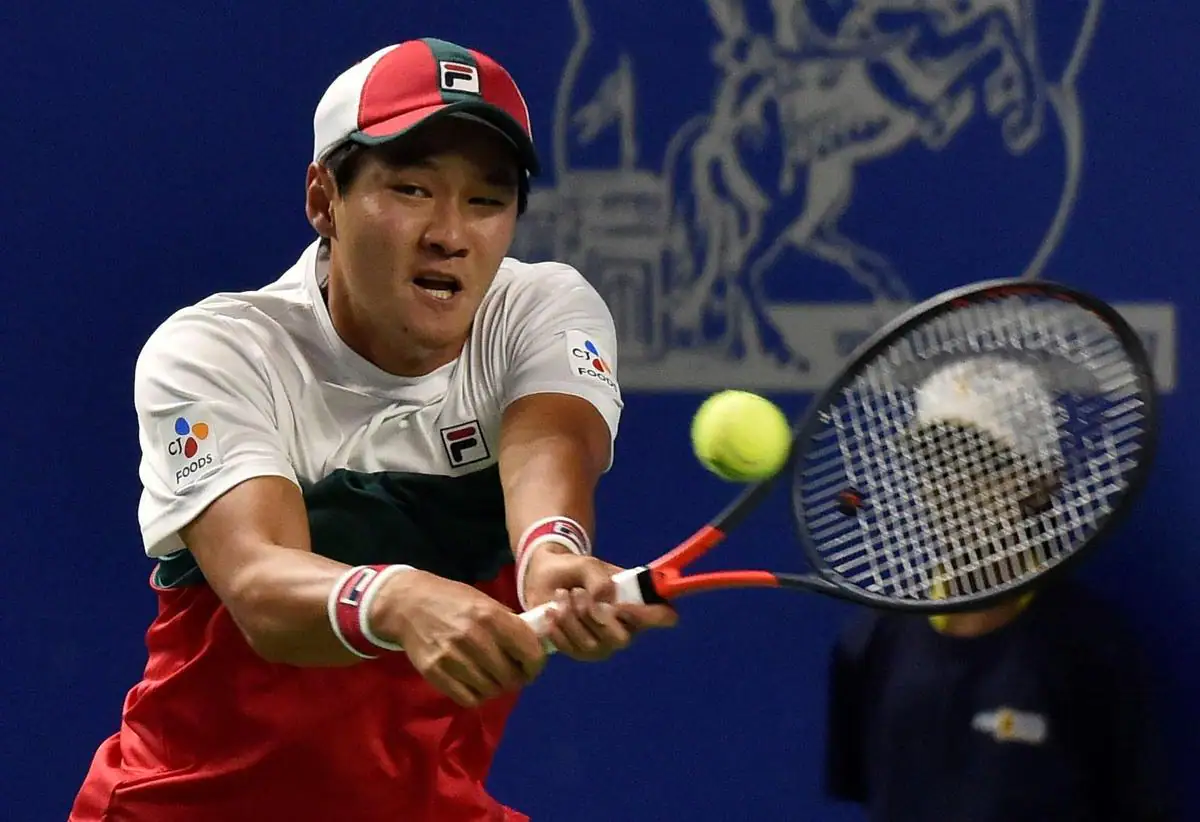
India face South Korea in Seoul on September 18-19 with a historic Davis Cup Final 8 place at stake as both nations chase a breakthrough for Asian tennis.
History will be on the line when South Korea hosts India in the Davis Cup Round of 16 on September 18 and 19, with both nations chasing a place in the season-ending Final 8 in Bologna.
The stakes could hardly be bigger.
Since the Davis Cup adopted its multi-team Finals format in 2022, no Asian nation has managed to reach the elite eight-team stage. That will change this year. The winner of the Seoul tie will become the first Asian country to secure a place in the Final 8 under the modern format.
For South Korea, the opportunity comes after a statement victory over Argentina in February. The Koreans defeated the 2016 Davis Cup champions 3-2 at home, showing their ability to handle the pressure of a decisive tie.
India also arrive with confidence after defeating the Netherlands 3-2 in Bengaluru in February. The two teams have therefore earned their place in Seoul through impressive victories, setting up a contest with much more at stake than regional bragging rights.
South Korea’s experienced squad
South Korea captain Jong-Sam Chung has named a squad that combines established international experience with players returning from mandatory military service. Leading the team is Soonwoo Kwon, currently ranked No. 152 in the ATP singles rankings. His present ranking, however, does not tell the complete story. Kwon has reached a career-high No. 52 and has considerable experience competing at the highest level.
His return is particularly significant because he has spent the last 18 months completing compulsory military service. Kwon demonstrated his value during South Korea's February victory over Argentina, where he defeated Thiago Tirante in the reverse singles to keep the tie alive. His ability to produce under pressure will again be central to South Korea's hopes in Seoul.
Another major name in the Korean squad is Hyeon Chung. Currently ranked No. 582, Chung has previously climbed as high as No. 19 in the world. He remains best known for his extraordinary run at the 2018 Australian Open, where he reached the semifinals after defeating both Novak Djokovic and Alexander Zverev.
Like Kwon, Chung's current ranking does not accurately reflect the level he has previously reached. He was South Korea's hero against Argentina in February, defeating Marco Trungelliti in the decisive fifth rubber to complete the comeback and seal the tie.
South Korea's third singles option is Seongchan Hong, who is currently unranked but has reached a career-high ranking of No. 139. Hong has also recently returned from mandatory military service, giving the Korean squad three players whose current rankings do not necessarily reflect their international experience or potential.
The remaining members of the squad are Uisung Park and Jisung Nam, who provide options in doubles. Park is ranked No. 759 in singles and No. 334 in doubles, while Nam is ranked No. 119 in doubles. Their role could become particularly important because the doubles rubber has the potential to determine the direction of the entire tie.
India will arrive in Seoul knowing that this is an opportunity to make history. The Indian men's team has a long and distinguished Davis Cup history, including runner-up finishes in 1966, 1974 and 1987. But under the modern eight-team Finals format, India are still searching for their breakthrough. The current structure makes the Seoul tie especially significant. The winner does not merely advance to another qualifying round. It earns a direct place in the Final 8.
For Indian tennis, reaching Bologna would represent another important step in establishing the country's presence in the upper tier of international men's team competition.
India also has momentum from February, when they defeated the Netherlands 3-2 in Bengaluru. That victory demonstrated the importance of depth in the Davis Cup format, where individual rankings can often become secondary to a player's ability to handle the unique pressure of team competition.
Seoul promises a difficult challenge.
Playing away from home will make India's task considerably harder. South Korea will have the support of the home crowd and familiarity with the conditions. More importantly, the hosts have players with significant international experience despite their relatively modest current rankings.
Kwon's return from military service adds an element of uncertainty, but his performance against Argentina showed that he can still produce at Davis Cup level. Chung brings perhaps an even greater wealth of big-match experience. His Australian Open run in 2018, along with his victories over Djokovic and Zverev, demonstrates that he has already competed successfully against the world's best.
India will therefore need to ensure that its players do not become overly focused on rankings. The contest will ultimately come down to execution across the five rubbers, with the doubles match potentially proving decisive.
There is an added significance to this tie because of what it represents for the continent. For years, Asian men's tennis has produced individual stars but has struggled to translate that talent into sustained success at the highest level of Davis Cup competition.
The Seoul winner will finally break that barrier. South Korea have already shown that they can defeat a major tennis nation after their victory over Argentina. India, meanwhile, has demonstrated their resilience by overcoming the Netherlands.
Now, one of them stands two days of tennis away from Bologna. September 18 and 19 will determine not only who wins the India-South Korea Davis Cup tie, but also which Asian nation writes a new chapter in the history of the modern Davis Cup.
For both teams, the message is simple: win in Seoul, and history follows.
Comments (0)
to post comments, replies, and votes.
Loading comments…