Asian Games 2026 Boxing Finals Preview: Lovlina, Parveen and Ankush Chase Gold
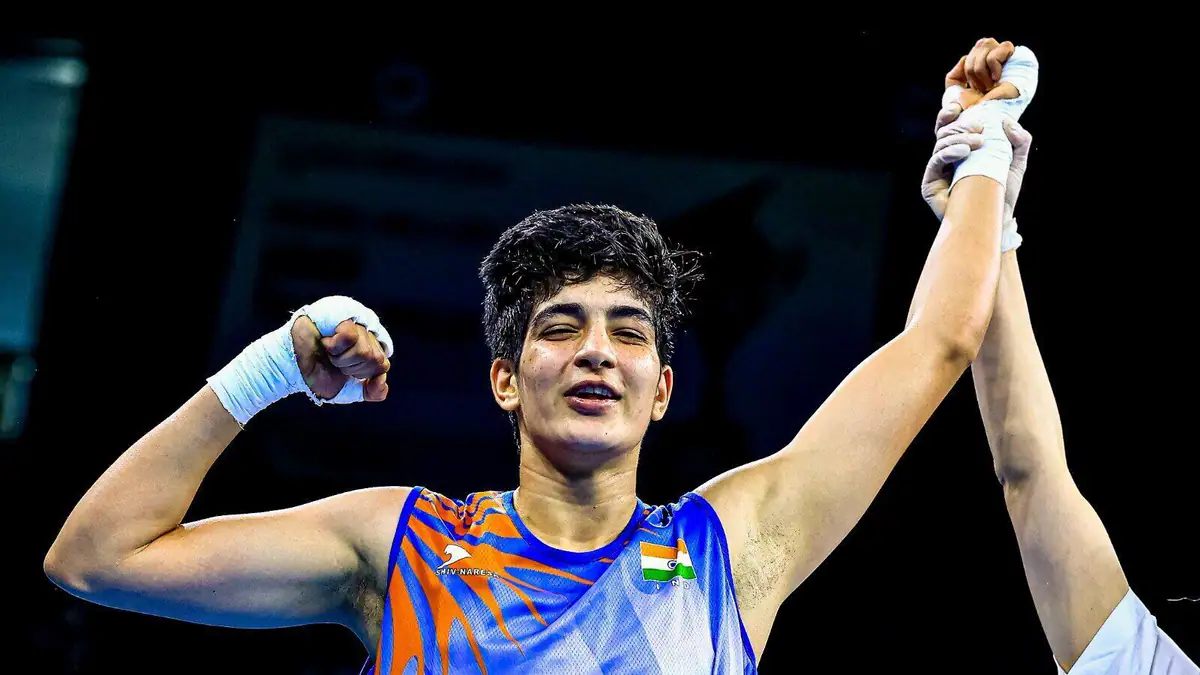
The 2026 Asian Games boxing competition reaches its decisive stage at Nishio Gymnasium on Friday, October 2, with India represented in three gold-medal bouts.
Lovlina Borgohain, Parveen Hooda and Ankush Panghal have all negotiated demanding routes to the championship bouts, but none faces a straightforward assignment. Each final presents a different tactical problem: Lovlina must keep China’s Bao Ziyi at range, Parveen has to solve Chinese Taipei’s Chen Nien-chin from a southpaw stance, while Ankush must find a way through South Korea’s disciplined counter-punching of Kim Minseong.
The three bouts also underline the contrasting paths taken by India’s finalists. Lovlina arrives after a physically demanding semifinal, Parveen has benefited from a relatively lighter route, while Ankush enters the final after producing one of the tournament’s significant upsets.
Lovlina Borgohain vs Bao Ziyi: Range Control Against Pressure
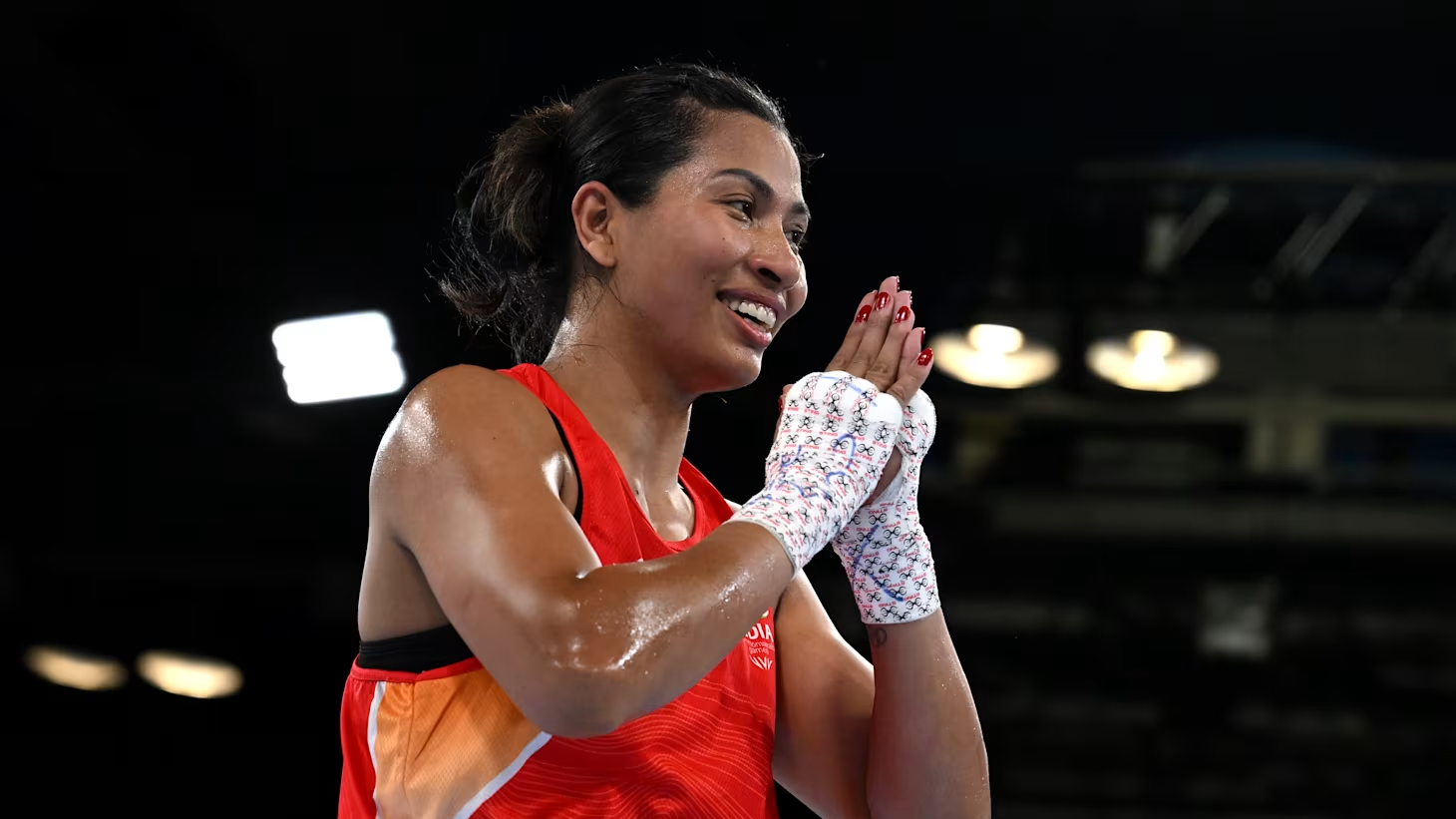
The women’s 75kg final pits India’s Olympic bronze medallist and 2023 world champion Lovlina Borgohain against China’s reigning Asian Elite champion Bao Ziyi. Lovlina had to work considerably harder to reach the final. She defeated South Korea’s Seong Suyeon 5-0 in the quarterfinal before edging Kazakhstan’s Natalya Bogdanova 3-2 in a closely contested semifinal. Lovlina lost the opening round against Bogdanova but responded strongly in the second, taking all five judges' cards. She then relied on defensive counters to secure the deciding verdict.
Bao, in contrast, has gone through the tournament without dropping a decision. She defeated Thailand’s Porntip Buapa 5-0 and Vietnam’s Luu Diem Quynh 5-0, giving her a significantly cleaner route into the final.
The tactical battle is straightforward in theory but difficult to execute. Lovlina's biggest weapon is distance. Her lead jab allows her to dictate range, disrupt forward movement and set up straight punches and check hooks. If she can remain in the centre of the ring and pivot away rather than allowing herself to be trapped on the ropes, her length can make Bao work for every scoring opportunity.
Bao's preferred fight is much closer. She looks to close the neutral space, enter behind the jab and work with compact hooks and combinations at mid-range. That approach could neutralise Lovlina's reach advantage if the Chinese boxer consistently gets inside. The opening round therefore becomes critical. Lovlina needs to establish her jab early and prevent Bao from building pressure. If Bao turns the bout into sustained close-range exchanges, the physical demands could become increasingly significant for the Indian boxer.
Parveen Hooda vs Chen Nien-chin: Southpaw Geometry Takes Centre Stage
The women’s 65kg final brings together two highly accomplished fighters with contrasting styles. Chinese Taipei’s Chen Nien-chin is a former world champion and Paris 2024 Olympic bronze medallist. She defeated Thailand’s Paris Olympic finalist Janjaem Suwannapheng in the quarterfinal and then survived a 3-2 semifinal against DPR Korea’s Hwang Hyo Sun.
Parveen, meanwhile, has been one of India's most convincing finalists. After receiving a walkover against Tajikistan’s Malika Nozimova, she defeated Uzbekistan’s Navbakhor Khamidova 5-0 before producing another 5-0 victory against China's Li Shu. The matchup is particularly interesting because Parveen fights southpaw while Chen is orthodox.
Parveen's recent tactical development has centred on patience and distance management. Rather than rushing forward, she has increasingly operated from the centre of the ring, using lateral movement and her straight left to score from range. That could be important against Chen, whose game is built around explosive entries. Chen wants to close distance quickly, slip the incoming jab and unleash overhand rights and short hooks from inside.
For Parveen, the priority will be denying Chen that pocket. The Indian boxer must maintain her lead-foot positioning, create clean lanes for the straight left and avoid being pinned against the ropes. Chen's semifinal showed that she can be frustrated by opponents who refuse to stand and trade. Parveen's cleaner route to the final also means she enters the contest with less accumulated punishment.
Ankush Panghal vs Kim Minseong: The Final Built on Ring Geography
The men's 80kg final may offer the most dramatic contrast in styles. Ankush Panghal has been one of India's breakout performers at these Games. The 21-year-old reached the final after unanimous victories over Bahrain's Hamsa Vogel and Tajikistan's Nekruz Salimov before defeating Uzbekistan's Fazliddin Erkinboev 4-1.
The semifinal was particularly significant. Ankush trailed 1-4 after the opening round but changed his approach, moving inside and increasing his combination work. He won the second round 3-2 before sweeping the final round 5-0. That adjustment demonstrated that Ankush is not dependent on one tactical pattern.
Kim Minseong presents a completely different challenge. The South Korean has reached the final through victories over Kazakhstan's Sabrizhan Akkalykov, Indonesia's Maikhel Roberrd Muskita and Jordan's Hussein Iashaish. His 5-0 semifinal win underlined his ability to control distance against an experienced pressure fighter.
Kim prefers to operate from the perimeter. He uses lateral movement, draws opponents into lunges and responds with pull-counters and straight punches. His objective is not necessarily to win through volume but through clean scoring while limiting his opponent's opportunities. That makes ring geography the central issue.
Ankush cannot simply follow Kim around the ring. He needs to cut off exits diagonally, force Kim toward the ropes and then work the body before bringing his uppercuts through the guard. If Ankush attacks in straight lines, Kim's movement should allow him to score while avoiding prolonged exchanges.a
The Indian corner's mid-fight adjustment against Erkinboev demonstrated that Ankush can alter his tactics under pressure. The final will require another level of discipline.
India's three finalists have reached Friday's gold-medal session through distinctly different routes. Lovlina's contest is about distance versus pressure. Parveen's is about southpaw geometry versus explosive entries. Ankush's is about ring cutting versus counter-punching.
The common requirement is tactical discipline. At this stage of an Asian Games tournament, raw aggression alone is unlikely to be enough. Each Indian boxer must make the opponent fight on terms that maximise their own scoring strengths.
For Lovlina, that means keeping Bao outside. For Parveen, it means refusing Chen the inside exchanges she wants. For Ankush, it means turning Kim's movement into a disadvantage by controlling where the fight takes place.
Three finals, three different tactical equations — and three opportunities for India to finish the boxing tournament with gold.
Comments (0)
to post comments, replies, and votes.
Loading comments…