Breaking the 36-Year Drought: How Arnav Paparkar Rewrote Indian Junior Tennis
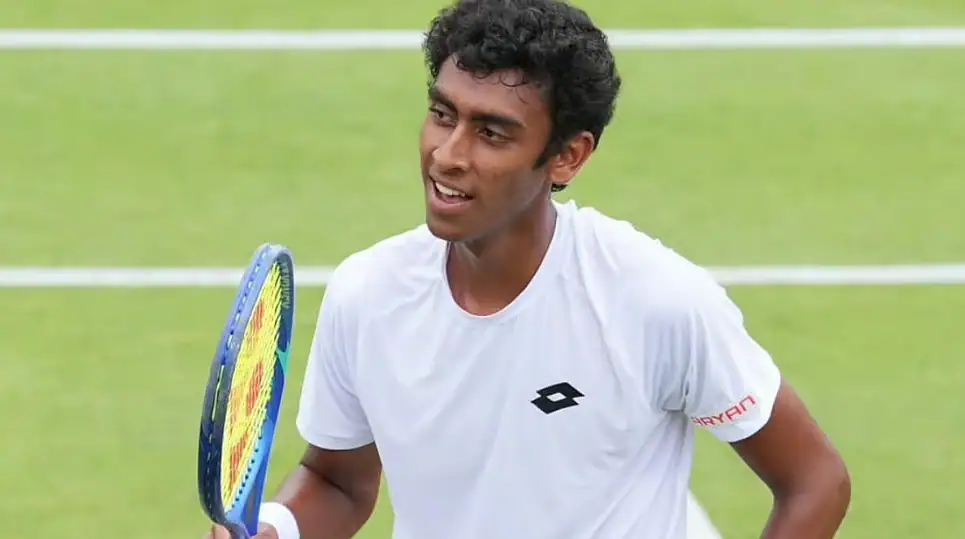
How 18-year-old Arnav Paparkar ended India's 36-year Junior Grand Slam drought with a historic Wimbledon run.
How 18-year-old Arnav Paparkar ended India's 36-year Junior Grand Slam drought with a historic Wimbledon run.
If you took a walk down the manicured paths of the All England Club on a warm afternoon in July, you would hear the familiar thud of yellow balls against grass courts that have hosted every iconic era of modern tennis. But for Indian fans, Wimbledon’s Junior Boys’ Singles draw had long felt like a locked vault. Ever since a fiery teenager named Leander Paes lifted the junior trophy back in 1990, generations of Indian prospects had tried and failed to reach the final eight of the tournament. Decades passed, traditions shifted, and the long wait turned into an uncomfortable symbol of India’s struggle to produce world-class singles talent.
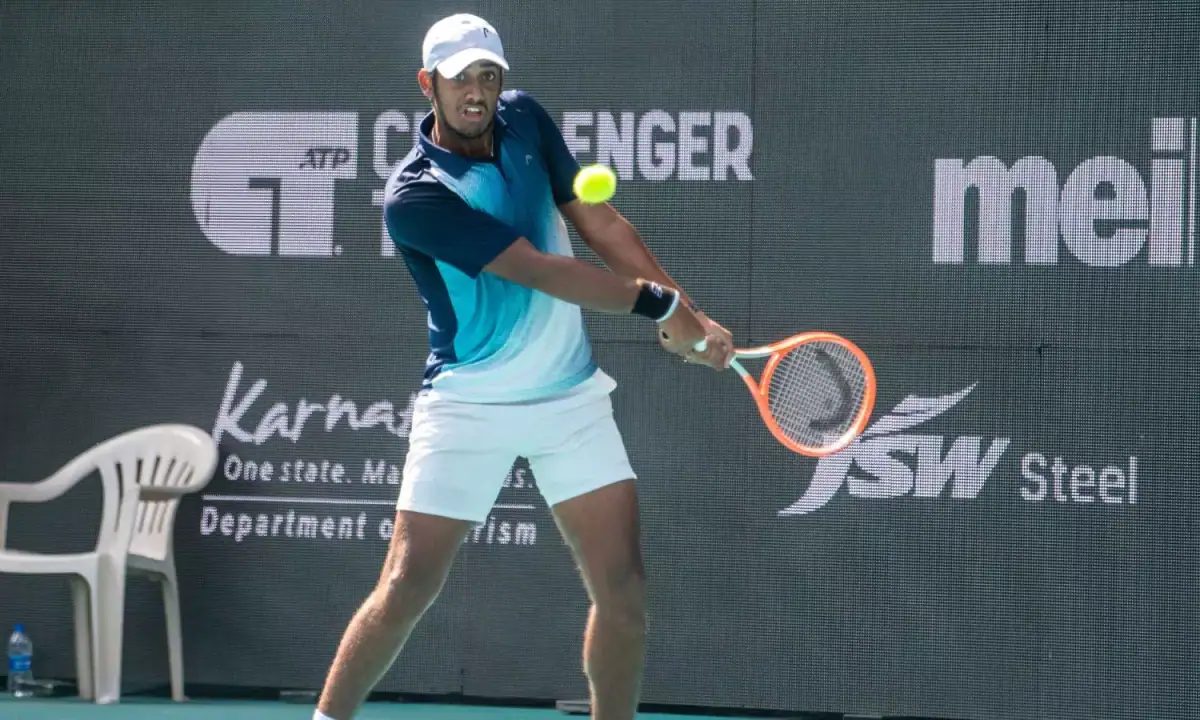
That silence was shattered in July 2026. Armed with a 208 km/h serve, a notebook full of tactical opponent breakdowns, and an unshakeable court demeanour, 18-year-old Arnav Paparkar stormed into the quarter-finals at SW19. He did not stumble into the last eight through lucky draws or opponent retirements; he tore through the bracket, knocking out top international seeds with staggering ease. In doing so, the youngster from Pune did far more than advance his own career. He smashed a psychological ceiling that had hovered over Indian tennis for nearly four decades.
To understand how Paparkar reached the manicured lawns of London, you have to look back to a noisy sports complex in Pune, India. Born into a non-sporting family, his entry into tennis was purely accidental. As a six-year-old taking swimming lessons, he spent his breaks hanging near the perimeter fence, watching older children swing racquets on the adjacent hard courts. A local coach noticed the quiet child staring at every exchange with intense focus and invited him to hit a few balls.
What began as simple curiosity morphed into an outright obsession. While his peers drifted between cricket and football, Paparkar fixated entirely on tennis. Spotting that rare fire, his family rallied behind him with life-altering commitments. His mother, a practising physician, made the difficult choice to shut down her clinic so she could travel full-time with him across the punishing junior circuit. His older brother frequently stayed home alone while the parents travelled, ensuring that every spare rupee and ounce of energy went toward international travel, tournament entries, and elite coaching stints at Spain’s Soto Tennis Academy.
For years, the critique aimed at rising Indian tennis players followed a predictable script: excellent touch and court awareness, but lacking the baseline weight, serve speed, and physical durability required on the modern global tour. Paparkar flipped that narrative on its head. Standing over six feet tall, he spent his teenage years building an aggressive, modern game built around heavy groundstrokes and a devastating first serve.
By early 2026, Paparkar had surged to World No. 19 in the ITF Junior rankings, having held the top spot in India's Under-18 rankings for 21 consecutive weeks. Yet, raw power alone is useless on grass if your movement fails you. Recognising the unique demands of lawn tennis, Paparkar spent two weeks training on Spanish grass courts prior to Wimbledon, adjusting his centre of gravity to handle the low, unpredictable skids of the surface and refining his return mechanics at the Roehampton warm-up tournament.
Equally vital to his rise is his analytical approach. An avid football fan, Paparkar studies tennis like a tactical board game. He keeps meticulous notes on rival players, analysing their tendencies on clutch points, their preferred passing shot angles, and how their ball flight changes under pressure. When he steps onto the court, he operates like a strategist executing a thoroughly researched game plan.
The Giant-Killing Blitz at Wimbledon
That tactical maturity reached a crescendo during the second week of July. Paparkar opened his Wimbledon campaign with a confident straight-sets victory against British wildcard Joshua Craze. But it was his second-round clash against America’s Keaton Hance the tournament’s third seed and junior world No. 3 that made the tennis world sit up and take notice.
Facing one of the most touted junior players on the planet, the Pune native put on a serving masterclass. Blasting six aces, keeping his unforced errors remarkably low, and conceding just 18 points on his own serve the entire match, Paparkar swept past Hance 6-2, 6-3 without offering up a single break point. It was a statement victory, but he was nowhere near done.
In the round of 16, Paparkar went toe-to-toe with Japan’s Ryo Tabata. Tabata was a familiar adversary who had beaten Paparkar in two prior meetings, including a heartbreaking loss where the Indian teenager had held five match points before letting the contest slip away. Rather than letting those ghosts haunt him, Paparkar delivered a clinical, 52-minute demolition. Hammering eight aces and winning 23 out of 25 points on his first serve, he ran away with a 6-2, 6-1 victory.
With that win, Paparkar etched his name into Indian sporting history. He became the first Indian player in 36 years to reach the Wimbledon boys' singles quarter-finals since Leander Paes in 1990 and the first Indian to reach the last eight of any Junior Grand Slam since Yuki Bhambri’s run at the 2009 US Open. Though his historical campaign eventually halted in a hard-fought 2-6, 5-7 quarter-final loss to American Jordan Lee, the damage to the status quo was already done.
Why is this run such a watershed moment? Because for over a decade, Indian singles tennis has suffered from a painful drought on the ATP tour. While the nation has consistently produced world-class doubles champions, singles prospects often stagnated during the crucial transition from junior dominance to senior success.
Paparkar’s journey shows what happens when natural talent meets proper structural support. His development was bolstered by targeted funding and infrastructure from the Maharashtra State Lawn Tennis Association (MSLTA), the Mahatennis Foundation, the state government’s "Mission Lakshyvedh" initiative, and corporate partners like Aryan Pumps. This safety net gave him the freedom to compete abroad, adapt to different court surfaces, and build the physical engine necessary for elite competition.
Most importantly, Paparkar has given young players across India something invaluable: proof of concept. When an 18-year-old from Pune can out-serve, out-think, and out-play the world's best juniors on grass, it shifts the belief system for every kid swinging a racquet in Mumbai, Bengaluru, or New Delhi. Arnav Paparkar didn't just break a 36-year-old barrier he showed the next generation that they belong on the sport’s biggest stages.
Comments (0)
to post comments, replies, and votes.
Loading comments…