Davis Cup: Manas Dhamne Drafted into India Squad for High-Stakes South Korea Tie
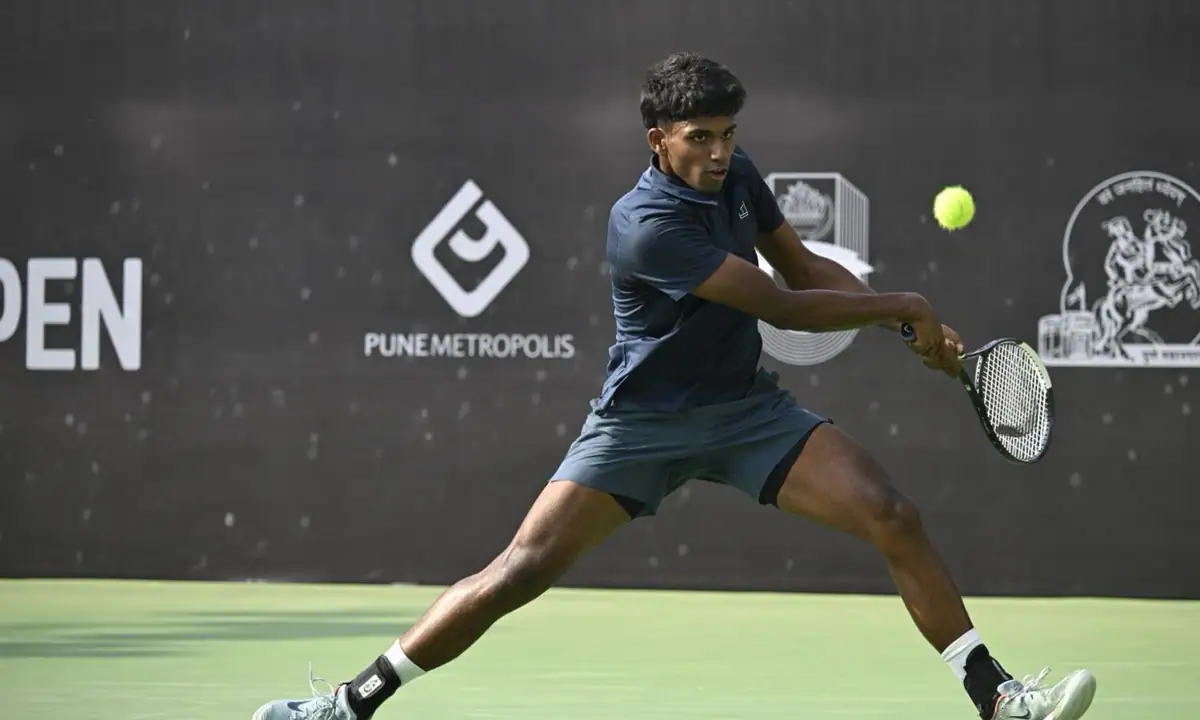
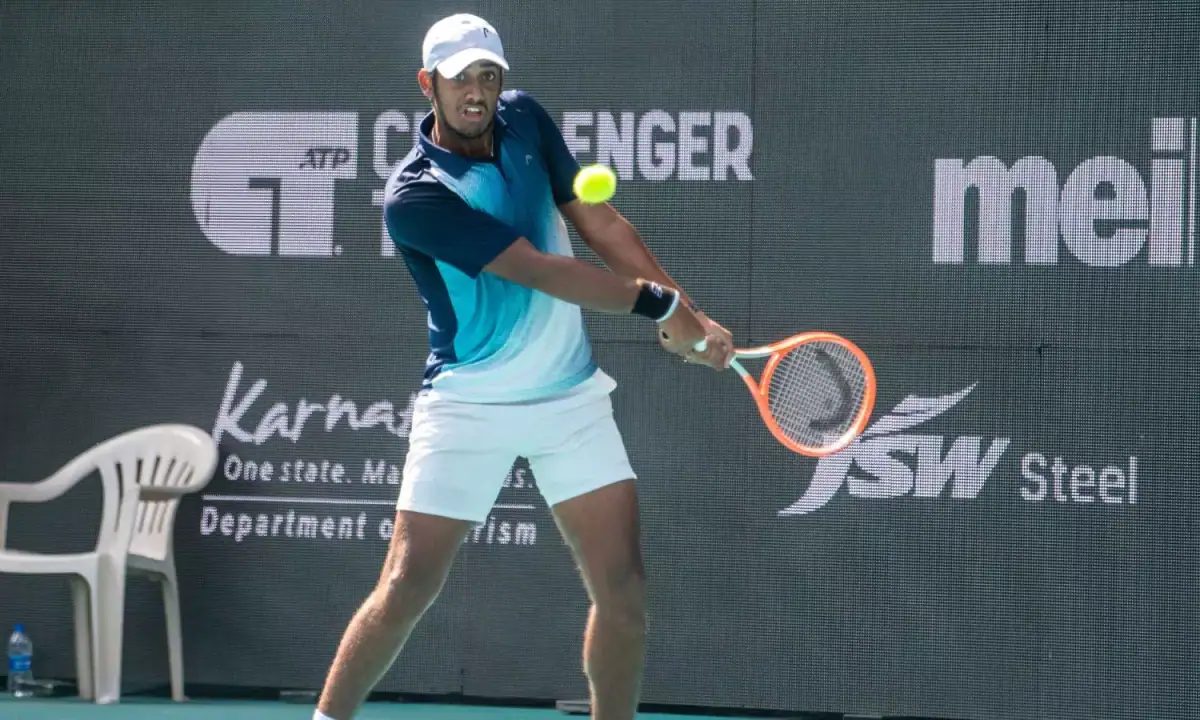
Manas Dhamne has been drafted into India's Davis Cup squad for the crucial Qualifier 2 tie against South Korea, with the two teams set to meet at the Olympic Tennis Centre in Seoul on September 18 and 19.
The selection gives the promising Indian player an opportunity to experience the country's premier men's team competition as India prepares for a potentially decisive tie against a South Korean side that will have home advantage.
The Professional Selection Committee of the All India Tennis Association (AITA) selected the squad after considering player rankings, availability, recent performances, and physical fitness.
India's five-member squad will comprise Sumit Nagal, Manas Dhamne, Dhakshineswar Suresh, Yuki Bhambri, and N. Sriram Balaji.
Siddharth Rawat has been named as the reserve, while junior Arnav Paparkar has been included as an additional reserve.
Dhamne's inclusion is one of the notable developments from the selection. The young Indian has been handed an opportunity to train and work within the Davis Cup environment at a time when Indian tennis is looking to build greater depth beyond its established names.
For a developing player, the experience of traveling with the national team, preparing alongside senior players, and being exposed to the intensity of a Davis Cup tie can be valuable for long-term progression.
Dhamne will now be part of a squad that combines singles experience with considerable doubles expertise.
The presence of players such as Nagal, Bhambri, and Balaji provides the team with established Davis Cup experience, while Dhakshineswar Suresh arrives after playing a central role in India's memorable victory over the Netherlands earlier this year.
India's qualification for the second round of the current Davis Cup Qualifiers was built around an outstanding performance from Dhakshineswar Suresh. Facing the Netherlands in Bengaluru in February, India produced one of the biggest upsets of the round, defeating a team ranked sixth in the world despite India entering the tie ranked 33rd and without a singles player inside the world's top 250 at the time.
The result demonstrated India's ability to compete effectively despite the apparent gap in rankings.
Suresh was central to the victory. He won both of his singles rubbers and also partnered Yuki Bhambri to victory in the doubles. With the tie level at 2-2, Suresh returned for the decisive fifth rubber and defeated Guy den Ouden 6-4, 7-6(4) to seal India's victory. The performance provided Suresh with a major breakthrough on the Davis Cup stage and demonstrated his ability to handle pressure when the result was on the line.
South Korea will present a different challenge. The Koreans will have a home advantage in Seoul and traditionally possess a strong level of comfort on hard courts. They also arrive in the second round after producing an upset of their own, defeating 2016 champions Argentina 3-2 in Busan. That result underlined the competitiveness of the Korean team and ensured that the September tie will feature two nations that enter the contest with significant momentum.
India and South Korea are also closely matched in the Davis Cup standings, making the contest difficult to separate on paper. The last meeting between the two nations came in 2016, when India defeated Korea 4-1 in Chandigarh in an Asia/Oceania Group I tie played on grass.
This time, however, the surface will be hard courts in Seoul, giving the hosts a setting more suited to their preferred conditions. The significance of the tie extends beyond simply advancing another round. The winner of the September contest will qualify for the Davis Cup Final 8 in November.
That makes the Seoul tie a winner-takes-all contest for a place among the final eight teams in the competition. For India, reaching this stage is already significant. The victory over the Netherlands took the country into the second round of the qualifiers for the first time since the current Davis Cup format was introduced in 2019. A victory over South Korea would represent another important step for Indian tennis and give the country an opportunity to compete against the world's strongest teams at the Final 8.
Paparkar Included as Additional Reserve
Alongside Dhamne, another young player has been brought into the wider squad environment. Arnav Paparkar has been named as an additional reserve following his recent performances, including his participation at Junior Wimbledon. The selection committee has closely followed his progress at the international junior level and believes that exposure to the Davis Cup environment will support his development. For Indian tennis, creating a pathway between junior and senior competition remains an important part of building long-term depth.
Paparkar's inclusion provides him with an opportunity to observe and learn from senior members of the squad while gaining experience of international team competition.
The squad for Seoul brings together several different strands of Indian tennis. Nagal provides singles experience, while Bhambri and Balaji bring significant doubles expertise. Suresh enters the tie after his decisive performance against the Netherlands, while Dhamne represents the next generation looking to establish himself at the senior level.
The team will be led by captain Rohit Rajpal, with Ashutosh Singh serving as coach. Dr. Debashish Das and Yash Pandey will accompany the squad as support staff.
The challenge is now clear. India must overcome a South Korean side playing at home, on a familiar surface, with a place in the Davis Cup Final 8 waiting for the winner. After stunning the Netherlands against the odds in Bengaluru, India has another opportunity to produce a major Davis Cup result.
The road to the Final 8 now runs through Seoul, and Manas Dhamne will be part of India's attempt to take the next step.
Comments (0)
to post comments, replies, and votes.
Loading comments…