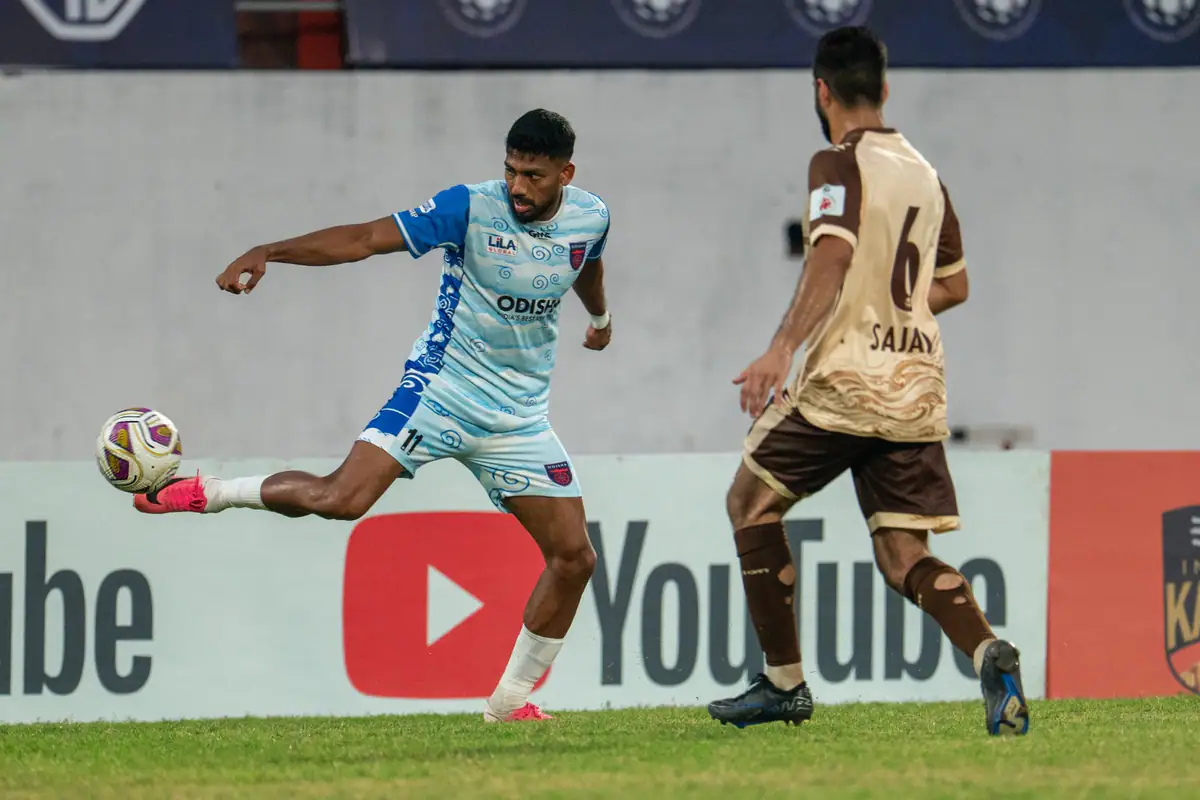
From Jakarta Glory to Nagoya Uncertainty: The Rise, Fall, and Crossroads of Indian Football at the Asian Games

Indian football’s journey at the Asian Games is one of the most dramatic arcs in the country’s sporting history from continental dominance in the 1960s to a very real possibility of missing out on the 2026 edition.
It is not just a story of results, but of systems, leadership, and missed transitions across generations. The high point of Indian football came at the 1962 Asian Games in Jakarta a tournament that remains unmatched in the country’s footballing history. Under the visionary coaching of Syed Abdul Rahim, India defeated South Korea 2-1 in the final to win the gold medal, cementing its place as the best team in Asia. Rahim’s influence went far beyond tactics. He introduced structured training methods, positional discipline, and a progressive attacking system that was ahead of its time. India’s style combined technical intelligence with fluid attacking play, led by legends like Chuni Goswami, P.K. Banerjee, and Tulsidas Balaram.
What made the triumph even more remarkable was the hostile environment in Jakarta. Political tensions had created an unfriendly atmosphere, yet the Indian team thrived under pressure. That victory symbolised not just sporting success, but resilience and identity. At that moment, India was not just competitive it was a benchmark for Asian football.
The Gradual Decline: Post-1962 to 1970
The decline began almost immediately after Rahim’s passing in 1963. His absence created a vacuum that Indian football never adequately filled. While India still managed a silver medal at the 1964 AFC Asian Cup and a bronze at the 1970 Asian Games, these successes masked deeper structural issues. The 1970 bronze in Bangkok was the last significant international medal India would win in football. That team, led by Syed Nayeemuddin and featuring players like Mohammed Habib and Subhash Bhowmick, showed glimpses of the past, but the system around them was already weakening.
There was no long-term roadmap. No investment in youth development. No tactical continuity. Indian football was surviving on residual quality rather than evolving.
The 1974 Asian Games in Tehran exposed the extent of the decline. India lost all its group matches, including a humiliating 1-7 defeat to China. It was a turning point the moment India fell out of Asia’s elite bracket. From there, the trajectory was steeply downward. Through the 1980s and 1990s, India became increasingly irrelevant in continental football. Administrative inefficiencies, lack of infrastructure, and the growing dominance of cricket further pushed football to the margins.
One of the most damaging phases came when India did not even participate in the 1990 and 1994 Asian Games due to internal conflicts and administrative decisions. An entire generation lost crucial exposure, widening the gap with the rest of Asia. The talent pipeline weakened, and the absence of professional structures meant that India could not keep pace with rapidly developing nations like Japan and South Korea.
The Modern Era: U-23 Shift and Continued Struggles
In 2002, the Asian Games football competition transitioned to an Under-23 format, aligning with the Olympic model. This shift was meant to encourage youth development, but for India, it exposed long-standing weaknesses. Since then, India has never won a medal in the Asian Games. The best performances have been Round of 16 finishes in 2010 and 2022, but even those came without sustained consistency. Preparation has often been chaotic. In 2014, the team struggled with logistics and lack of match readiness. In 2018, India did not even participate after the Indian Olympic Association refused to clear the team based on ranking criteria.
The 2022 edition (held in 2023) saw India reach the knockouts, but even that campaign was marred by poor preparation, last-minute squad changes, and club-versus-country conflicts. Indian football at the Asian Games has become reactive rather than strategic.
Now, as the 2026 Asian Games in Aichi-Nagoya approach, Indian football faces a new low potential non-participation due to strict government eligibility criteria. The Ministry of Youth Affairs and Sports has mandated that only teams ranked within the top 8 in Asia or those with comparable recent performances will be allowed to participate. India currently sits far outside that bracket, both in continental and global rankings.
Additionally, India’s poor showing at the 2024 AFC Asian Cup where the team failed to score a single goal further weakens its case. Unless an exception is granted, India may not feature at the Asian Games at all a stark contrast to its golden past.
The fall of Indian football is not accidental it is systemic. While countries like Japan and South Korea invested in long-term development models, professional leagues, and sports science, India remained stuck in fragmented structures. Grassroots development was neglected, coaching standards stagnated, and administrative instability became a constant issue.
Even today, conflicts between governing bodies, legal battles, and financial uncertainties continue to affect the ecosystem. The lack of alignment between clubs, federation, and government has made long-term planning nearly impossible. The journey from 1962 to 2026 is ultimately a story of lost continuity. India once had a clear footballing identity under Rahim, but failed to build on that foundation. Yet, the story is not entirely closed.
The growth of the Indian Super League, improved youth academies, and increased international exposure offer some hope. But unless these are aligned under a coherent national strategy, progress will remain inconsistent. The Asian Games have historically been a mirror of India’s footballing health. From gold medal winners to potential absentees, the shift reflects deeper truths about the system.
If India misses out in 2026, it will not just be a missed tournament it will be a stark reminder of how far the country has drifted from its once glorious footballing past.
And more importantly, it will raise a critical question: can Indian football rebuild before the gap becomes permanent?
Comments (0)
to post comments, replies, and votes.
Loading comments…