India Drawn with Malaysia, Syria and Iraq in AFC U-17 Women's Asian Cup 2027 Qualifiers
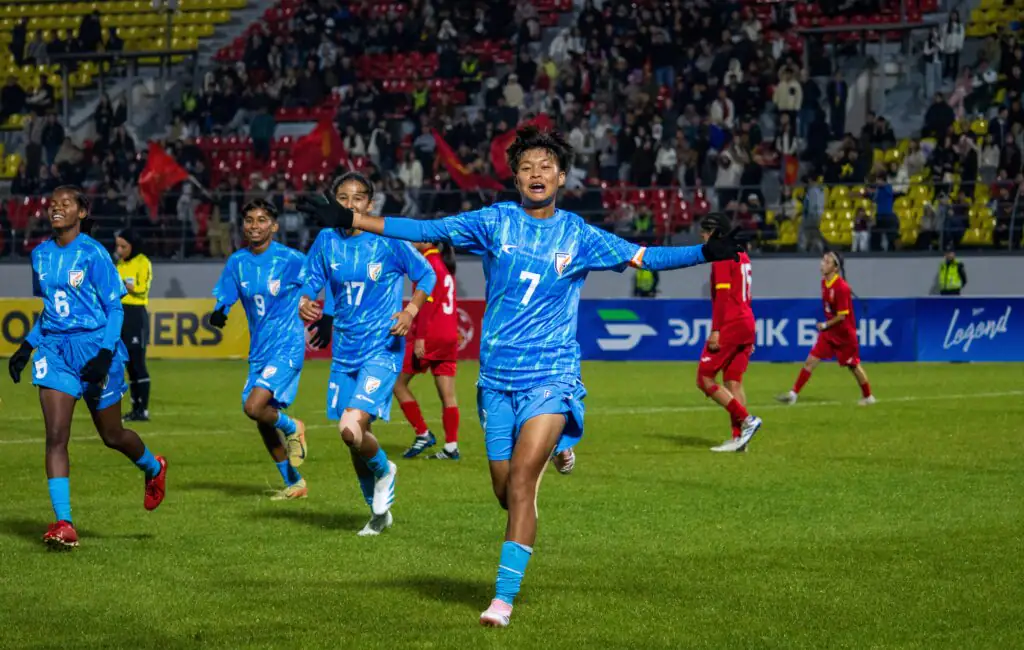
India have been drawn alongside hosts Malaysia, Syria and Iraq in Group E of the AFC U-17 Women's Asian Cup 2027 Qualifiers, with only the group winners advancing to the final tournament in China.
India's Young Tigresses have been handed what many consider a favourable draw for the AFC U-17 Women's Asian Cup 2027 qualifiers after being placed in Group E alongside hosts Malaysia, Syria and Iraq.
The draw, conducted at the AFC House in Kuala Lumpur, sets the stage for India's qualification campaign, with all Group E matches scheduled to be played in Malaysia from October 5 to 11, 2026.
The qualification process will be fiercely competitive, with only the winners of each group progressing to the AFC U-17 Women's Asian Cup China 2027. The stakes are even higher because the top four teams at the final tournament will qualify for the FIFA U-17 Women's World Cup Morocco 2027. For India, the draw offers a realistic opportunity to build on the encouraging progress made by the country's youth women's programme over the past year.
India enters the qualifiers with renewed confidence after reaching the quarter-finals of the AFC U-17 Women's Asian Cup 2026. That performance marked an important step forward for the Young Tigresses, who competed strongly against some of Asia's leading youth teams and demonstrated significant progress under the AIFF's youth development programme.
The experience gained during that campaign will prove invaluable as the current squad prepares for another qualification challenge.
Unlike previous editions, where India often found itself drawn alongside multiple continental powerhouses, this year's group appears considerably more balanced.
Group E Breakdown
India will compete against three opponents with contrasting strengths.
Malaysia (Hosts)
Playing at home will undoubtedly give Malaysia an important advantage. Home support, familiar conditions and the absence of travel fatigue often make host nations difficult opponents in youth football. Malaysia has continued investing in women's football development and will view qualification on home soil as a major objective.
Their opening match against India could potentially prove decisive in determining the group winner.
Syria
Syria remains one of the less predictable teams in Asian youth football. Although they have not consistently challenged Asia's strongest nations, they possess technically capable players and cannot be underestimated. Matches against Syria are often physical and closely contested, making discipline and concentration essential.
Iraq
Iraq continues to develop its women's football structure and has shown gradual improvement at the age-group level in recent years. While they may not carry the pedigree of Asia's traditional heavyweights, Iraq has the ability to surprise stronger opponents if given opportunities. India will be expected to approach the fixture confidently but cannot afford complacency.
While the draw appears favourable, the qualification format leaves very little margin for mistakes. Only the group winners will qualify directly for the AFC U-17 Women's Asian Cup 2027.
That means every match carries enormous importance. Unlike tournaments where runners-up can also progress, a single defeat or dropped points could significantly damage qualification hopes. Goal difference may also become crucial if multiple teams finish level on points, making convincing victories just as valuable as winning itself.
India will therefore need to maintain consistency throughout the campaign rather than focusing on one marquee fixture.
Largest Qualifiers in Tournament History
The 2027 qualification campaign marks a historic milestone for Asian women's football. A record 30 nations will compete in the qualifiers, making it the largest edition in the history of the AFC U-17 Women's Asian Cup qualification tournament. The increasing number of participating teams reflects the rapid growth of women's football across Asia.
Several emerging football nations have invested heavily in youth development programmes, raising the overall standard of competition. For India, successfully navigating qualification against a larger field would further underline the progress being made within the country's women's football ecosystem.
Qualification for the AFC U-17 Women's Asian Cup carries additional significance because it opens the pathway to the FIFA U-17 Women's World Cup Morocco 2027. The top four teams at the continental championship will earn tickets to the global event. India has consistently prioritised youth development in recent years, with increased exposure tours, national camps and structured competitions helping improve the standard of junior football.
The Young Tigresses now have another opportunity to take the next step.
On paper, Group E offers India one of its best opportunities in recent years to qualify for the continental championship. Avoiding traditional Asian heavyweights such as Japan, North Korea, South Korea and China in the qualifying stage is certainly advantageous. However, youth football often produces unpredictable results. Malaysia will benefit from home conditions, while Syria and Iraq are capable of causing upsets.
India will therefore need to approach every match with the same level of preparation and intensity. The encouraging performance at the 2026 AFC U-17 Women's Asian Cup has raised expectations, but it has also given this generation valuable experience competing at the highest continental level.
The continued improvement of India's youth women's teams is becoming increasingly evident. Recent performances across various age groups suggest that the country's long-term investment in women's football is beginning to produce tangible results. A successful qualification campaign would not only secure another appearance at the AFC U-17 Women's Asian Cup but also move India one step closer to another FIFA World Cup qualification at the youth level.
With the qualifiers set to begin in October, the coming months will be crucial as the Young Tigresses prepare for what could become one of the most important tournaments in the development of this promising generation.
Drawn alongside Malaysia, Syria and Iraq, India has been presented with a genuine opportunity. The challenge now will be to convert that opportunity into qualification and continue the upward trajectory of Indian women's football on the Asian stage.
Comments (0)
to post comments, replies, and votes.
Loading comments…