India Reach Asian Games 2026 Women’s Hockey Final After 2-0 Win Over South Korea
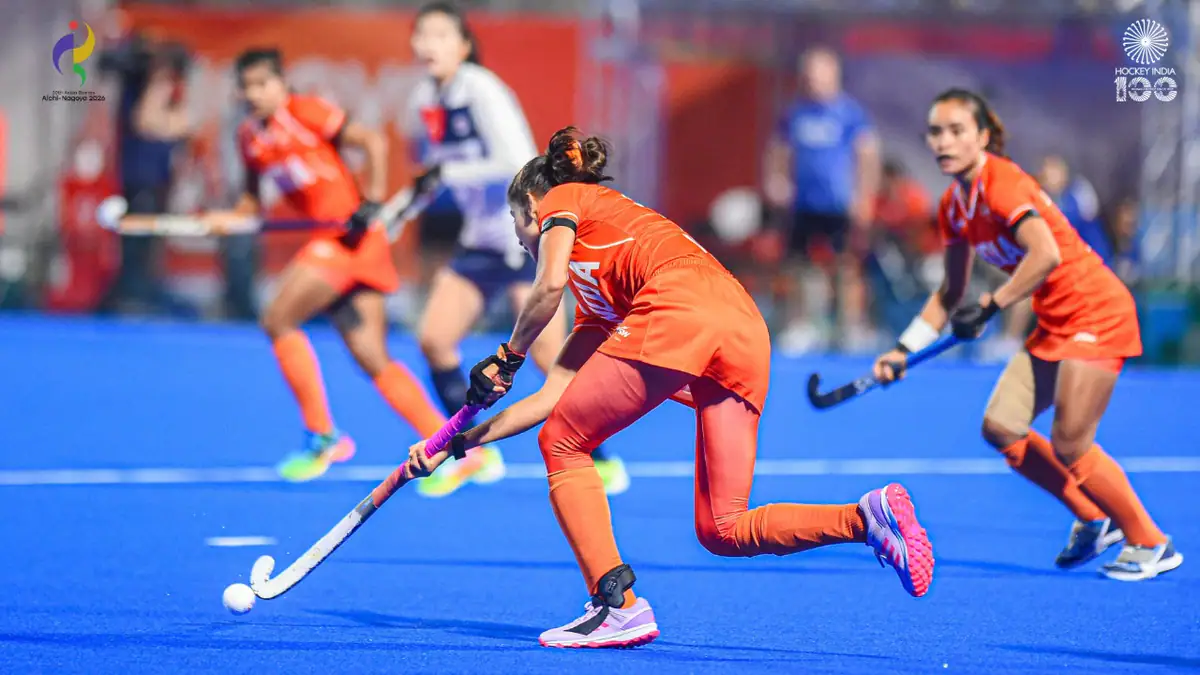
India’s women’s hockey team booked its place in the Asian Games 2026 gold-medal match with a hard-earned 2-0 victory over South Korea on Wednesday, overcoming a stubborn defensive performance to reach the final in Kakamigahara.
The defending champions dominated possession and territory for long stretches, particularly during the opening half, but repeatedly found South Korean goalkeeper Seoyeon Lee in outstanding form. The Korean custodian made a series of crucial saves to keep the semifinal goalless through 30 minutes. India eventually broke the deadlock through Ishika in the third quarter before captain Salima Tete added a second goal early in the final quarter. India then defended its advantage under late South Korean pressure to preserve a clean sheet and secure a place in the title clash against China on October 2.
China reached the final earlier in the day after surviving a tense contest against hosts Japan. After 60 minutes ended goalless, China prevailed 4-2 in the shootout.
India immediately established control of the semifinal, using a high press and fluid midfield combinations to push South Korea deep into its defensive structure. South Korea threatened first, entering the Indian circle in the opening minute after a long ball, but the attempted deflection went wide. India responded almost immediately. A defender's foot gave India its first penalty corner in the second minute, presenting an early opportunity for Deepika. Her effort appeared destined for the corner before Lee produced a diving save to her left.
The Korean goalkeeper's performance would become the defining feature of the first half. Baljeet was particularly active down India's left flank. She dispossessed a Korean defender in the fourth minute before combining with Navneet Kaur, who entered the circle and got a shot away. Lee again blocked the attempt.
India earned another penalty corner, with Navneet taking the direct effort, but Lee reacted quickly to palm the ball away. India continued to generate entries, with Baljeet threatening again in the 10th minute before Lee came off her line to close the angle. South Korea largely relied on long slap-pushes from midfield to release its forwards, but India's pressure prevented the Korean attack from developing sustained momentum.
A combination between Navneet and Lalremsiami in the 12th minute created another opening, while India's movement around the circle repeatedly stretched the Korean defence.
South Korea Survive a Relentless Second Quarter
The pattern continued into the second quarter. India earned an early penalty corner, and another opportunity followed when the initial attempt was not stopped cleanly. Once again, however, Lee stood between India and the opening goal. Lalremsiami continued to make overlapping runs, while Ishika attempted to find spaces through the Korean defensive line. India were moving the ball efficiently through midfield but could not turn their territorial advantage into a goal.
The pressure intensified late in the half. A successful Korean video referral in the 28th minute was overturned, resulting in another penalty corner for India. Navneet's direct attempt was blocked by the rusher. India received another penalty corner soon after, but Lee again made the decisive intervention.
At half-time, the scoreboard still read 0-0. For India, the statistics of territory and opportunities had not yet translated into the one number that mattered most. For South Korea, Lee's performance had kept the team within touching distance of an upset.
India returned from the half-time break with the same attacking intent but greater patience. South Korea increasingly sat deep, attempting to deny India's forwards the space required to create clear shooting opportunities. Lalremsiami came close with a clever back-flick, while Rutuja Dadaso Pisal tested the defence with a reverse hit in the 36th minute.
The breakthrough finally came in the 44th minute. India earned another penalty corner, but rather than relying on a conventional drag-flick, Deepika introduced deception into the routine. She played a dummy and directed the ball towards Ishika, who had positioned herself perfectly.
Ishika needed only one touch, converting with a first-touch push to finally beat Lee. After 44 minutes of resistance, South Korea were behind. The goal also changed the tactical equation. India no longer needed to force the contest open and could manage the match with the lead.
Salima Tete Doubles India’s Advantage
India quickly turned its first goal into breathing room. In the 48th minute, captain Salima Tete made a superb overlapping run on the right side of the Korean circle. Her movement created the opportunity, and she finished it clinically to make it 2-0.
The second goal placed South Korea under immediate pressure to attack, but India remained composed. The Koreans continued to look for a route back into the contest and had a penalty-corner decision overturned after a video referral in the 54th minute. Three minutes later, India earned another penalty corner following a successful referral. Deepika's flick was initially blocked by Lee, before India received a re-award.
This time, a Korean defender made a goal-line save. The rebound fell to Deepika, but her follow-up went wide.
South Korea had one final opportunity to put India under pressure when they earned a penalty corner in the 59th minute. India's defence, however, held firm. Salima was particularly effective during the defensive rush as India protected its two-goal advantage and completed the clean sheet.
The final whistle confirmed a 2-0 victory and another Asian Games final appearance for the Indian women. The semifinal also highlighted an important aspect of India's campaign: the ability to remain patient when dominance does not immediately produce goals. India controlled much of the first half but were repeatedly denied by Lee. Rather than allowing frustration to disrupt their structure, the team continued to press and eventually found the breakthrough through a cleverly executed penalty-corner variation.
Now the defending champions face China in the gold-medal match on October 2.
The final will present a different challenge, but India arrive with momentum, defensive confidence and the knowledge that they have already navigated one of the tournament's most difficult knockout tests.
The gold-medal match will determine whether India's women can complete their Asian Games campaign with another title.
Comments (0)
to post comments, replies, and votes.
Loading comments…