Indian Tennis Faces a Reality Check as Men’s Doubles Medal Streak Ends at Asian Games
India’s tennis campaign at the 2026 Asian Games has reached a difficult point. For the first time since 1998, India will leave an Asian Games without a medal in men’s doubles, while the country’s mixed doubles campaign has also ended without a podium finish.
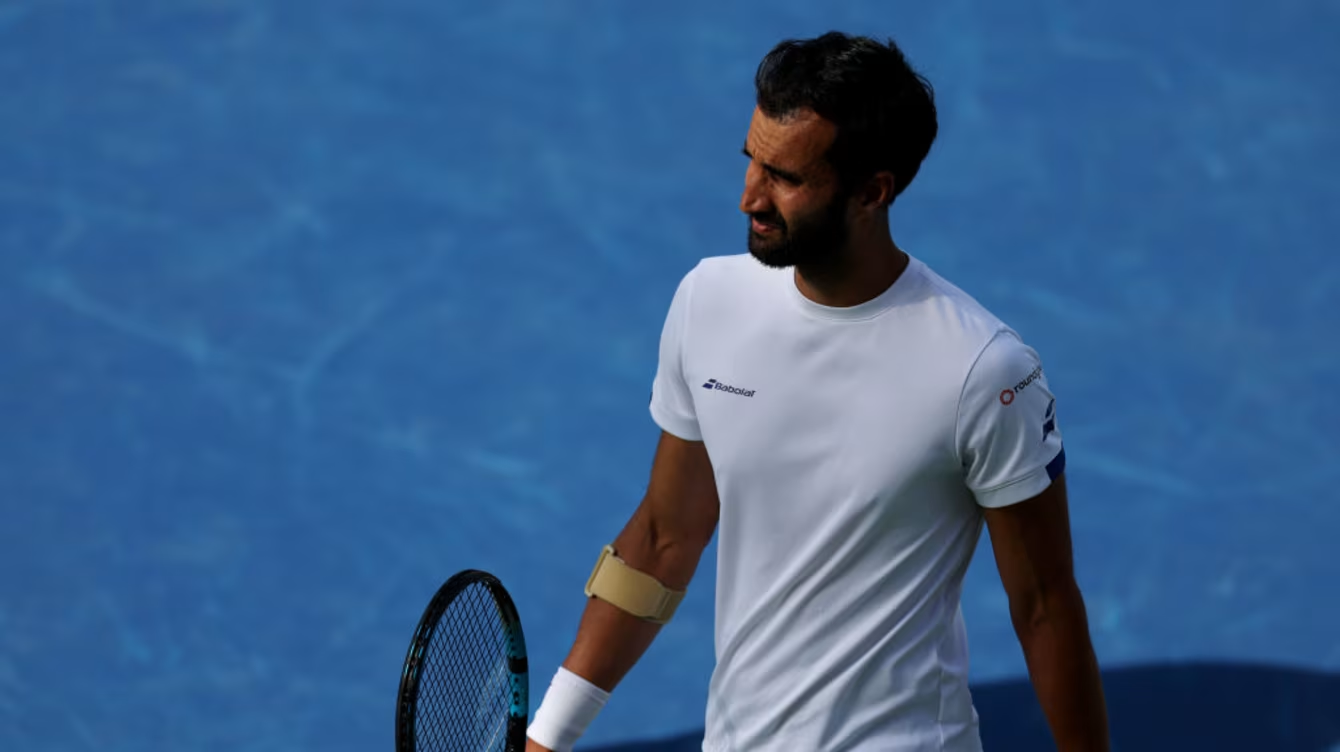
The latest setback came on Wednesday when Yuki Bhambri and Dhakshineswar Suresh were beaten by Chinese Taipei’s Ho Chenjui and Hsu Yu-hsiou in the men’s doubles quarterfinals. The Indian pair lost 6-7(5), 3-6, ending one of the country’s traditionally strongest medal routes at the Asian Games.
Earlier, top seeds Anirudh Chandrasekar and Sriram Balaji had also suffered a quarterfinal defeat, losing to China’s Zhang and Jiang in a three-set thriller.
The results mean India’s men’s doubles campaign has ended without a medal for the first time in 28 years.
Men’s doubles has historically been one of India’s most reliable disciplines at the Asian Games.
India won gold in the event at Busan 2002 through Leander Paes and Mahesh Bhupathi and successfully defended the title four years later in Doha. Somdev Devvarman and Sanam Singh continued the run with gold at Guangzhou 2010.
The medal colour changed to silver at Incheon 2014, where Saketh Myneni and Sanam Singh finished runners-up, before Rohan Bopanna and Divij Sharan restored India to the top of the podium at Jakarta 2018.
At Hangzhou 2022, Myneni and Ramkumar Ramanathan won silver. That sequence meant India had collected a medal in men's doubles at six consecutive editions from 2002 through 2022.
The 2026 quarterfinal exits bring that run to an end. India's doubles record over those six editions included four gold medals and two silvers, underlining how significant the event has been to the country's Asian Games tennis history.
Bhambri-Suresh Fall After Tight First Set
Bhambri and Suresh faced Ho Chenjui and Hsu Yu-hsiou in a quarterfinal that was decided by small margins. The first set remained competitive throughout and eventually went to a tiebreak. The Chinese Taipei pair edged the breaker 7-5 to take a one-set advantage.
India needed a response in the second set, but Ho and Hsu maintained control and closed it out 6-3. The defeat was particularly significant for Bhambri, who had entered the tournament with extensive doubles experience and was also competing in the mixed doubles event alongside Rutuja Bhosale.
The Indian pair had been among the country's key medal prospects, but the quarterfinal proved to be the end of their campaign.
The other Indian men's doubles combination, Anirudh Chandrasekar and Sriram Balaji, suffered an even narrower defeat. The top-seeded Indian pair lost to China's Zhang and Jiang 6-7(4), 7-6(7), 8-10 in a match decided by a deciding match tiebreak.
India won the first-set tiebreak 7-4, but China fought back to take the second-set breaker 9-7. The match then came down to the deciding tiebreak, where Zhang and Jiang eventually prevailed 10-8.
Two Indian pairs, therefore, reached the quarterfinals, but neither could convert that position into a semifinal berth.
Mixed Doubles Also Ends Without a Medal
The disappointment extended beyond the men's doubles draw. Yuki Bhambri and Rutuja Bhosale, seeded second in mixed doubles, were eliminated by Chinese Taipei's Su-Wei Hsieh and Chun-Hsin Tseng, losing 3-6, 4-6.
The result ensured India would not win a medal in any doubles discipline at these Asian Games. India's most recent mixed doubles gold came at Hangzhou, where Rohan Bopanna and Rutuja Bhosale won the title. This time, Bhosale's mixed doubles campaign ended in the quarterfinals.
The combined results represent a significant contrast with India's historical strength in Asian Games doubles competition.
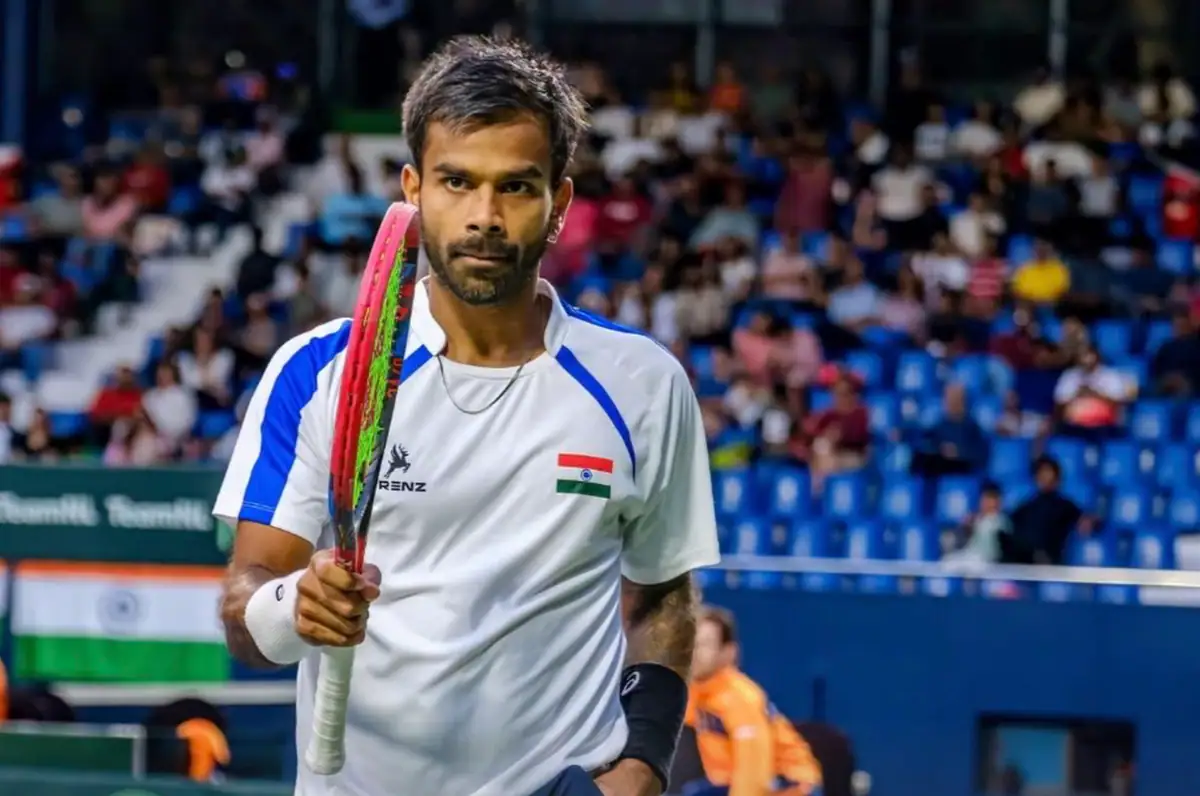
With the doubles events completed for India, Sumit Nagal remains the country's principal men's singles hope. Nagal advanced to the quarterfinals on Wednesday with a convincing 6-3, 6-2 victory over Uzbekistan's Sergey Fomin.
The result puts Nagal one victory away from securing a medal and keeps India's tennis campaign alive. His quarterfinal opponent will be China's Yibing Wu on October 1. Wu is listed at ATP No. 111, with a career-high ranking of No. 54, while Nagal entered the tournament ranked No. 249.
The two met once in 2024, with Wu winning 6-3, 6-3.
That previous result provides context, but Nagal now has an Asian Games semifinal place and therefore a guaranteed medal within reach.
India's failure to win a doubles medal does not erase the country's long record of success in the discipline, but it does mark a notable change. The men's doubles streak had survived multiple generations, from Paes and Bhupathi to Somdev and Sanam, Bopanna and Divij Sharan, and Myneni's partnerships across recent editions.
At Aichi-Nagoya, both Indian men's pairs reached the quarterfinals but could go no further.
The mixed doubles exit adds to the disappointment, leaving Nagal as the remaining Indian player with a realistic route to the singles podium.
His quarterfinal against Wu therefore carries added importance. A victory would not only put Nagal into the semifinals but also ensure that India does not leave the Asian Games without a tennis medal.
For now, the 28-year men's doubles streak has ended. The next opportunity rests with Nagal.
Comments (0)
to post comments, replies, and votes.
Loading comments…