India’s Women’s Doubles Puzzle: Why Experimental Pairings Continue To Dominate Team Events
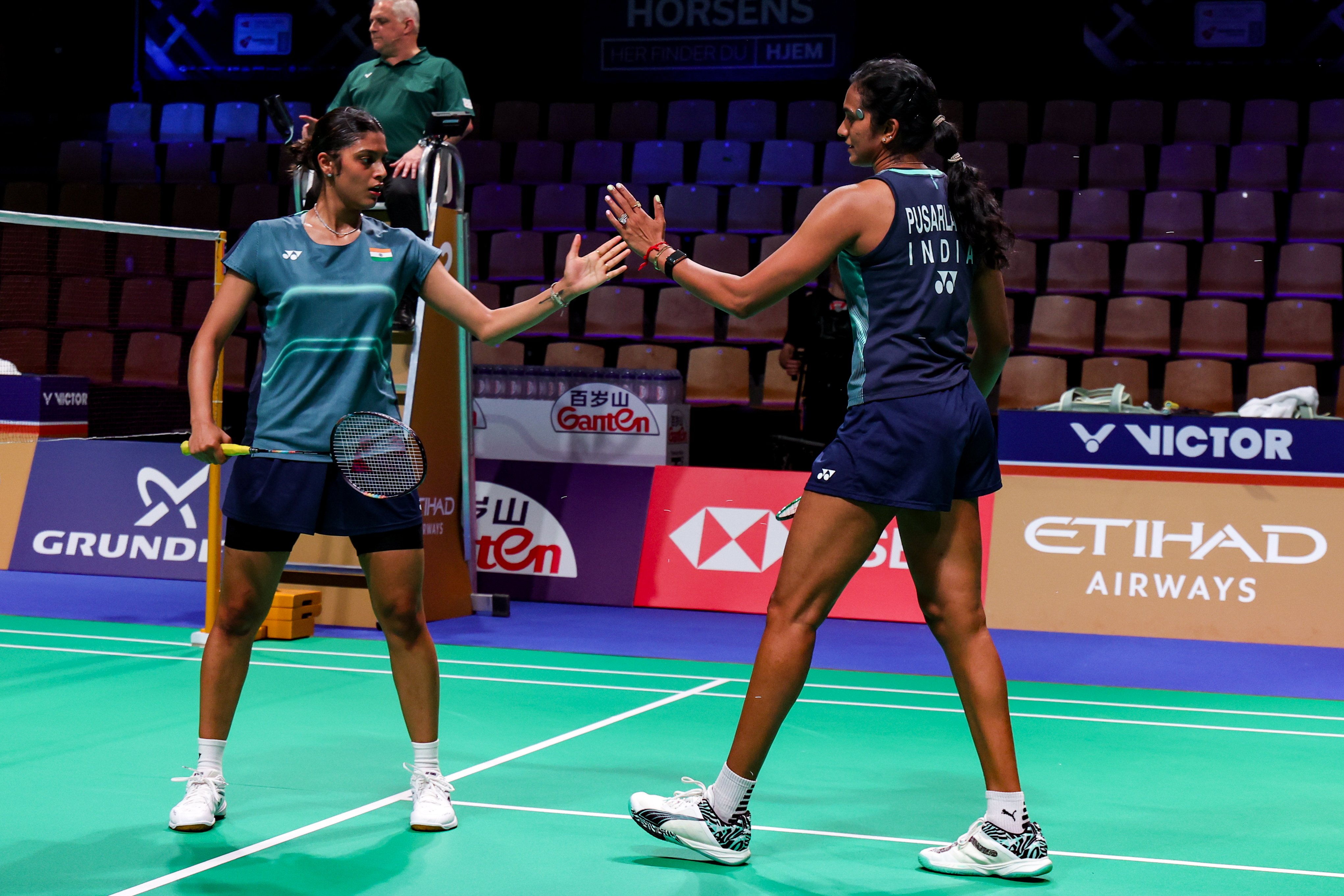
It is April 2026, and the Thomas & Uber Cup Finals 2026 in Horsens, Denmark, has once again brought the global badminton community together for one of the sport’s most prestigious team competitions.
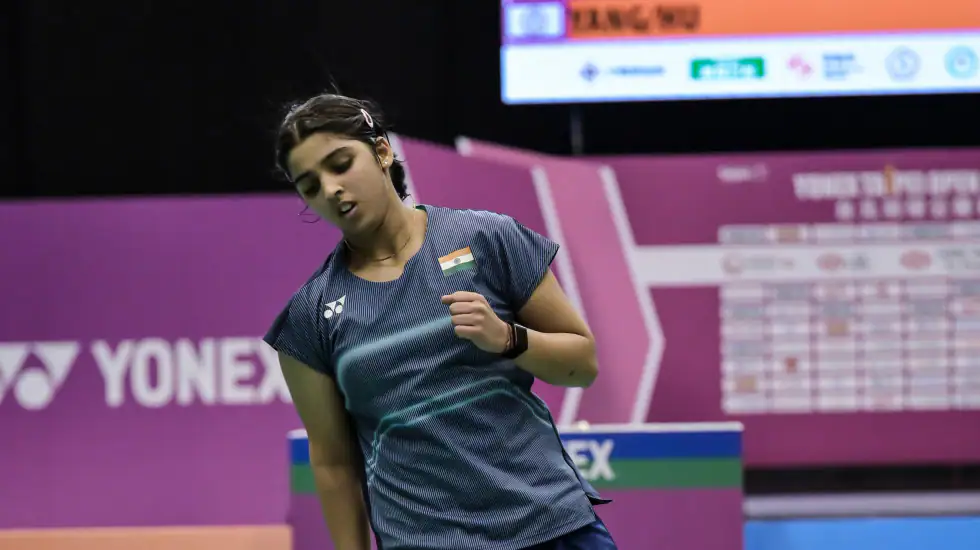
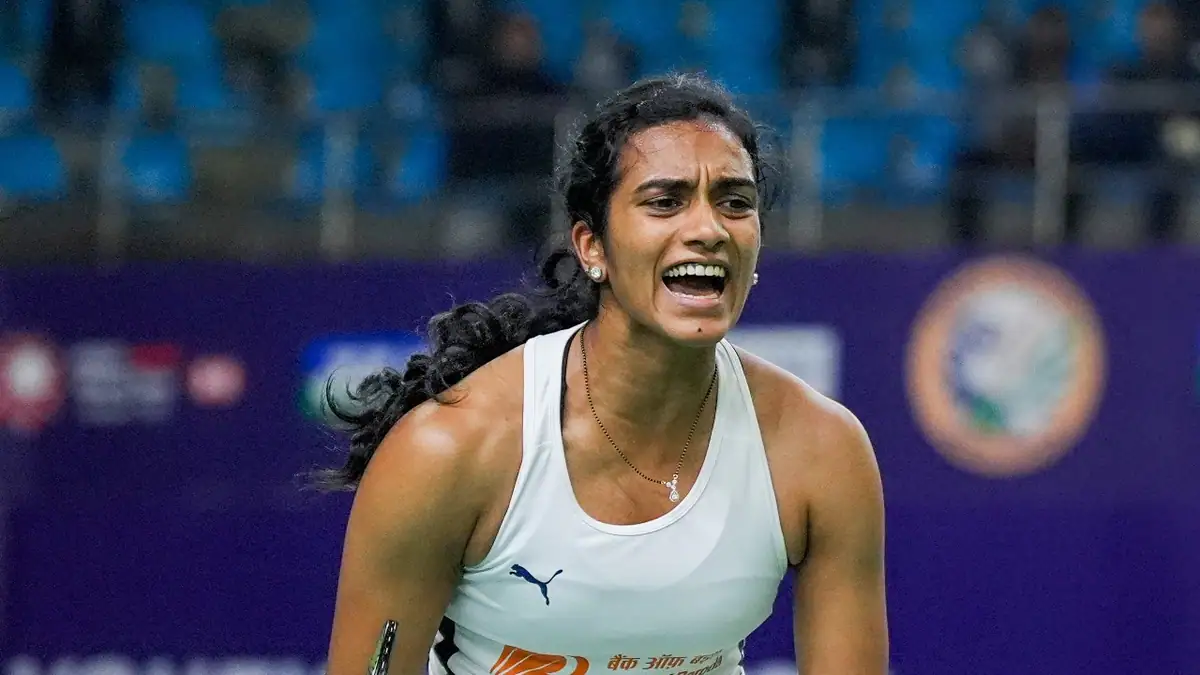
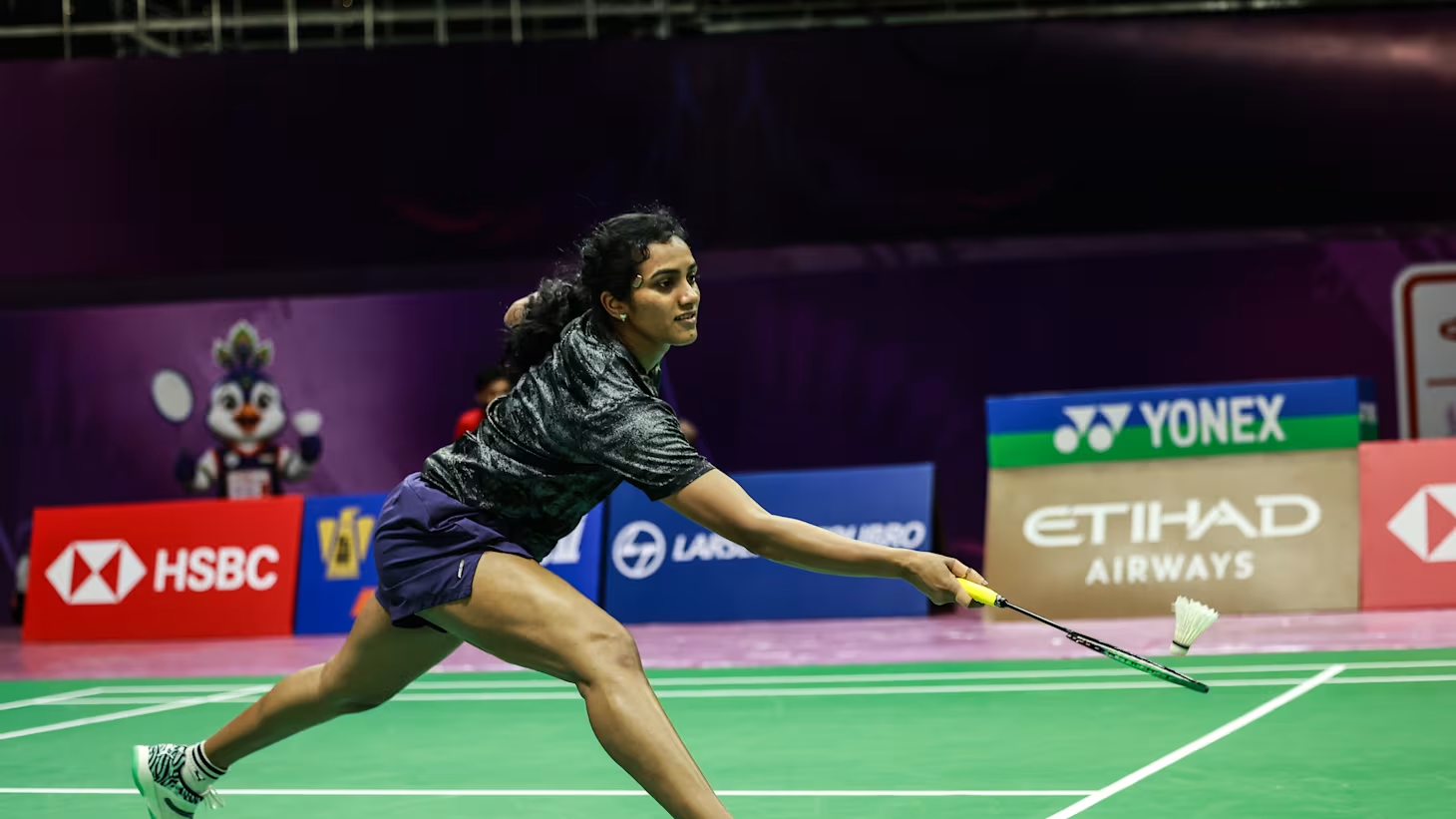
Unlike individual tournaments, the Thomas and Uber Cup transforms badminton into something far more emotional. Players are no longer competing only for ranking points or personal milestones they are competing for the flag, for the team, and for national pride. For India, however, the ongoing Uber Cup campaign has sparked an interesting conversation surrounding the women’s doubles setup. The biggest talking point emerged when PV Sindhu partnered Tanisha Crasto in doubles during India’s group-stage matches. On paper, it looked exciting two elite Indian players combining in a pressure situation. But it also raised a deeper question: why does India still frequently rely on makeshift combinations featuring players whose primary disciplines are not women’s doubles?
The answer perhaps lies in both circumstance and structure.
The Missing Presence of Treesa-Gayatri
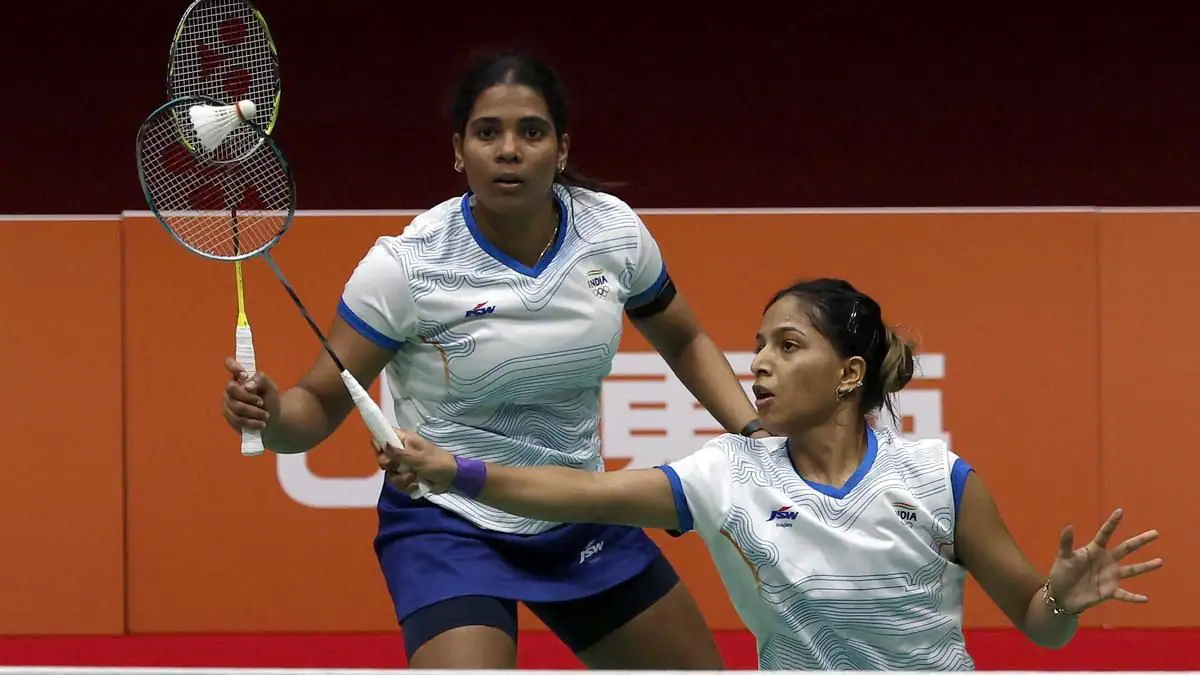
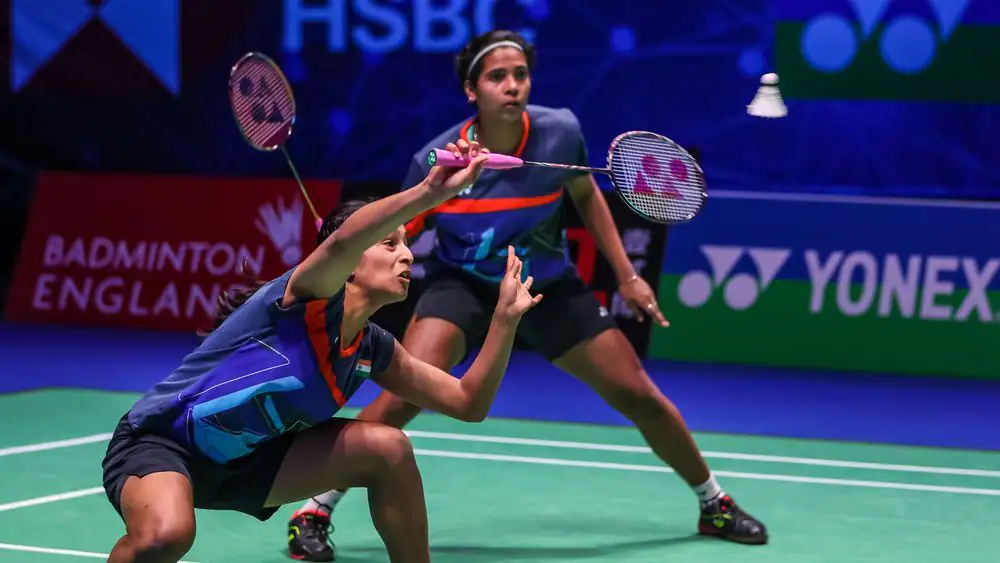
India’s established women’s doubles pair, Treesa Jolly and Gayatri Gopichand Pullela, were unavailable for the tournament due to injury concerns. Their absence was significant. Over the last few years, Treesa and Gayatri have become the face of Indian women’s doubles badminton. The duo reached a career-high ranking of World No. 9 in early 2025 and consistently challenged top pairs across the world circuit.
Their contrasting styles made them particularly effective. Gayatri’s intelligent net control and tactical awareness complemented Treesa’s attacking power and steep smashes from the backcourt. Together, they gave India a genuine top-level women’s doubles pair capable of competing against Asian and European heavyweights. Without them, India’s doubles depth immediately came under scrutiny.
Simran Singhi and Kavipriya Selvam: A Promising Young Pair, India’s next notable combination features Simran Singhi and Kavipriya Selvam, currently ranked World No. 45. Both players enjoyed strong junior careers before transitioning onto the senior international circuit together. Simran brings attacking aggression, strong smashes, and fast court movement, while Kavipriya adds resilience and tactical discipline during long rallies. The pair remains one of India’s most promising long-term women’s doubles projects, though consistency at the highest level is still developing.
At the Uber Cup, however, they struggled against China’s scratch pairing of Polina Buhrova and Yevheniia Kantemyr, underlining the gap India still needs to bridge against stronger badminton nations.
Another emerging combination is Shruti Mishra and Priya Konjengbam, currently ranked World No. 48. Their inclusion in the Uber Cup squad came following the withdrawal of Treesa-Gayatri, but they earned their place through solid performances at International Series events. Priya Konjengbam has already created history as the first badminton player from Manipur and the Northeast to qualify for the prestigious All England Open Badminton Championships in 2025. Shruti, meanwhile, has quietly developed into a reliable doubles player known for her defensive positioning and rally construction. Together, they represent the growing depth slowly emerging in Indian women’s doubles.
Then there is the pairing of Ashwini Bhat and Shikha Gautam. The duo may not regularly headline international tournaments, but within the domestic circuit, they remain one of India’s strongest combinations. Former Senior National Champions, they achieved a career-high world ranking of No. 33 and continue to dominate regional competitions. Ashwini’s powerful flat exchanges combine effectively with Shikha’s court coverage and stamina, making them particularly difficult opponents in long matches.
Similarly, the Panda sisters Rutaparna Panda and Swetaparna Panda have steadily climbed the rankings through strong performances at Future Series and Challenge events. The sibling pair reached a career-high ranking of World No. 31 in 2025 and represent another exciting Indian doubles project.
The Tanisha Crasto Factor
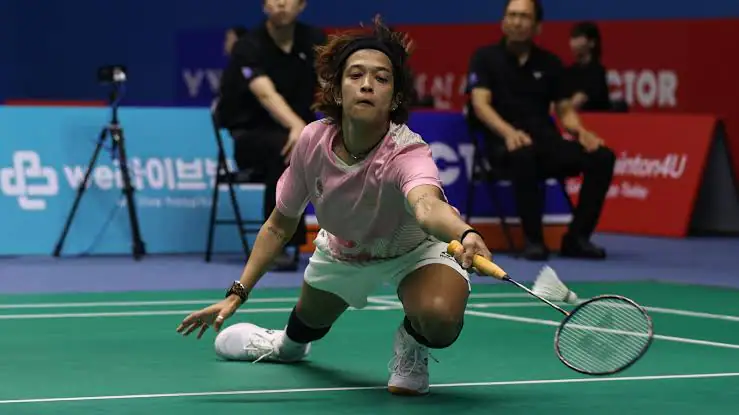
Perhaps the most fascinating name in this entire discussion is Tanisha Crasto. Crasto initially built a successful women’s doubles partnership alongside veteran Ashwini Ponnappa. Together, they climbed to World No. 13 and briefly looked capable of becoming India’s leading pair. But over time, Crasto shifted greater focus toward mixed doubles, where she has enjoyed increasing success.
That shift has once again left Indian women’s doubles searching for stability. The result is situations like the current Uber Cup campaign, where experimental combinations involving singles specialists become necessary.
The larger concern is not talent India clearly has enough quality players. The issue is continuity. Top badminton nations build women’s doubles partnerships over years, allowing combinations to develop instinctive understanding, rotation patterns, defensive systems, and communication under pressure. India, in contrast, still frequently rotates combinations due to injuries, scheduling decisions, or discipline shifts. That is why speculative combinations continue to excite fans.
Imagine Tanisha Crasto partnering Treesa Jolly combining speed with attacking power. Other than calling the duo T-Squared, this combination will bring together Tanisha’s speed and Treesa’s power to create the perfect aggression dripping front-back system. With both clear communicators and hungry players, they would ensure every match is a blockbuster watch!
Gayatri Gopichand alongside Rutaparna Panda a highly tactical pairing built around net control and intelligent rally construction. While there have been very few crossovers of these two players, watching them in silos has highlighted both their strengths at the net. It would be very interesting to see the two rotate their net play skills and add tactful strategy into the mix, becoming perhaps a less powerful doubles pairing but an incredibly tactful, skillful one.
Even a defensive-oriented duo like Priya Konjengbam and Shikha Gautam could potentially trouble opponents through consistency and endurance. Konjengbam’s strong defensive and rally tolerance paired with Gautam’s court coverage and endurance would make for a pair that would be very difficult to take down - it would be interesting to see how the two come up with tactics on court to strategically win points rather than hustle out each rally for incremental points!
These conversations reflect both optimism and frustration.
The talent exists. The potential exists. The depth is slowly improving. But India still awaits a truly settled women’s doubles structure capable of consistently challenging the world’s elite across Olympic cycles. And perhaps that is why the sight of Sindhu playing doubles at the Uber Cup sparked such a strong reaction.
Because while the experiment was exciting, it also reminded everyone that Indian women’s doubles still remains a work in progress full of promise, but still searching for long-term stability at the highest level.
Written by Anushka Purohit
Comments (0)
to post comments, replies, and votes.
Loading comments…