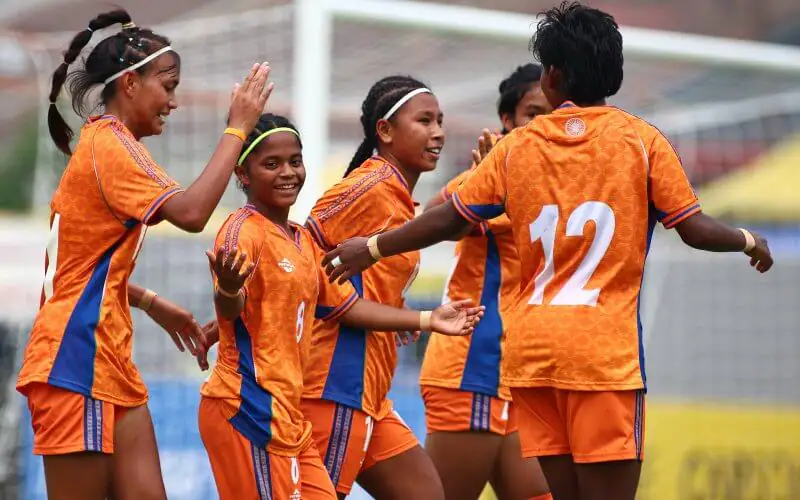
India Secures Third Finals Appearance for AFC U-17 Women’s Asian Cup 2027
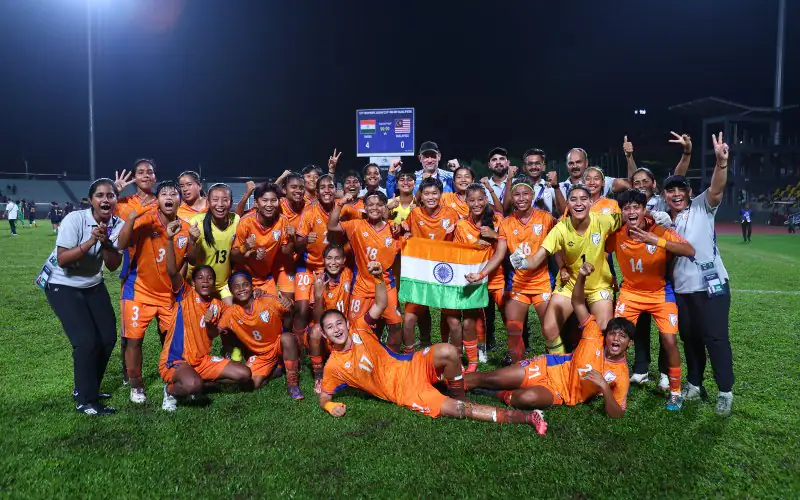
India’s qualification for the 2027 AFC U-17 Women’s Asian Cup in China is a significant milestone for the country’s women’s youth football programme.
By topping Group E in Malaysia, India became the only team from outside East Asia, Southeast Asia and Australia to secure a place at the continental finals, underlining the progress made by the young Indian side.
The qualification also marks India’s third appearance at the AFC U-17 Women’s Asian Cup, following participation in 2005 and 2026. More importantly, the team has now qualified for consecutive editions on sporting merit, carrying forward the momentum generated by its run to the quarter-finals in 2026. The 2027 tournament is scheduled to take place in China in March and April, where India will face a significantly tougher test against some of Asia’s strongest women’s youth football programmes.
The 12-team field for the 2027 finals reflects the current concentration of strength in East and Southeast Asian women’s football. China, DPR Korea, Japan and Australia secured direct qualification based on their performances at the 2026 tournament, while eight further places were decided through the preliminary round. The remaining qualifiers included South Korea, Indonesia, Chinese Taipei, Vietnam, India, Thailand, Myanmar and the Philippines. India is the sole South Asian representative in the final tournament, while teams from Central and West Asia failed to secure qualification.
India’s progression is particularly notable because it has come through the qualifying route rather than a host or defending-champion berth. The team finished above Malaysia, Syria and Iraq in Group E, winning all three matches without conceding a goal. The achievement gives India an opportunity to build on its recent progress against the continent’s leading sides and establish greater consistency at the international level.
Three Wins, 20 Goals and No Goals Conceded
India produced a commanding campaign under head coach Joakim Alexandersson at the MP Selayang Stadium in Selangor, Malaysia. The campaign began on October 5 with a remarkable 14-0 victory over Iraq, the biggest winning margin recorded by India’s U-17 women’s team. Anushka Kumari led the scoring with five goals, while Abhista Basnett contributed twice. Silky Devi, Baskey, Nira Chanu, Barman, Joya and Alva Devi also found the net.
India followed that performance with a 2-0 win against Syria on October 8. Anushka scored both goals, finding the net in the fifth minute before adding another in the second half. Despite difficult weather conditions and interruptions caused by a thunderstorm, India maintained its defensive discipline to secure another clean sheet.
The decisive fixture came against hosts Malaysia on October 11. With qualification at stake, India delivered a convincing 4-0 victory. Chingkhamayum opened the scoring in the 28th minute, followed by goals from Barman, Anushka and Kumar in the second half. India finished the group stage with three wins from three matches, scoring 20 goals and conceding none. Malaysia ended with four goals scored and five conceded, while Syria and Iraq were eliminated.
Forward Anushka Kumari was central to India’s qualification campaign. Her goals against Iraq and Syria provided the foundation for the team’s early progress, while her contribution against Malaysia helped complete a perfect group-stage record.
The young striker finished with eight goals across the qualifying campaign, emerging as the leading scorer according to the supplied tournament figures. Her ability to convert chances, attack space and contribute in decisive moments gave India a consistent attacking threat.
The wider squad also demonstrated that its scoring threat was not limited to one player. Barman, Chingkhamayum and other attacking contributors helped India maintain pressure on opponents, while captain Abhista Basnett and goalkeeper Munni anchored a defence that conceded no goals in three matches.
Continuity was another important factor. Alexandersson retained a core of players from the previous campaign, helping the team carry forward its understanding and experience from the 2026 finals.
India’s latest qualification follows a major step forward at the 2026 AFC U-17 Women’s Asian Cup. After returning to the continental stage, India recorded a 4-0 win over Lebanon in the group phase and progressed to the quarter-finals, where the campaign ended against hosts China.
That performance marked a significant improvement for a programme that had struggled to qualify consistently between its appearance in 2005 and its return in 2026.
Consecutive qualifications now provide an opportunity to develop players across successive international cycles rather than treating each tournament as an isolated achievement. The annual format of the AFC U-17 Women’s Asian Cup also increases the importance of consistent preparation, player development and international exposure.
A Bigger Challenge Awaits in China
Qualification is an important achievement, but the next objective will be to translate the team’s dominant qualifying form into results against Asia’s elite. India’s 20 goals and three clean sheets demonstrate its superiority in Group E, but the finals will present a different level of competition.
The tournament will also offer another opportunity to pursue qualification for the FIFA U-17 Women’s World Cup. India narrowly missed out on that opportunity in 2026 after losing to China in the quarter-finals.
For now, the immediate achievement is clear: India has secured its third appearance at the AFC U-17 Women’s Asian Cup and become the only qualifier from outside East Asia, Southeast Asia and Australia. The challenge in China will be to turn that regional distinction into a deeper run at the continental tournament.
Comments (0)
to post comments, replies, and votes.
Loading comments…