India U17 Women Beat Malaysia 4-0 to Qualify for AFC U17 Women's Asian Cup China 2027
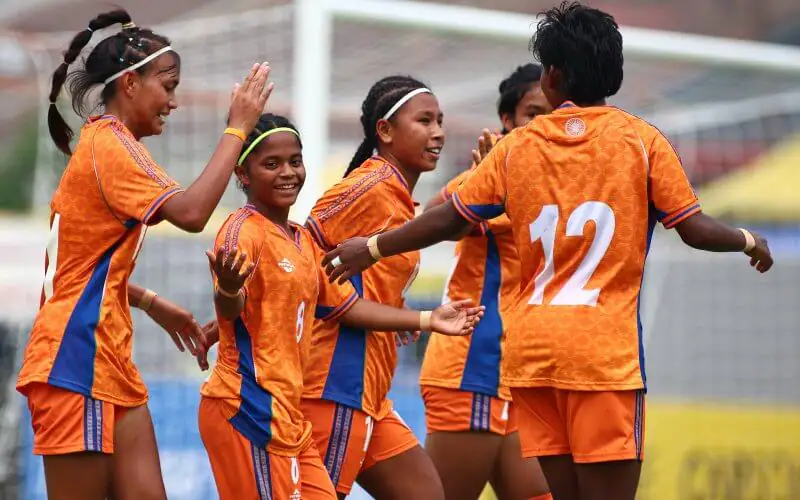
India U17 women defeated hosts Malaysia 4-0 to top Group E and qualify for the AFC U17 Women's Asian Cup China 2027, making history with consecutive appearances.
The India U17 women's national team created history on Sunday, defeating hosts Malaysia 4-0 at the MP Selayang Stadium to qualify for the AFC U17 Women's Asian Cup China 2027.
The emphatic victory secured the Young Tigresses the top position in Group E and confirmed their second consecutive appearance at the continental tournament. India entered the decisive qualifier knowing that a draw would be sufficient to advance, having won their opening two matches against Iraq and Syria. However, head coach Joakim Alexandersson's side went beyond what was required, producing another commanding performance to finish the qualifying campaign with three victories, 20 goals scored and no goals conceded.
The result also marked a historic milestone for Indian women's football. India became the first Indian team to qualify for consecutive editions of the AFC Women's Asian Cup at any age category, including the senior level. Only the eight group winners from the qualifying competition will progress to the final tournament, joining defending champions DPR Korea, Japan, Australia and hosts China PR, who qualified directly after finishing among the top four at the 2026 edition.
India's campaign had begun with a record-breaking 14-0 victory over Iraq, the biggest win by an Indian U17 women's team. They followed that result with a disciplined 2-0 triumph against Syria, with Anushka Kumari scoring twice to take her tally to seven goals in the qualifiers.
Malaysia, meanwhile, had opened with a 1-0 win against Syria before defeating Iraq 4-0. With both teams entering Sunday's encounter on six points and yet to concede, the final Group E match was effectively a contest for the sole qualifying spot.
India's superior goal difference meant the Young Tigresses could afford to avoid defeat, while Malaysia needed a victory to finish above the visitors. Alexandersson, however, had made it clear before the match that his players would not approach the contest with a defensive mindset.
The Swedish coach wanted India to pursue victory while maintaining the tactical discipline required against a team playing on home soil. That balance between attacking ambition and defensive organisation had been a central theme throughout the qualifying campaign.
The 4-0 scoreline ultimately reflected India's ability to combine attacking intent with the defensive solidity that had characterised their first two outings.
Anushka Kumari Leads India's Attacking Charge
Anushka emerged as one of the defining performers of India's qualifying campaign. The forward scored five times in the opening 14-0 victory against Iraq before adding two more goals against Syria. Her seven goals made her India's leading scorer heading into the decisive match against Malaysia and underlined her importance to the team's attacking plans.
The 15-year-old, however, was quick to acknowledge the contribution of her teammates, emphasising that her goals were the product of collective effort and the chances created by the players around her. Following the 2-0 victory over Syria, Anushka also identified areas where India could improve. Despite controlling much of that match, the Young Tigresses had missed opportunities to extend their advantage.
She stressed the need for quicker attacking transitions, more accurate passing and greater clinical efficiency against Malaysia. Those improvements would be particularly important against a Malaysian side that had demonstrated its defensive resilience by keeping clean sheets in its first two matches.
India's attacking threat was not limited to Anushka. The midfield's ability to distribute the ball quickly, stretch opposition defences and sustain pressure had been central to the team's success against both Iraq and Syria.
India's squad also benefited from continuity, with 13 players returning from the group that qualified for the AFC U17 Women's Asian Cup China 2026. Captain Abhista Basnett, goalkeeper Munni and leading scorer Anushka were among those who had experienced the previous qualifying cycle and the demands of competing at this level.
Alexandersson believed that experience had helped the returning players communicate more effectively and support their less experienced teammates. Their familiarity with the qualification process also offered a measure of calmness during a high-pressure contest in which the outcome would determine India's continental future.
The coaching staff had carefully managed the players' workload ahead of the final match. Following several consecutive days of training and competition, Friday's schedule included activation exercises, light strength work and recovery time in the swimming pool. The team then shifted its attention towards Malaysia, with the official training session scheduled under floodlights on Saturday evening.
Alexandersson emphasised the importance of studying Malaysia's strengths, identifying weaknesses and preparing the players to defend effectively while exploiting opportunities in attack.
India's qualification represents another important step in the development of the country's women's youth football programme. The Young Tigresses reached the quarter-finals of the AFC U17 Women's Asian Cup China 2026, marking the first time an Indian team had progressed to the knockout stage of the competition.
Securing a second consecutive appearance gives the current generation another opportunity to test itself against Asia's strongest youth teams and build on that achievement. The qualifying campaign also demonstrated the value of combining an established core of players with emerging talent. India's defensive record, attacking output and ability to negotiate different types of opposition provided encouraging signs for the coaching staff.
Alexandersson had repeatedly cautioned against complacency, insisting that statistical advantages and outside expectations would count for little without hard work and respect for the opposition. The Young Tigresses responded with a performance that went beyond the minimum requirement for qualification.
By defeating Malaysia 4-0, India finished Group E as winners and confirmed their place at the AFC U17 Women's Asian Cup China 2027. More importantly, they achieved a landmark for Indian women's football, becoming the first Indian side to qualify for consecutive editions of the Women's Asian Cup at any age level.
The next challenge will be to translate that qualifying success into another competitive showing at the continental finals, where India will have the opportunity to build on the progress made during the previous edition.
Comments (0)
to post comments, replies, and votes.
Loading comments…