India Selected for FIFA Women's Development Programme in Major Boost for Women's Football Ecosystem
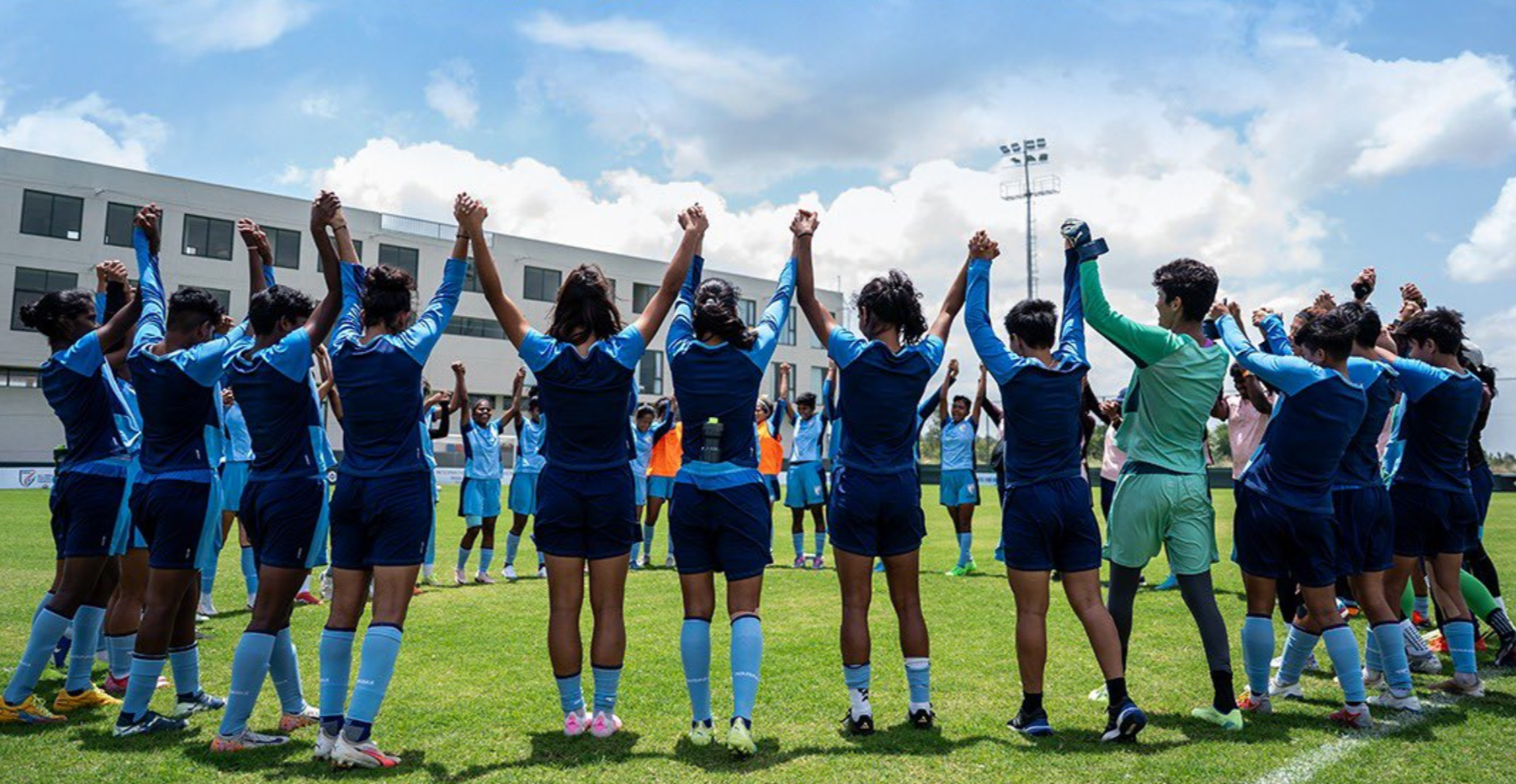
In a significant recognition of India's growing ambitions in women's football, FIFA has selected the country as one of twelve nations to participate in the FIFA Women's Development Programme (Commercial Strategy 2026).
The announcement, confirmed on Wednesday by the All India Football Federation, places India alongside some of football's most established women's football nations Germany, Netherlands, Sweden, Scotland, Canada, Mexico, Finland, Ghana, Jordan, Lithuania and Paraguay in a programme designed to build sustainable commercial foundations for the women's game at the club and federation level.
India's inclusion was not automatic. The AIFF submitted an initial application to FIFA, which was followed by a detailed presentation of the federation's commercial strategy and future plans for women's football a process that required the federation to articulate not just where Indian women's football currently stands, but where it intends to go. FIFA's decision to select India from what would have been a competitive pool of applicants reflects a belief that the country possesses both the appetite and the infrastructure to make meaningful use of the programme's resources.
The programme will run online from May to October 2026, with the course content tailored specifically by FIFA for the various stakeholders in women's football across each participating country. For India, that means clubs, administrators, commercial partners and other key figures in the domestic women's football ecosystem will receive structured capacity building across areas including commercial strategy development, sponsorship acquisition, fan engagement, and the broader business of running a sustainable women's football operation.
The timing is particularly significant given the AFC's plans to introduce a women's club licensing system a framework that will require Indian Women's League clubs to meet defined structural, financial and governance standards to participate in continental competition. Clubs that are commercially sound, well-governed and financially sustainable will be far better placed to meet those requirements than those operating on an ad hoc basis. The FIFA programme effectively gives Indian clubs a head start in preparing for that transition.
AIFF Deputy Secretary General M. Satyanarayan captured the moment's significance with clarity. "I think this is the perfect time for us to grow the commercial aspect of women's football in India as a whole," he said. "The qualification of three of our women's teams senior, U20 and U17 for the AFC Asian Cups in their respective age categories shows our potential, and the ASMITA U13 Women's Football League has helped us create the base at the youth level. Now that the clubs will receive this kind of capacity building on developing commercial strategies, securing sponsorships, engaging fans, and much more, the whole ecosystem will benefit."
His point about the ASMITA U13 league is worth dwelling on. Building a credible youth pathway for women's football in India has been one of the more quietly consequential developments in the sport's recent domestic growth, and pairing that grassroots foundation with commercial capacity building at the club level creates a virtuous cycle clubs with better resources can invest more in youth development, which produces better players, which attracts more commercial interest. The FIFA programme has the potential to accelerate precisely that kind of momentum.
India's selection also arrives at a moment when women's football globally is experiencing unprecedented growth in commercial interest, broadcast revenues and fan engagement. Nations and federations that position themselves intelligently during this window stand to benefit enormously in the years ahead. Being part of a FIFA-curated programme, learning alongside some of the world's most commercially advanced women's football markets, gives Indian football access to knowledge and best practices that would otherwise take years to develop organically.
For a women's football programme that has shown genuine potential across age groups while wrestling with the structural challenges of building a sustainable ecosystem, Wednesday's announcement is precisely the kind of institutional backing that can accelerate the journey from potential to reality.
Comments (0)
to post comments, replies, and votes.
Loading comments…