Indian Football: A Tale of Commercial Revolt and the Diaspora Dilemma

Explore Indian football's historic shift as ISL clubs take commercial control, alongside a detailed timeline of the nation's PIO and OCI player saga.
The Indian Super League (ISL) has entered an unprecedented chapter of self-governance. Following months of deep administrative anxiety during the 2025-26 season, when the previous Master Rights Agreement (MRA) with Football Sports Development Limited (FSDL) expired midway through the season on December 8, 2025 - the league's continuation was severely threatened. FSDL, a subsidiary of major conglomerates Star and Reliance, had previously managed the commercial and broadcasting operations of the league under a 15-year pact signed in 2010. However, a legal impasse over the federation’s constitution led to a truncated, emergency season held from February to May 2026. On July 8, 2026, the All India Football Federation (AIFF) and the 14 ISL clubs declared a historic compromise at a joint press conference. Under a new four-year operational charter, the clubs will assume complete custody of the league’s commercial, marketing, and broadcasting rights under a decentralized "club-led model." In exchange, the clubs will contribute ₹1.1 crore annually to the AIFF to support grassroots football and refereeing and grant the federation ten percent of the league's net profits alongside full auditing oversight. To safeguard stability, clubs retain a conditional exit clause after two seasons, requiring advanced notice to prevent another mid-season collapse.
The Chronological Journey of the PIO and OCI Saga
As the domestic league restructures, a separate debate has erupted over who is eligible to represent the national team, which currently languishes at 138th in the FIFA rankings. This administrative saga unfolds across a twenty-year timeline of policy shifts and legal battles:
September 2002 (The Dawn of Diaspora Recognition): The government introduces the Person of Indian Origin (PIO) card, allowing overseas Indians visa-free entry. In this early window, OCI and PIO athletes like Prakash Amritraj and Shikha Uberoi represented India in international events despite holding foreign passports.
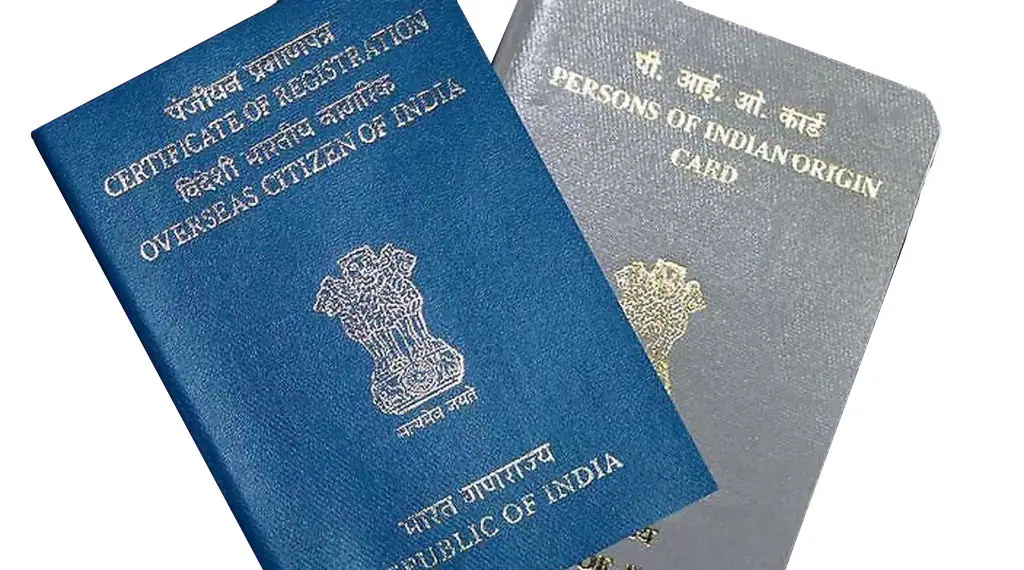
January 2006 (The OCI Framework Launches): The Overseas Citizenship of India (OCI) scheme launches, offering lifelong work and residence rights. However, because the Citizenship Act of 1955 strictly prohibits dual nationality, OCI cardholders remain legally classified as foreign nationals.
December 2008 (The Closing of the Gates): Fearing a dilution of local development, the Ministry of Youth Affairs and Sports (MYAS) issues a strict decree mandating that only valid Indian passport holders can represent the nation.
August 2012 (The Arata Izumi Precedent): Japanese-born midfielder Arata Izumi makes a life-changing sacrifice, formally surrendering his Japanese passport to naturalize as an Indian citizen. He debuts for India in February 2013. Today, Arata coaches youth in Pune and strongly warns against "parachuting" overseas players, advocating instead for structural youth development.
January 2015 (The Merger of Schemes): The government officially merges the PIO scheme into the OCI framework, invalidating separate PIO cards and restricting sports representation further.
November 2025 (The Ryan Williams Awakening): Anglo-Indian midfielder Ryan Williams of Bengaluru FC - whose grandfather Lincoln Grostate played for Bombay in the 1950s Santosh Trophy - surrenders his Australian passport. Backed by a FIFA switch, he debuts for India in March 2026, offering immediate competitive quality.
June 2026 (The Dual Strategy): The AIFF Special General Body Meeting proposes allowing clubs to field three foreigners and one OCI cardholder in domestic lineups. Simultaneously, the MYAS submits a "Sports Passport" proposal to the Prime Minister’s Office, seeking a special eligibility pathway for qualifying OCI athletes to compete without surrendering foreign passports, similar to Middle Eastern naturalization templates.
July 2026 (A Hard Dose of Reality): At the joint press conference, the AIFF delivers a pragmatic reality check. For the 2026-27 season, any signed OCI players will still be registered strictly under the six-foreigner quota, as the federation cannot bypass central sports policies until the central government officially codifies the Sports Passport.
Tactical Liberty and National Identity
The restructuring also resolved a highly contested tactical policy. In June 2026, the AIFF proposed a mandatory rule requiring clubs to keep an Indian striker on the field for all 90 minutes of ISL and IFL games. While intended to develop a successor to the legendary Sunil Chhetri, clubs vehemently opposed the mandate, arguing it would artificially inflate domestic player salaries and strip managers of tactical flexibility. AIFF Deputy General Secretary M. Satyanarayan clarified that the striker rule is purely optional. This tactical freedom allows clubs to remain sustainable, while they collaboratively work to establish youth academies directly with FIFA. Concurrently, the AIFF continues its bid to rename itself the "Football Federation of Bharat" (FFB) to realign its identity. Ultimately, the transition to a club-led commercial structure, combined with the pending Sports Passport legislation, marks a desperate but highly professionalized attempt to pull Indian football out of its systemic stagnation.
Comments (0)
to post comments, replies, and votes.
Loading comments…