Indian Women’s League 2026-27: AIFF Sets October Start as Top Two Tiers Eye Expansion and Higher Standards
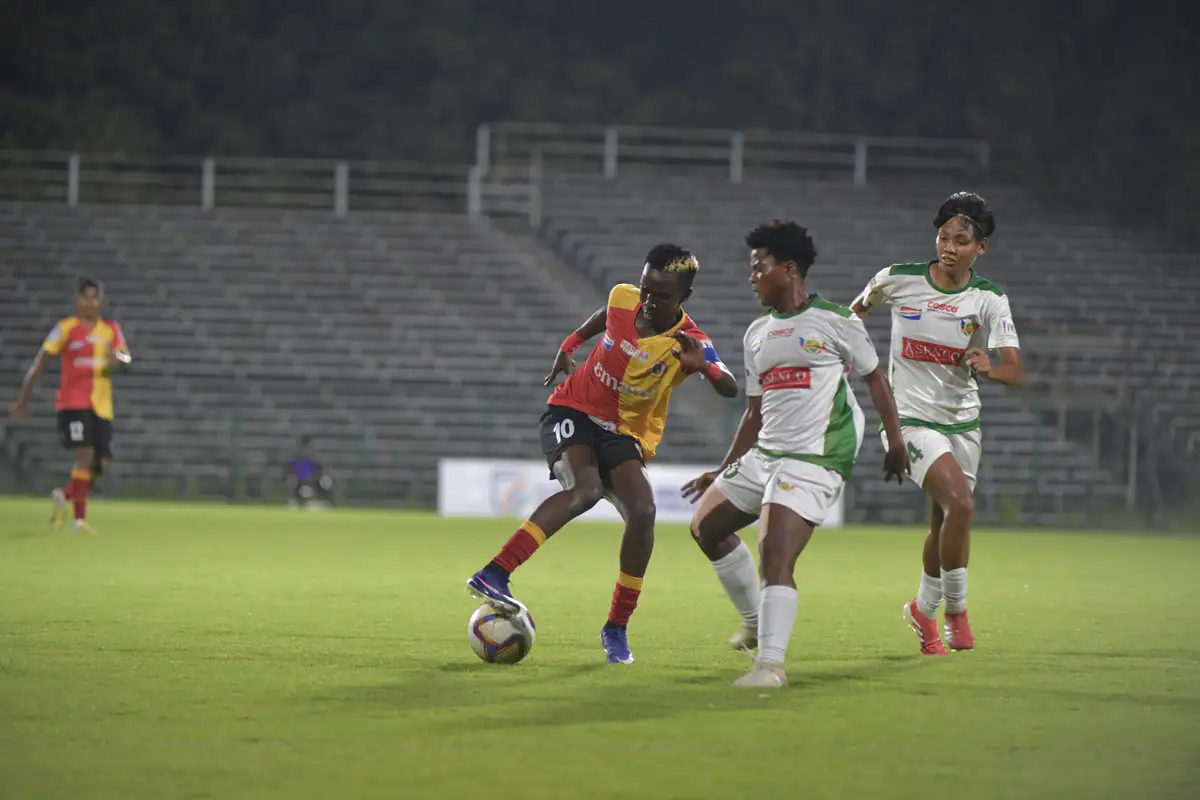
The All India Football Federation (AIFF) has announced the start dates for the 2026-27 seasons of the Indian Women’s League (IWL) and Indian Women’s League 2 (IWL 2), setting the stage for another important season in the development of women’s club football in India.
The IWL, India’s top tier of women’s club football, will begin on October 16, 2026, with eight teams competing for the title. The second tier, IWL 2, will start a week later on October 23, with 20 clubs set to battle through the group stage for promotion opportunities.
The announcement comes with the AIFF also outlining several structural changes that could have a significant impact on the women’s football ecosystem in the coming years. From higher coaching licence requirements to restrictions on players moving between the two leagues, the governing body is looking to strengthen the competitive and technical foundations of the domestic game.
East Bengal begin title defence
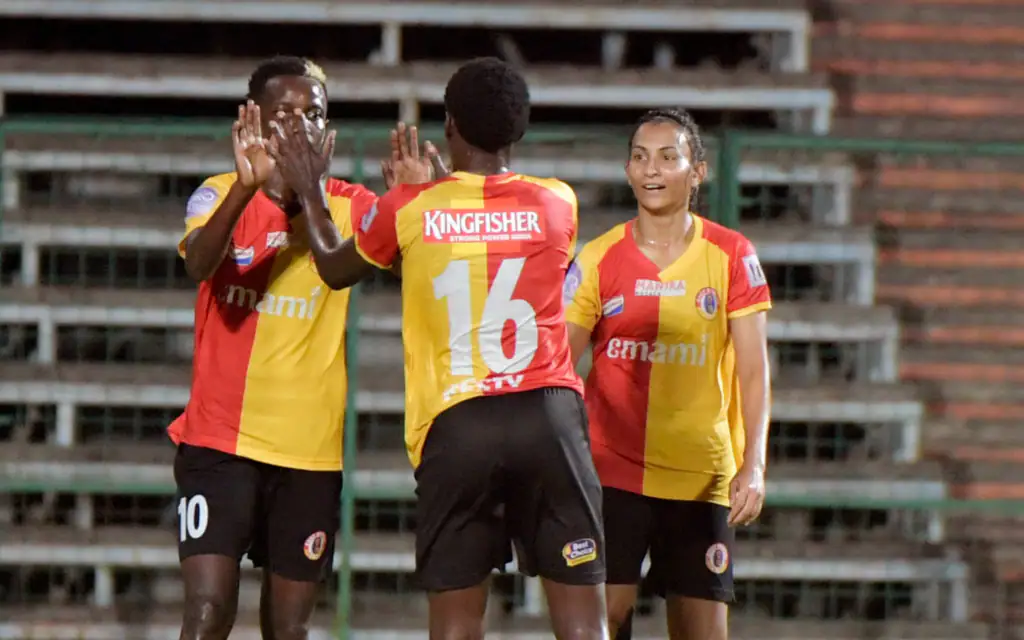
East Bengal FC will enter the 2026-27 IWL season as defending champions after securing their maiden league title in the 2025-26 campaign. The Kolkata club finished the previous season strongly, defeating Sribhumi Football Club 2-0 on the final matchday. Fazila Ikwaput opened the scoring from the penalty spot before Sulanjana Raul added a second in the 55th minute.
Ikwaput was one of the standout performers of the campaign, finishing as the league's Best Striker. She scored 20 goals during the season and also became the outright highest goalscorer in IWL history, moving beyond Sabitra Bhandari's previous mark.
The new season will see East Bengal compete alongside Sethu FC, Kickstart FC, Nita FA, Gokulam Kerala FC and Garhwal United FC, who were all part of last season's IWL. HOPS FC and Juba Sangha FC have earned promotion from IWL 2 to complete the eight-team field. The IWL 2025-26 season also saw Garhwal United avoid relegation on the final day after beating Sesa Football Academy 3-1. Sribhumi and Sesa FA, meanwhile, were relegated to IWL 2.
IWL 2 set for 20-team battle
The second tier will have a considerably larger field, with 20 clubs divided into four groups of five for the opening stage.
The group winners and the two best second-placed teams will progress to a six-team final round, which begins on November 25. The format is designed to give more clubs meaningful competitive fixtures while creating a clearer pathway towards the country's top division.
One important new regulation will also prevent players registered or signed by an IWL club from participating in IWL 2 during the same season. The move is aimed at ensuring that players in the second tier receive genuine opportunities for playing time rather than being displaced by players already contracted to top-flight clubs.
The AIFF League Committee has also approved higher minimum coaching qualifications for both divisions, although the changes will come into effect from the 2027-28 season. In the IWL, head coaches will need to hold an AFC A Licence, while assistant coaches will require an AFC B Licence. For IWL 2, the minimum requirement will be an AFC B Licence for head coaches and an AFC C Licence for assistants.
The move represents an attempt to raise technical standards across women's club football. As the competitions become more professional and the player pool expands, stronger coaching structures will be increasingly important for player development and the overall quality of the league.
The AIFF has also revised the disciplinary regulations concerning yellow-card accumulation. Under the new system, a player's first suspension will come after three yellow cards, followed by another suspension for every additional two yellow cards.
AIFF targets 12-team IWL
Perhaps the most significant announcement concerns the long-term expansion of the IWL.
The league currently has eight teams, but the AIFF is targeting an increase to 10 clubs by the 2028-29 season and eventually 12 teams by 2032. Alongside the expansion in the number of clubs, the federation wants the IWL to feature approximately 90 matches by 2028-29. The objective is to provide Indian players with more competitive exposure and greater playing time. A larger and stronger domestic league could also help create a deeper talent pool for the Indian women's national team.
The 2025-26 season provided an indication of the talent available across the competition. Alongside Ikwaput's scoring exploits, Sethu FC's Nirmala Devi Phanjoubam was named Best Defender, Garhwal United's Sanfida Nongrum won Best Midfielder and East Bengal goalkeeper Panthoi Chanu Elangbam was named Best Goalkeeper.
The 2026-27 campaign therefore represents more than another title race. For the IWL, it is another step towards building a sustainable professional competition, while IWL 2 will play an increasingly important role in developing clubs and players capable of competing at the highest level.
With the season beginning in October, the immediate focus will be on the eight IWL clubs and the 20 teams entering IWL 2. But the bigger picture is the AIFF's long-term ambition: more clubs, more matches, better coaching and a broader player pool.
If that roadmap is successfully implemented, the IWL could enter the next decade as a significantly deeper and more competitive competition—and provide Indian women's football with the foundation needed to improve its standing on the international stage.
Comments (0)
to post comments, replies, and votes.
Loading comments…