Institutional Fracture in Indian Football: Jamshedpur FC ISL Exit
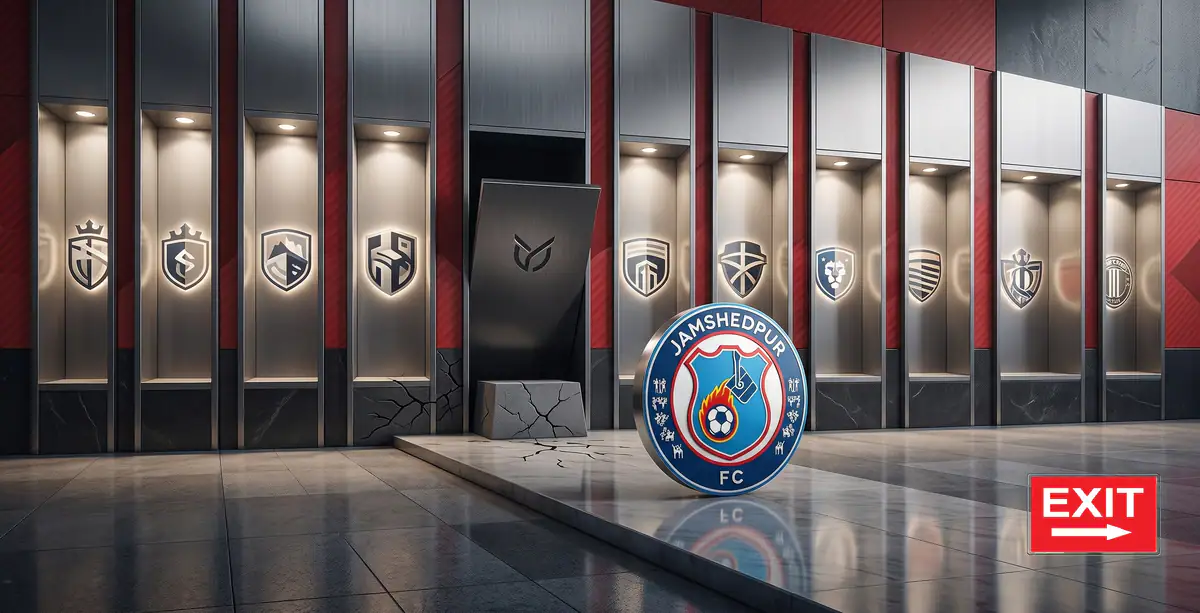
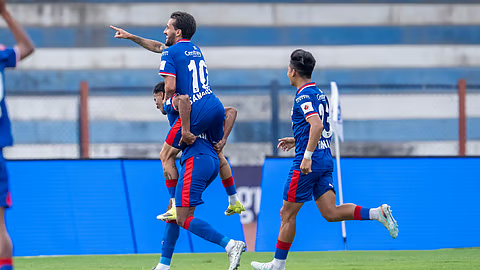
On July 31, 2026, Indian domestic football experienced a significant structural disruption when Jamshedpur Football Club announced its complete withdrawal from the Indian Super League (ISL) ahead of the 2026–27 season. The operating entity, Jamshedpur Football and Sporting Private Limited (JFSPL - a wholly owned subsidiary of corporate giant Tata Steel) confirmed via an official statement that it would discontinue first-team operations following the conclusion of its ongoing Durand Cup campaign.
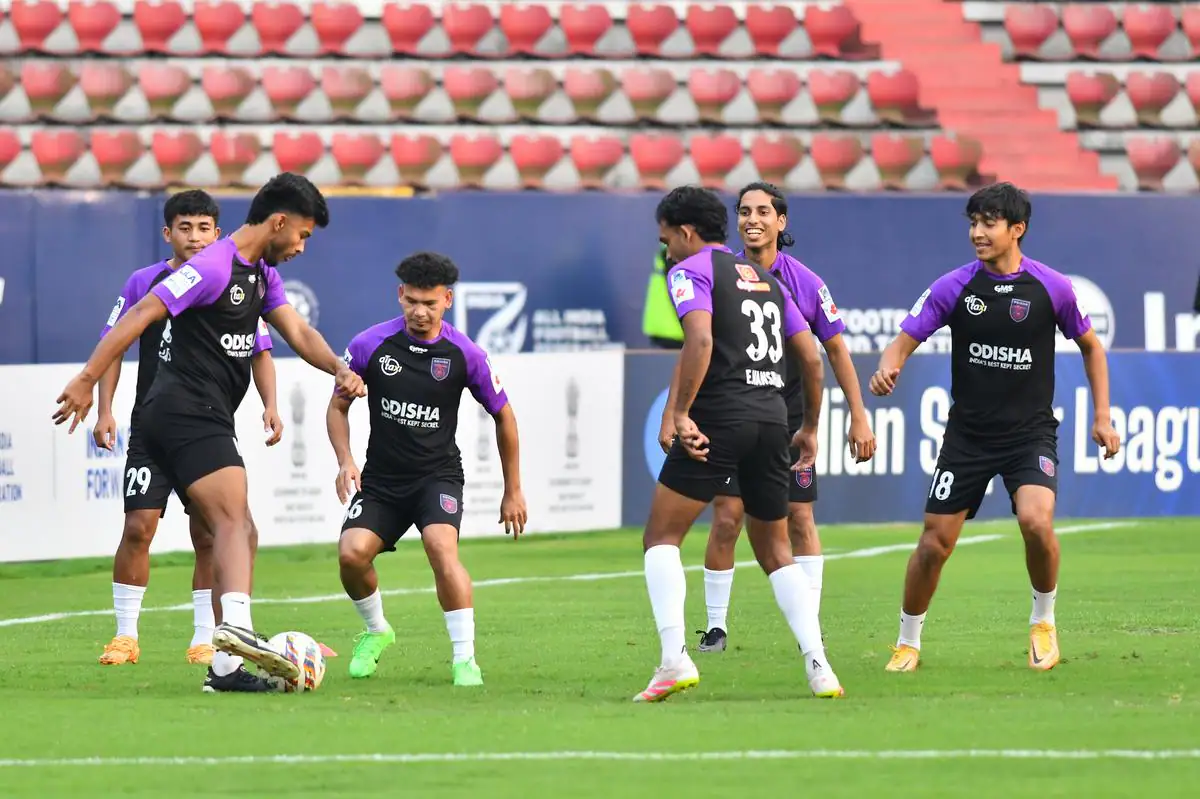
The announcement arrived while the squad was actively competing in the Durand Cup, having opened its group stage with a dominant 5–0 win over Sri Lanka Army’s Defenders FC and preparing for a match against SC Delhi. Players and technical staff were summoned to a team meeting barely an hour before the public notice was posted on official channels. The news caught the locker room unprepared during active match preparation.
Key Operational and Historical Parameters
Operating Entity: Jamshedpur Football and Sporting Private Limited (JFSPL), a wholly owned subsidiary of Tata Steel.
League Entry & Tenure: Joined the Indian Super League as an expansion franchise in the 2017–18 season, competing across 9 consecutive campaigns.
Pinnacle Achievement: Won the ISL xLeague Winners' Shield in the 2021–22 season under head coach Owen Coyle.
2025–26 Season Finish: Ranked 6th in the league standings, accumulating 22 points from 13 matches.
Financial Exit Catalyst: Non-payment of the mandatory ₹55 lakh administrative participation fee installment prior to the extended deadline on July 31, 2026.
Post-Exit League Footprint: Reduces the top-flight ISL competition footprint from 14 to 13 professional clubs.
The immediate commercial trigger was JFSPL’s non-payment of the mandatory administrative participation fee instituted under the All India Football Federation (AIFF) and ISL governance framework. The AIFF had set an initial deadline of July 20, 2026, for top-tier clubs to deposit the first installment of ₹55 lakh out of a total ₹1.1 crore annual administrative fee. Although the governing body extended the remittance window to July 31, 2026, Jamshedpur FC failed to process the payment. Peer clubs facing payment delays, including Varanasi-based Inter Kashi, remitted their funds prior to the extended deadline. Jamshedpur FC’s non-compliance triggered its formal exit, reducing the top flight to 13 participating clubs for the 2026–27 campaign.
Economic Rationales, Corporate Strategy, and Governance Restructuring
The decision to pull out of top-flight football stems from deeper structural and financial issues within the sport's business model. In official correspondence addressed to AIFF Deputy Secretary General M. Satyanarayan, JFSPL Chief Executive Officer Mukul Choudhari stated that the primary driver behind the exit was the entity’s inability to generate positive operational cash flows. JFSPL had relied almost entirely on parent company equity injections and corporate sponsorship commitments from Tata Steel to finance its yearly operating expenditures. Upon reviewing projected operating costs against actual returns, the company's board of directors concluded that participating in the ISL, in its present structure, was financially unviable for the foreseeable future.
Central Financial Imbalance Mechanics
High Capital Drain: Rising operational costs driven by recurring administrative compliance fees, top-tier player contracts, and logistical overheads.
Depressed Revenue Yield: Diminished central broadcast revenue distributions alongside limitations on local match-day and commercial sponsorship monetization.
Operational Result: Unsustainable negative cash flows, resulting in the board's decision to discontinue top-flight first-team funding.
This decision occurred alongside significant governance changes within Indian domestic football. Following the expiration of the long-standing Master Rights Agreement (MRA) between the AIFF and Football Sports Development Limited (FSDL) in late 2025, the AIFF reached an agreement on July 8, 2026, granting clubs direct commercial oversight of the league through a club-led operating model, while the federation retained a 10% equity stake.
However, this governance shift coincided with operational disruptions. The preceding 2025–26 ISL season was significantly shortened, consisting of a single-leg schedule of just 13 matches per club compressed between February and May 2026. This reduced schedule diminished match-day gate revenues, lowered broadcasting valuations, and restricted local sponsorship activations.
While the new corporate model was intended to grant franchises greater control over central asset commercialization, the immediate financial demands—including administrative compliance fees—prompted Tata Steel's leadership to curtail capital deployment in professional team operations.
Contractual Repercussions and Dressing Room Impact
The sudden decision to dissolve first-team operations created immediate contractual and logistical challenges for the playing squad and coaching staff. Jamshedpur FC possessed a fully assembled roster under Scottish manager Owen Coyle, including 12 first-team players under multi-year contracts and six additions secured specifically for the Durand Cup. Senior figures, including club captain Pronay Halder and defender Pratik Chaudhari, publicly expressed distress over the lack of advance notice, noting that many players had turned down competing offers from other clubs due to the perceived security of the Tata brand.
To mitigate potential legal and labor disputes, JFSPL assured the AIFF that it would satisfy all existing financial obligations to players, technical staff, and operational employees according to their signed agreements. Nevertheless, releasing a complete roster into the transfer market shortly before the domestic transfer window closes presents significant operational challenges. Across the broader ISL ecosystem, approximately 150 player contracts were set to expire or undergo renegotiation ahead of the 2026–27 season, compounding market saturation and making prompt re-employment difficult for displaced athletes.
Ecosystem Reactions: Players, Leadership, and Fan Communities
The exit of one of Indian football's established corporate backers produced widespread reactions from prominent figures across the domestic game. National team leadership, rival club executives, and local fan groups expressed surprise at the loss of an institutional pillar.
Key Stakeholder Positions Across the Football Ecosystem
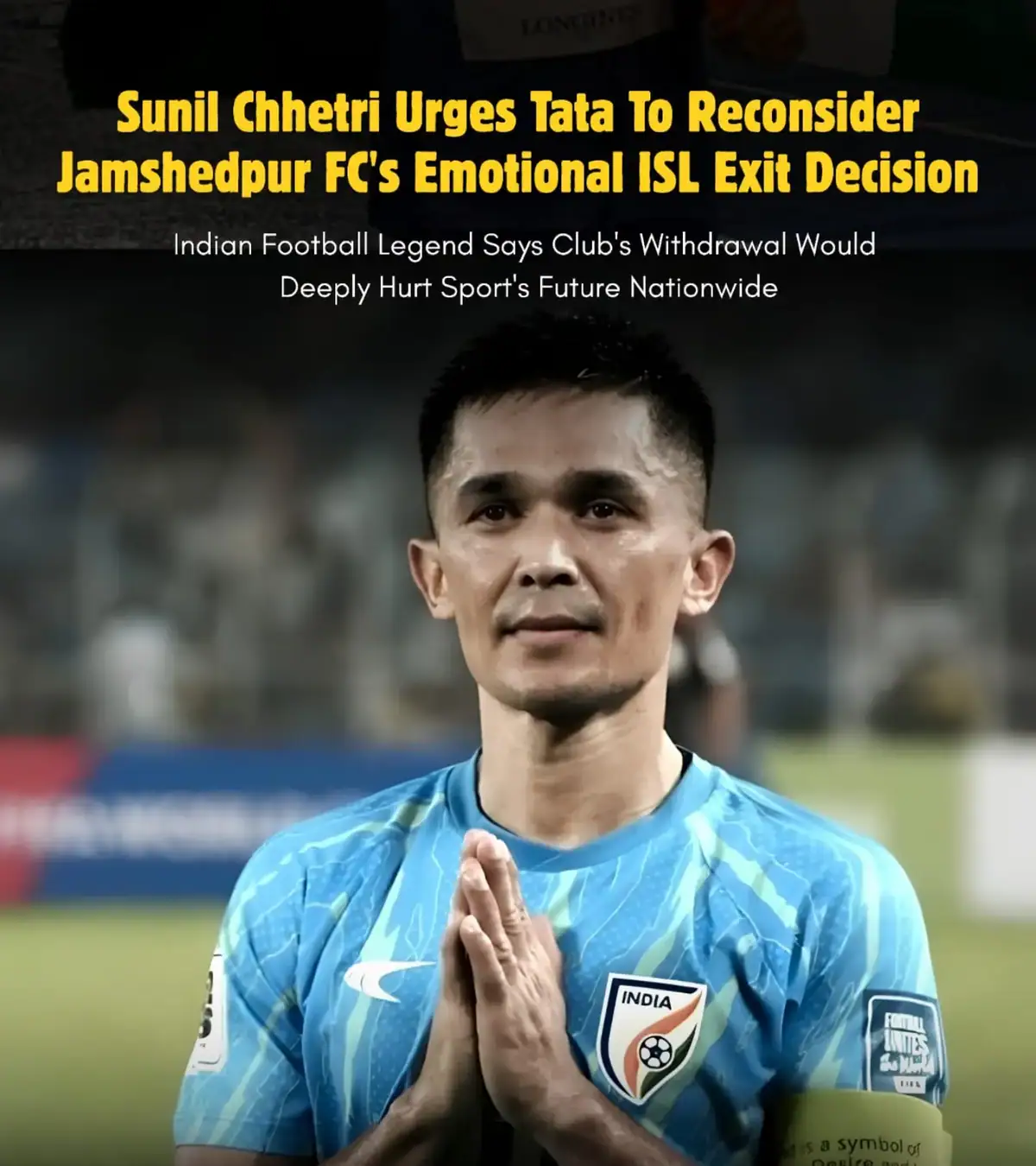
Sunil Chhetri (National Team Captain & Bengaluru FC): Described the decision as a "punch to the gut" and a "disaster with no alternative," making a direct public appeal to Tata Group leadership to "pick heart over head" and reconsider.
Gurpreet Singh Sandhu (International Goalkeeper): Termed the departure a "major loss" for Indian football, highlighting that Jamshedpur FC represented institutional stability in a historically volatile league.
Sandesh Jhingan (Senior National Defender & FC Goa): Emphasized that the Tata Group’s decades of structural commitment through the academy and club had built essential trust across domestic football pathways.
Pronay Halder & Pratik Chaudhari (First-Team Leadership): Publicly appealed to corporate leadership to reconsider, emphasizing the disruption to professional livelihoods, contracted personnel, and youth pathways.
The Red Miners (Official Supporters Group): Expressed deep disappointment over losing top-tier fixtures at the JRD Tata Sports Complex, affectionately known as "The Furnace".
Indian national team captain Sunil Chhetri characterized the exit as a critical blow to the sport's infrastructure. While acknowledging the financial considerations behind boardroom decisions, Chhetri urged Tata Group executives to consider the broader systemic impact and continue supporting the senior team. Similar statements were issued by national team regulars Gurpreet Singh Sandhu and Sandesh Jhingan, who emphasized that corporate departures undermine institutional stability, drawing comparisons to previous club closures like Pune City FC, Delhi Dynamos, and Hyderabad FC.
Local fan communities also voiced disappointment. The official supporters group, The Red Miners, had established a strong fan culture at the JRD Tata Sports Complex, known locally as "The Furnace". The loss of top-tier matches leaves a notable gap in the region's sporting landscape.
Strategic Pivot to Grassroots Development and Future Outlook
Despite closing its professional first-team operations, JFSPL clarified that it is not abandoning football entirely. The organization plans to redirect its capital and organizational efforts toward grassroots training, youth talent identification, and academy infrastructure.
At the center of this strategy is the Tata Football Academy (TFA), established in 1987 in Jamshedpur. TFA has historically functioned as one of India's top youth development centers, producing over 100 international players, including former national team captains and regulars such as Renedy Singh, Subrata Paul, and Mahesh Gawli. By stepping back from the financial costs of top-flight professional competition—such as foreign player salaries, travel logistics, and administrative fees—JFSPL aims to operate TFA primarily as an elite training academy and talent feeder network for the broader domestic market.
However, industry analysts point out that operating a youth academy without an affiliated top-flight team creates structural challenges. Graduates from the academy will now need to seek professional opportunities through third-party clubs rather than moving directly into a top-tier senior squad within the same organization.
For the Indian Super League, navigating the 2026–27 season with 13 teams highlights the importance of economic sustainability under its new club-led structure. Ensuring long-term stability across top-flight domestic football will require the new management entity to re-evaluate central revenue-sharing mechanisms, align administrative fees with realistic club income, and establish standardized multi-year competition calendars. Without these structural adjustments, the top flight risks further instability among its remaining corporate and private investors.
Comments (0)
to post comments, replies, and votes.
Loading comments…