ISL Set to Discuss PIO/OCI Quota: Game-Changer for Indian Football or Another Short-Term Fix?
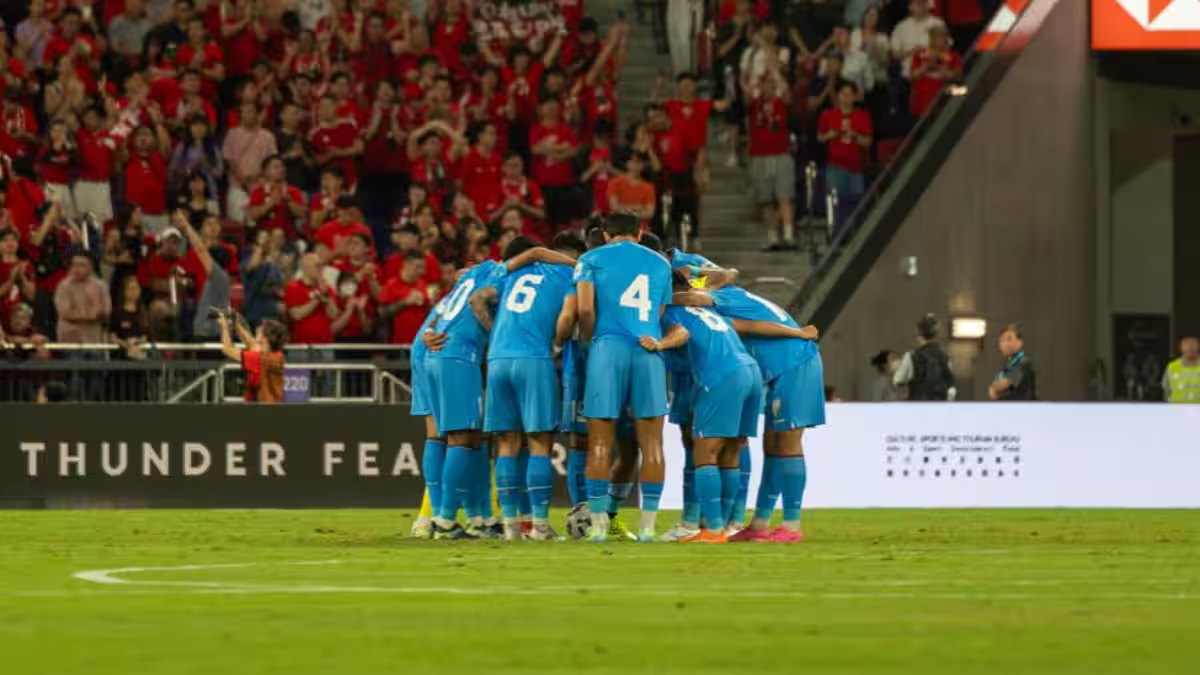
Indian football could be on the verge of one of its most significant policy shifts in recent years.
According to media reports, the All India Football Federation (AIFF) and Indian Super League clubs are discussing the introduction of a dedicated Overseas Citizen of India (OCI) or Person of Indian Origin (PIO) quota from the 2026-27 season. The proposal would potentially allow players of Indian heritage currently playing abroad to compete in the ISL. Names such as Yan Dhanda, Nikhil Hundal and Danny Raikhy have frequently been mentioned in discussions surrounding the initiative.
AIFF president Kalyan Chaubey has reportedly encouraged clubs to focus on recruiting players who either possess OCI status or could qualify for it. Discussions have also included maintaining at least one Indian striker on the field to support domestic player development.
The move comes amid growing concerns regarding the quality of Indian footballers, India's declining FIFA ranking, and the national team's failure to qualify for the AFC Asian Cup 2027.
However, while the proposal has generated excitement among supporters, the reality is significantly more complicated than simply creating a quota.
From a footballing perspective, the benefits are obvious. Players such as Yan Dhanda have developed within elite European football environments and possess technical qualities currently rare in Indian football. Others, including Hundal and Raikhy, have been exposed to competitive systems abroad and could immediately raise the overall standard of the league.
Their arrival would likely improve training intensity, tactical awareness and professionalism within ISL squads. For a league frequently criticised for inflated salaries and limited competition, exposure to players developed in stronger football ecosystems could provide a valuable benchmark for domestic players.
The argument supporting the quota is straightforward: if Indian football wants to improve quickly, it needs better players competing within its ecosystem.
However, critics argue that the focus on PIO and OCI players risks masking deeper structural issues. Indian football's struggles cannot be attributed solely to a lack of overseas Indian talent.
The league continues to face questions around salary inflation, declining competitiveness, inconsistent youth development and limited playing opportunities for young domestic footballers. Many observers point out that bringing in players such as Dhanda or Hundal will not automatically solve these issues.
A recurring concern is that once overseas players enter the ISL environment, they may eventually face the same challenges that affect domestic footballers: lower competitive intensity, fewer high-quality foreign players and a league structure that has struggled to maintain upward momentum in recent seasons.
Instead of relying on a quota as a quick fix, some believe clubs should prioritise reforms such as stricter salary controls, improved youth pathways and smarter recruitment strategies. The objective should be to raise the level of the entire football ecosystem rather than simply importing a handful of better players.
Perhaps the biggest misconception surrounding the PIO/OCI debate relates to national team eligibility. Many fans assume that allowing OCI players into the ISL automatically creates a pathway for them to represent India internationally. That is not currently the case. An OCI card is not citizenship.
OCI holders are foreign citizens who receive certain benefits and long-term residency rights in India. However, they remain citizens of another country and therefore remain ineligible to represent India under current Indian citizenship laws and FIFA regulations.
To play for the Indian national team, these players would ultimately need Indian citizenship. That process is far more demanding than simply spending one or two seasons in the ISL. Under the Citizenship Act, naturalisation generally requires a foreign national to complete 12 months of continuous residence immediately before the application, plus 11 years of residence during the preceding 14 years. The Government of India can exercise discretion in specific cases, but the standard process remains considerably stricter than many fans realise.
More importantly, India does not permit dual citizenship. This means any player wishing to represent India would likely need to renounce their existing nationality before obtaining an Indian passport. As a result, playing in the ISL for two seasons does not automatically make a player eligible for the national team.
Even if a dedicated PIO/OCI quota is introduced, players would still need to navigate the full citizenship process and satisfy government requirements before becoming available for India selection.
Despite the legal hurdles, the proposal remains significant. If implemented successfully, it could create a larger pool of players connected to Indian football and strengthen ties with the global Indian diaspora. For the national team, however, the benefits would only materialise if broader citizenship and eligibility issues are eventually addressed through legal and governmental channels.
Until then, the immediate impact would primarily be felt at club level.
The discussion surrounding a PIO/OCI quota reflects an important reality: Indian football needs fresh ideas and stronger talent pathways. Allowing overseas Indian-origin players into the ISL could improve the league's quality and expose young domestic players to higher standards on a daily basis. Yet the quota alone will not transform Indian football.
The sport's long-term growth still depends on stronger youth development, better coaching, improved competition structures and sustainable club models.
If the quota becomes part of a broader reform strategy, it could be a valuable step forward. If treated as a standalone solution, it risks becoming another headline-grabbing initiative that fails to address the deeper challenges holding Indian football back.
Comments (0)
to post comments, replies, and votes.
Loading comments…