Manas Dhamne Leads India’s New Tennis Generation as Young Stars Chase Global Breakthroughs
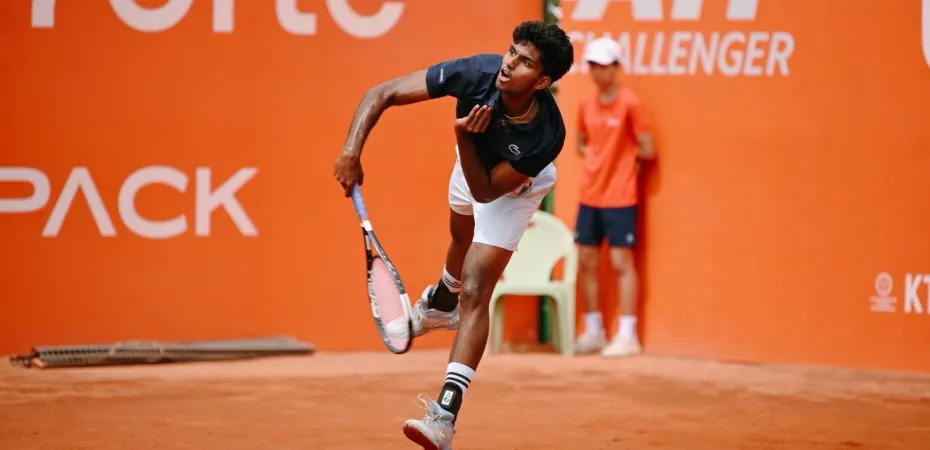
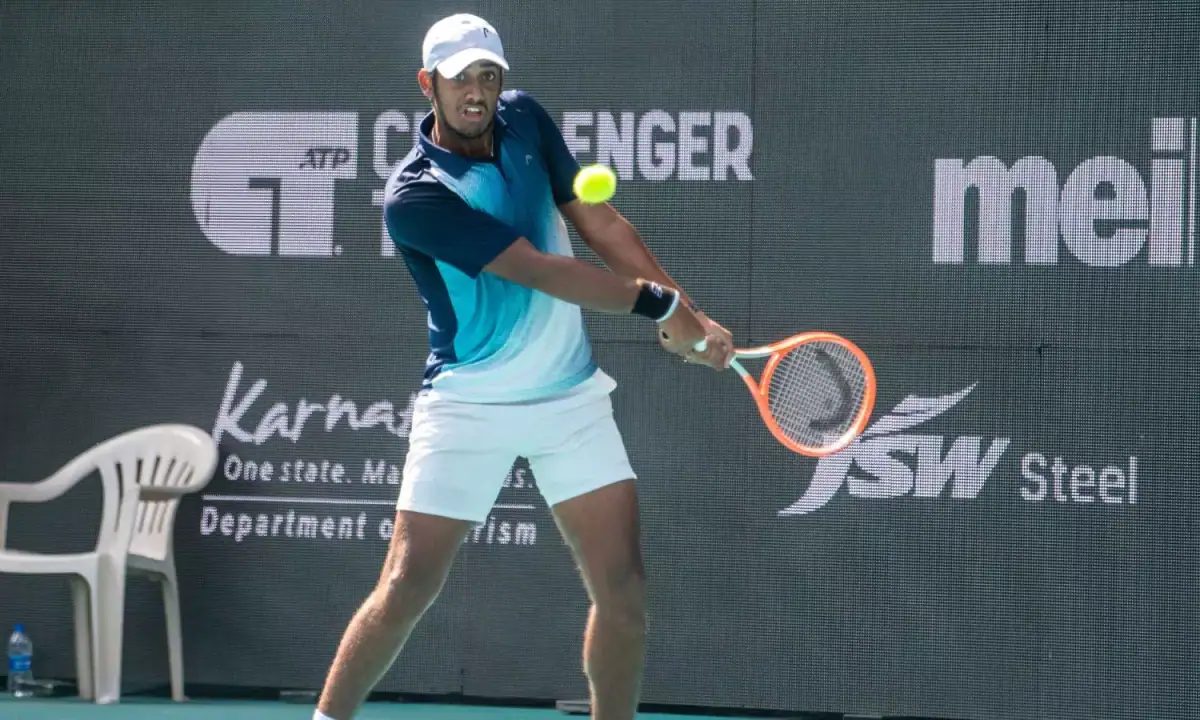
18-year-old Manas Dhamne is emerging as India’s biggest young men’s singles tennis prospect alongside a rising generation of Indian ATP players.
How many of us truly remember what we were doing at the age of 18? For most people, it is an age associated with school memories, college admissions and early uncertainty about the future.
But for a small group of athletes, 18 is the age where careers begin accelerating onto the global stage. One such athlete today is Manas Dhamne. The teenager from Satara, Maharashtra, is increasingly becoming one of the most exciting names in Indian tennis as he steadily climbs the professional circuit under the guidance of renowned coach Riccardo Piatti.
At just 18 years old, Manas has already reached a career-high ATP ranking inside the top 400 and is now positioning himself as India’s biggest hope for qualification to the prestigious Next Gen ATP Finals.
The Next Gen ATP Finals are not just another youth competition. Organised annually by the ATP, the tournament features the world’s best players aged 20 and under and is widely viewed as a showcase for the future stars of men’s tennis. The format itself is unique and designed to modernise the sport. Matches are played in a round-robin structure with shorter best-of-five-set contests, where each set consists of four games instead of the traditional six.
But beyond the format, what makes the event truly important is its history.
Several of the biggest names in world tennis used the tournament as a launchpad before becoming global superstars. Carlos Alcaraz, Jannik Sinner and Stefanos Tsitsipas all previously competed there before evolving into Grand Slam contenders and ATP Tour stars. That is why Manas’ current position in the qualification race matters so much.
The Indian teenager currently sits around 12th in the race standings and is the second-best Asian player in contention for qualification.
If Manas qualifies for the Next Gen ATP Finals, the achievement would carry significance far beyond rankings alone. It would mean finishing the season among the top eight ATP players globally aged 20 and under an extraordinary milestone for an Indian men’s singles player. More importantly, the exposure from the tournament could completely transform his career trajectory.
International visibility, sponsorship attention, wildcard opportunities into ATP events and increased media recognition often follow strong performances at elite youth tournaments. In a country where discussions around sporting investment and sponsorship frequently dominate conversations, a breakthrough at the Next Gen Finals could become a defining moment for Indian tennis visibility globally.
Yet Manas is not alone. Indian men’s singles tennis, long searching for consistent international-level depth, is quietly developing a new generation of players attempting to establish themselves globally.
Leading the list remains Sumit Nagal, still India’s top singles player and the country’s strongest ATP-level competitor.
Nagal reached a career-high ATP ranking of 68 in 2024 and continues competing regularly on the ATP Challenger circuit and Grand Slam qualifying stages. His success over the last few seasons has become extremely important because it demonstrated that Indian singles players can still compete internationally despite limited structural support compared to major tennis nations.
Behind him, several younger names are steadily rising.
Karan Singh has emerged as one of India’s fastest-rising young players after breaking into the ATP Top 450 range through strong Futures and Challenger performances. Meanwhile, Dhakshineswar Suresh has quietly produced consistent results across ITF and lower Challenger tournaments, gradually moving himself into India’s top group of singles professionals.
These may not yet be headline-grabbing rankings internationally, but for Indian tennis, they represent important developmental progress.
Alongside the younger generation, experienced professionals continue playing a major role within Indian tennis. Mukund Sasikumar remains one of the country’s most active Challenger-level competitors and continues to deliver strong performances across Asian circuits. Similarly, Sidharth Rawat has maintained stable ATP rankings through consistent domestic and ITF competition.
Players like these often become important benchmarks for younger athletes transitioning into professional tennis because they understand the physical and mental demands of surviving long seasons on the lower-tier circuits.
Other names steadily climbing the rankings include Aryan Shah, Digvijay Pratap Singh, Prajwal Dev and Manish Sureshkumar. Some are balancing singles and doubles schedules, while others are focusing heavily on ITF events to improve rankings and gain international match exposure. Collectively, they form a broader picture of Indian men’s tennis that often goes unnoticed outside specialist circles.
Indian tennis has historically struggled with continuity in singles development. While India has consistently produced world-class doubles players, building sustained success in men’s singles has remained far more difficult due to infrastructure gaps, financial demands and the enormous challenge of competing internationally week after week.
That is why the emergence of players like Manas Dhamne feels particularly important. For perhaps the first time in years, India appears to have a young generation slowly building ATP-level foundations together rather than relying on isolated individual success stories.
And if Manas can eventually reach the Next Gen ATP Finals, it would not only mark a breakthrough for one player it could become a defining moment for the future direction of Indian men’s tennis itself.
Comments (0)
to post comments, replies, and votes.
Loading comments…