SAFF Championship 2026: India Begin Title Defence as Bangladesh Host South Asian Football Showdown
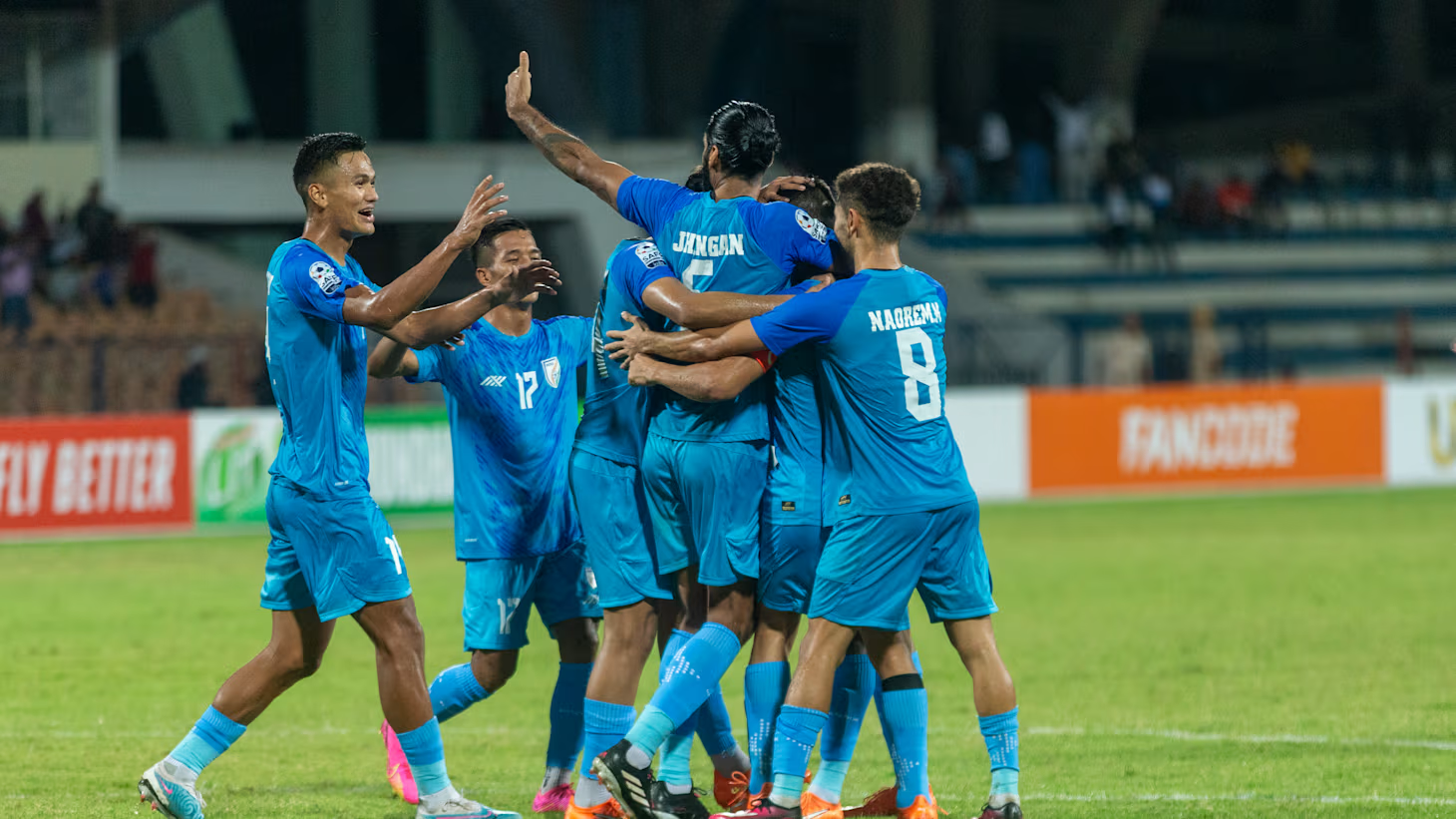
The SAFF Championship 2026 begins in Bangladesh on November 5, with India defending their title against five rivals. The final is scheduled for November 17.
The 15th edition of the SAFF Championship will bring six South Asian nations together in Bangladesh from November 5 to 17, with regional supremacy and a coveted international trophy at stake.
India enter the competition as defending champions and the most successful team in the tournament's history, but will face a competitive field featuring hosts Bangladesh, Bhutan, Sri Lanka, Maldives and Pakistan.
The tournament offers a significant opportunity for the participating nations to claim regional bragging rights and add silverware to their footballing achievements. With Nepal absent because of its FIFA suspension, six of the seven SAFF member nations will compete for the title.
India have won the championship nine times, comfortably the most by any nation. Maldives are next on the honours list with two titles, while Bangladesh have won it once. Bhutan, Pakistan and Nepal are yet to lift the trophy.
The participating teams have been divided into two groups of three. Group A features hosts Bangladesh, Bhutan and Sri Lanka, while Group B comprises defending champions India, Maldives and Pakistan.
The FIFA rankings highlight the competitive landscape. India are the highest-ranked team in the tournament at 138th, followed by Maldives at 175th, Sri Lanka at 184th, Bangladesh at 182nd, Bhutan at 192nd and Pakistan at 197th. The rankings underline the relatively narrow gap between several teams and suggest that the group-stage matches could be closely contested.
India will have to negotiate a group featuring two opponents with different footballing histories. Maldives have won the championship twice and cannot be underestimated, while Pakistan will be keen to make an impression in a tournament that provides an important opportunity to compete for regional honours.
In Group A, Bangladesh will enjoy home advantage, an important factor in a competition where familiar conditions and local support could influence performances. Sri Lanka and Bhutan will look to challenge the hosts and secure a place in the knockout rounds.
India Carry the Weight of History
India arrive as the team to beat, having won the SAFF Championship nine times. Their record makes them the most successful side in the competition, and the defending champions will be expected to mount another serious title challenge.
However, past success does not guarantee an easy campaign. The group-stage draw places India alongside the Maldives and Pakistan, both of whom will see the tournament as an opportunity to challenge the regional hierarchy.
Maldives, in particular, have a strong record in the competition, with two championship titles to their name. Their presence means India cannot afford to take their group fixtures lightly. For Pakistan, the tournament represents another chance to compete against regional opponents and potentially make a deeper run. Their position in the FIFA rankings places them below India and Maldives, but knockout football can produce surprises when teams find form at the right time.
Hosts Bangladesh will be among the teams attracting attention in Group A. Playing on home soil offers an opportunity to build momentum with the support of their own fans, but the challenge will be to convert that advantage into results.
Their group opponents, Sri Lanka and Bhutan, will also be targeting qualification for the semifinals. Bhutan, who have never won the championship, will be looking to make an impact, while Sri Lanka will hope to progress beyond the group stage and challenge for a place in the final.
With three teams in each group, every fixture carries considerable importance. A strong start could prove decisive in determining which two teams advance from each section.
The championship begins on November 5, with the group-stage fixtures scheduled across November 5, 8 and 11. The top two teams from each group will advance to the semifinals, scheduled for November 14. The Group A winners will face the Group B runners-up, while the Group B winners will take on the Group A runners-up.
The two semifinal winners will then meet in the final on November 17 to determine the 2026 SAFF champions.
The compact schedule leaves little room for teams to recover from poor results. Every match will matter, particularly in groups where a single defeat could complicate qualification.
Squad Availability Could Be an Early Challenge
One factor worth watching is the timing of the competition in relation to the international calendar. The opening fixtures fall before the FIFA November international window, which could affect the availability of players based outside their home countries.
National teams may therefore begin the tournament without some overseas-based players, depending on their club commitments and release arrangements. This could influence squad selection and the balance of the teams, particularly for countries relying on footballers playing abroad.
The ability to adapt to available personnel and build combinations quickly could be as important as individual quality during the group stage.
India begin as defending champions and the clear historical benchmark, but the 2026 edition offers several potential challengers. Maldives have the second-best title record, Bangladesh have home advantage, and Sri Lanka, Bhutan and Pakistan will be eager to upset the established order. For the six participating nations, the next two weeks represent an opportunity to establish regional supremacy. For India, the objective is straightforward: defend the title and extend their record to ten championships.
The race begins in Bangladesh on November 5, with the final scheduled for November 17. South Asia's footballing rivals now have their chance to settle the question of regional supremacy on the pitch.
Comments (0)
to post comments, replies, and votes.
Loading comments…