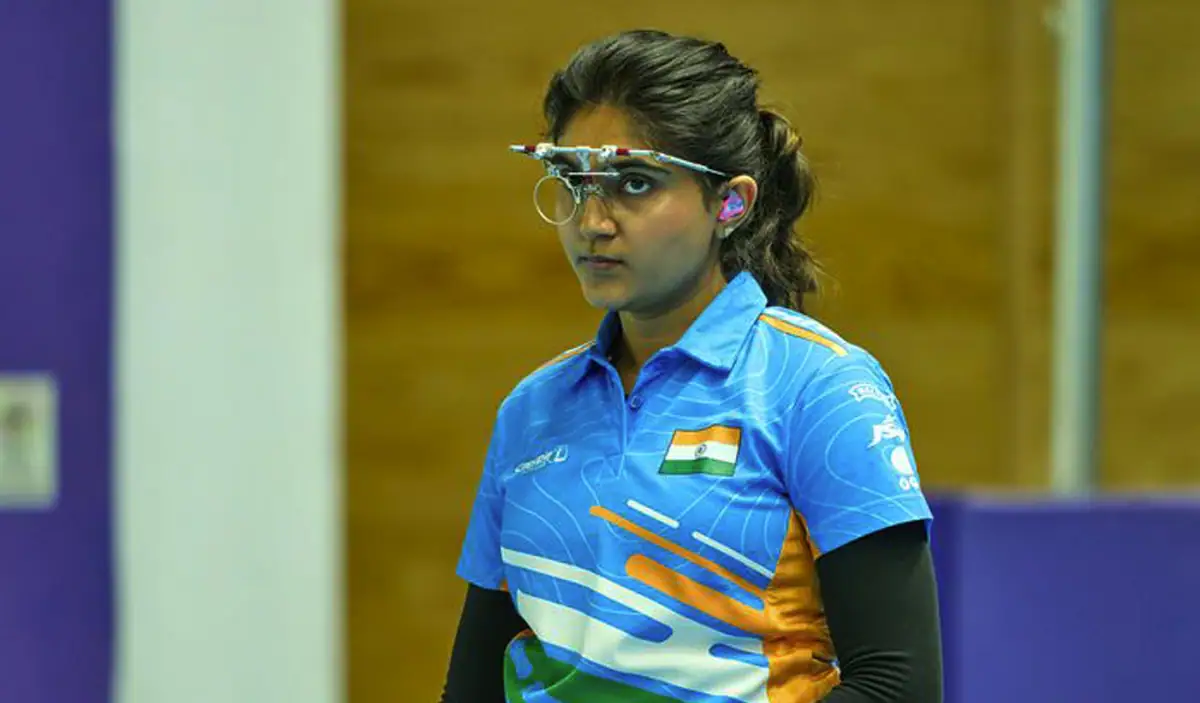
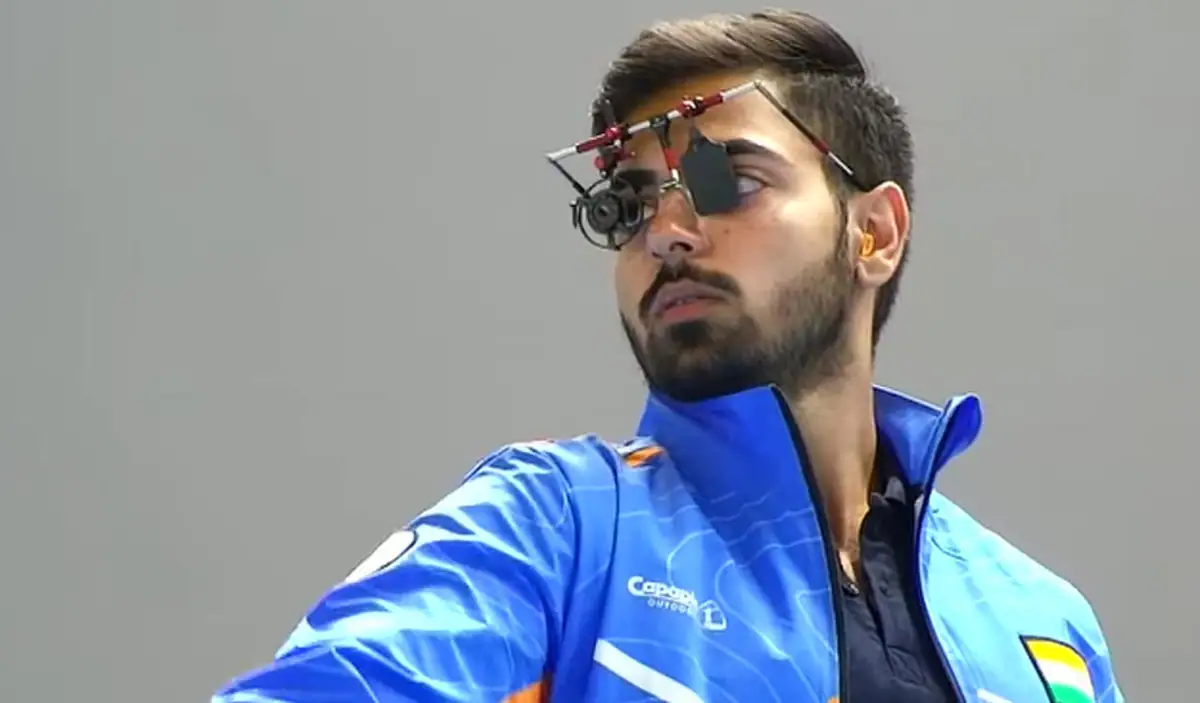
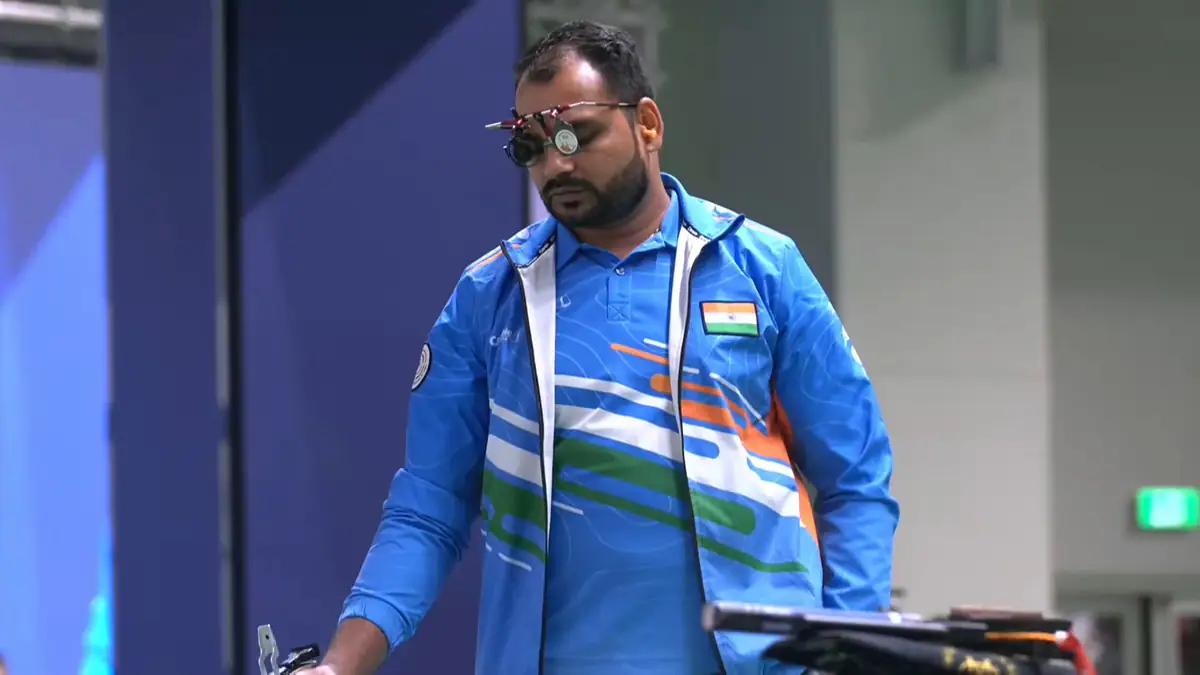
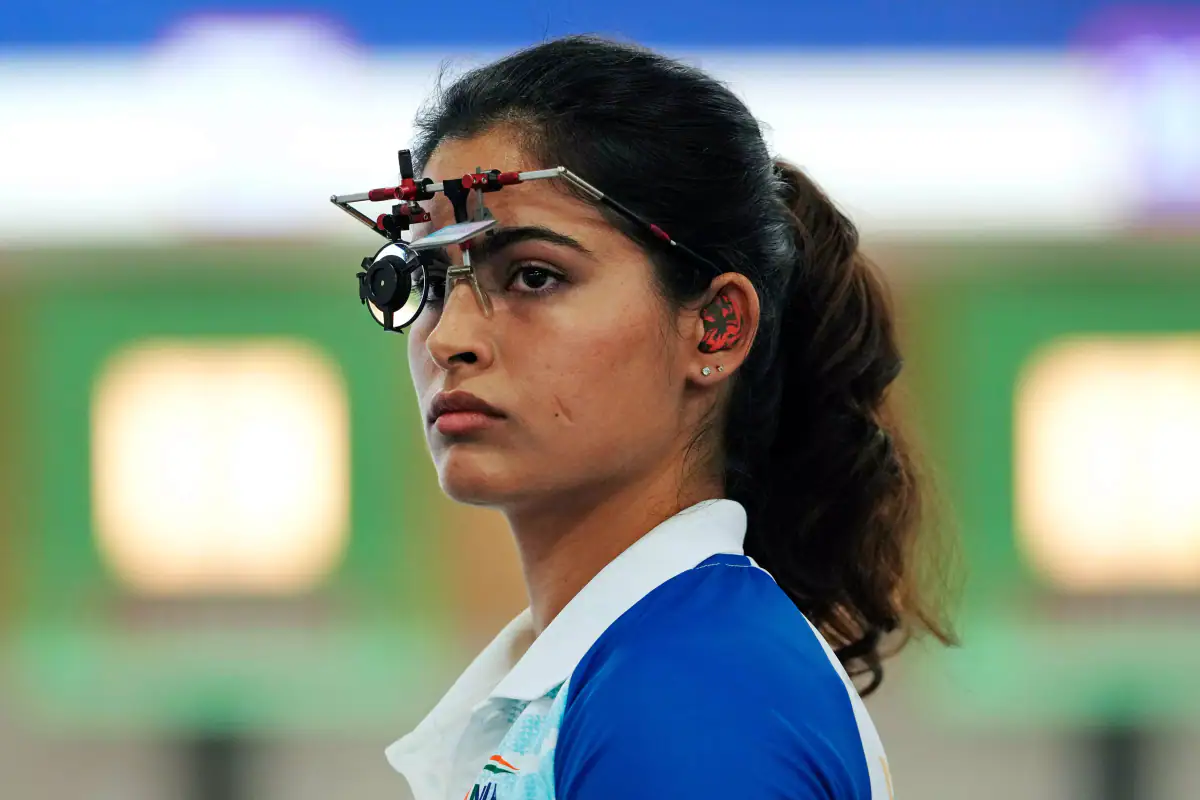
Samrat Rana: From World Champion to World No. 6, The Indian Pistol Shooter's Road to LA 2028
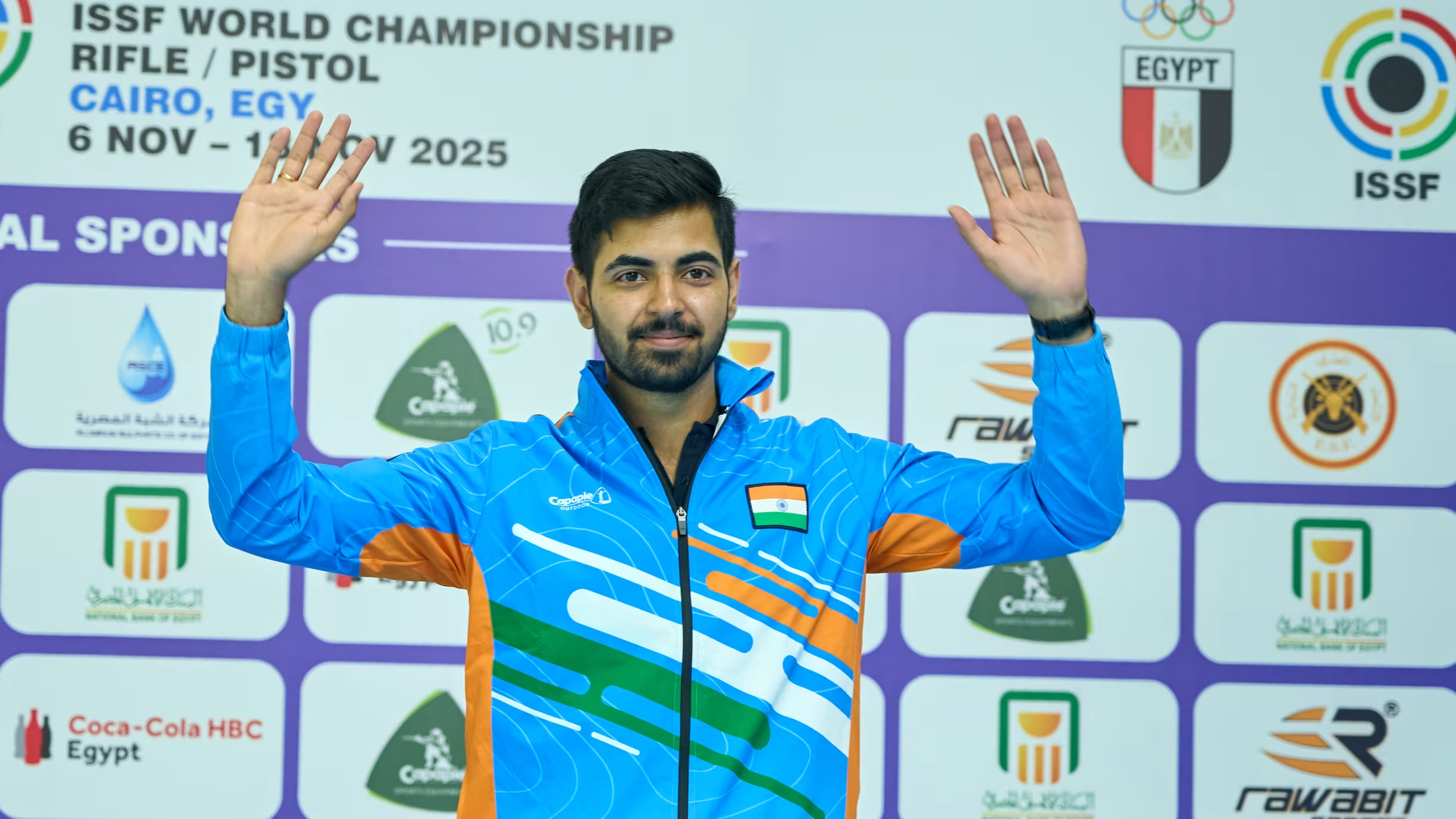
Samrat Rana's rise to the top of international shooting has been remarkable, but his journey towards the Los Angeles 2028 Olympics presents a different kind of challenge.
The 21-year-old Indian pistol shooter has already achieved what many athletes spend an entire career chasing becoming a senior individual world champion. However, despite holding the World No. 6 position in men's 10m air pistol and establishing himself among the world's elite, Rana finds himself fighting to regain a place in India's travelling international squad.
His story is an interesting reflection of the competitive depth in Indian shooting, where international medals and world rankings do not necessarily guarantee selection. From winning a historic gold medal at the 2025 ISSF World Championships in Cairo to missing India's travelling squad for the 2026 World Championships in Doha, Rana's recent career has featured extraordinary highs and a demanding period of reassessment.
Born on January 8, 2005, in Karnal, Haryana, Rana has followed a relatively unconventional development pathway compared to many elite Indian shooters.
While several national-level athletes train at centralised institutional facilities, Rana has continued to prepare at his home base in Karnal. His father, Ashok Kumar Rana, has been his primary coach since 2018, overseeing his technical development, shooting mechanics and competitive preparation.
His journey began at a modest single-lane shooting range constructed at home using improvised wooden target equipment. Over time, the facility developed into a private shooting academy. His mother also plays an important role in his preparation, focusing on mental conditioning, emotional regulation and competitive composure.
This family-supported training environment has remained central to Rana's development. Even after achieving international success, he has preferred to maintain continuity in his preparation rather than shift permanently to a national residential training centre.
As of late 2026, Rana is ranked World No. 6 in men's 10m air pistol and remains part of the National Rifle Association of India's Senior Group A core squad.
Cairo 2025: The Performance That Changed Everything
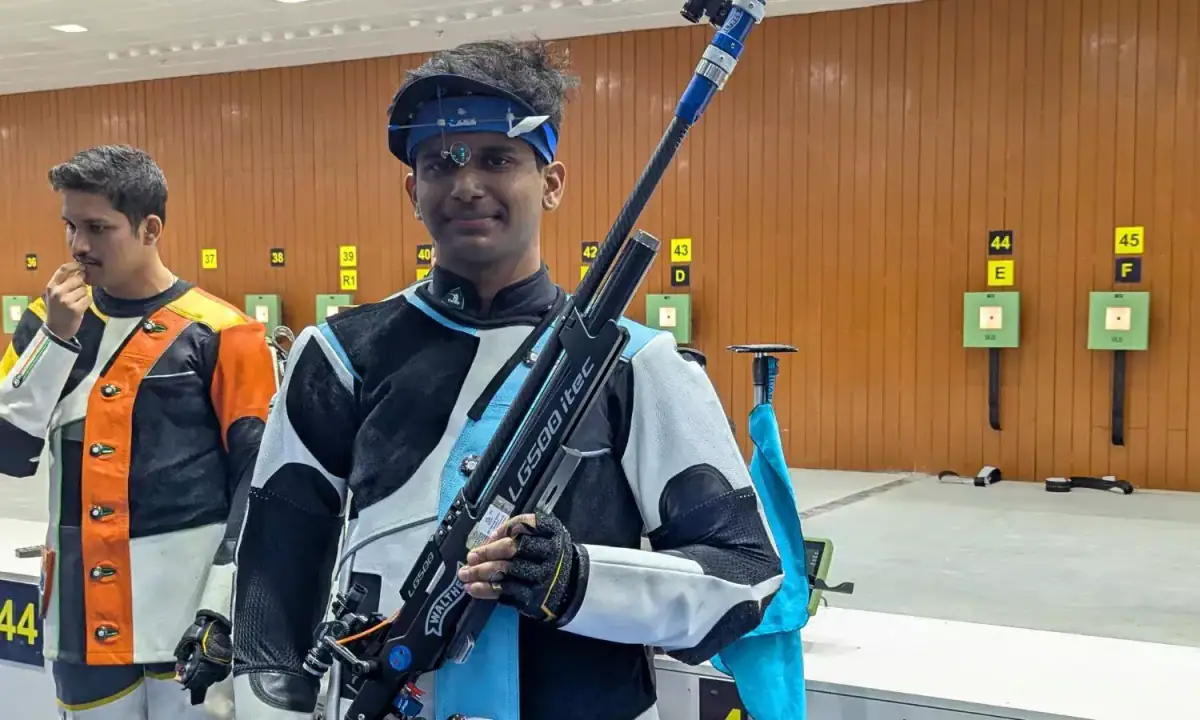
The defining moment of Rana's career came on November 10, 2025, at the ISSF World Championship in Cairo, Egypt. Competing in his first senior individual World Championship, the then 20-year-old produced a qualification score of 586/600, including 28 inner tens, to secure the top position and qualify for the eight-shooter final.
The final developed into a high-pressure contest against China's Hu Kai, the world's top-ranked shooter and reigning Asian champion. Rana demonstrated exceptional composure during the elimination phase. He took the lead after the 20th shot with a cumulative score of 202.5, but Hu responded strongly and briefly moved ahead by 0.1 points after the 22nd shot.
The contest went down to the final shot. Hu registered an outstanding 10.8, putting immense pressure on the Indian shooter. Rana needed at least 10.3 to secure the gold medal.
He responded with a 10.6, finishing with 243.7 points against Hu's 243.3 to win the world title by just 0.4 points.
The victory made Rana the first Indian shooter to win an individual senior World Championship gold in men's 10m air pistol. He also became only the third Indian to win an individual senior World Championship title in an Olympic shooting discipline, following Abhinav Bindra in 2006 and Rudrankksh Patil in 2022.
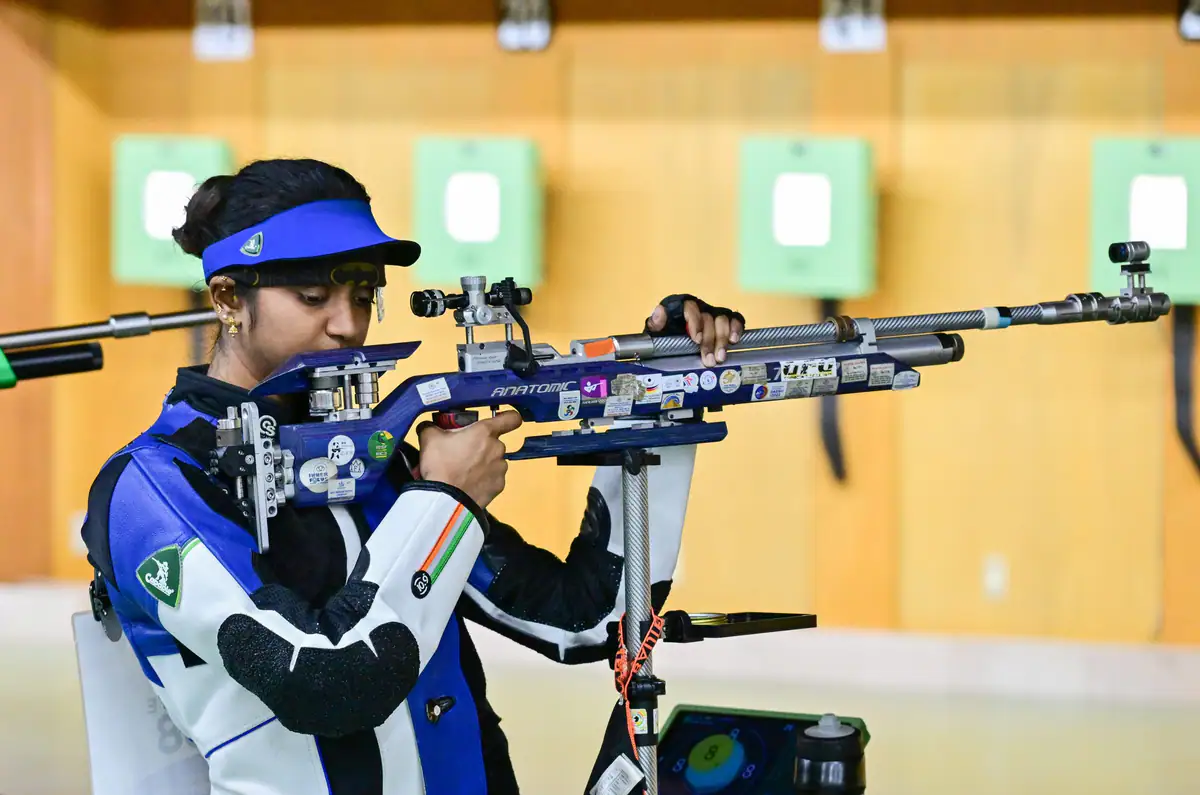
India also enjoyed a double podium, with Varun Tomar claiming bronze with 221.7 points. Rana's success extended beyond the individual event. He partnered Varun Tomar and Shravan Kumar to win men's team gold with a combined score of 1754. He also secured mixed team silver alongside Esha Singh after topping the qualification round with 586 points.
Rana's performances over the following year demonstrated that Cairo was not an isolated success. At the December 2025 ISSF World Cup Final in Doha, he secured individual bronze after qualifying with 584 points and finishing the final with 221.5.
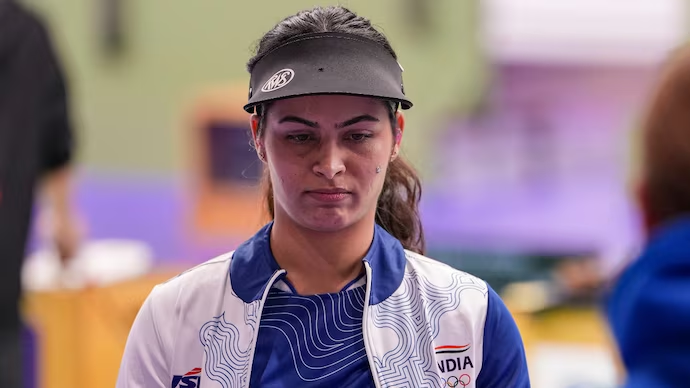
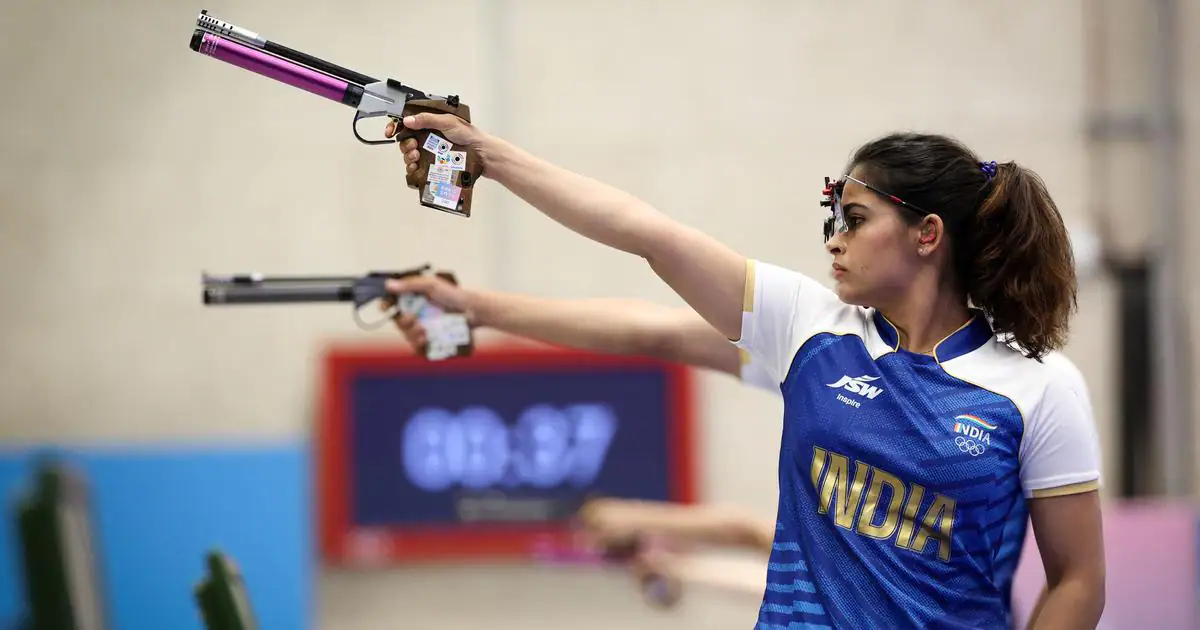
In February 2026, he added another individual bronze at the Asian Rifle/Pistol Championships in New Delhi, scoring 220.3 in the final. He also won mixed team silver with Suruchi Singh and men's team silver. At the ISSF World Cup in Munich in May 2026, Rana partnered Olympic medallist Manu Bhaker to win mixed team silver. The Indian combination scored 483.6 in the final.
However, his individual performances began showing signs of inconsistency. He finished 14th in Munich with 582 points before registering 580 in qualification at the Hangzhou World Cup in July, where he finished 20th. The numbers reveal an important pattern: while Rana remains capable of producing medal-winning performances in finals, his qualification scores have not consistently matched the standards required to reach those finals.
The Domestic Selection Challenge: Why Rana Missed the Doha Worlds
Perhaps the most interesting aspect of Rana's current career situation is the domestic selection system. India's shooting selection process places considerable importance on mathematical averages across sanctioned national trials. Historical achievements and international medals do not automatically guarantee a place in the travelling squad.
During the 2026 domestic selection trials, Rana recorded scores of 579, 582, 581 and 582.5 across the four trial stages. His resulting average ranged between 581.38 and 581.45, placing him approximately seventh to ninth in the Senior Group A rankings.
With only three travelling positions available, marginal differences proved decisive. Jaypal Malviya, Ravin Kumar and Kamaljeet Sohlot secured India's travelling positions for the late-2026 Doha World Championships. Malviya registered a trial average of 581.58 before going on to win individual silver in Doha and secure India's first men's 10m air pistol Olympic quota for Los Angeles 2028.
The selection outcome also meant that Rana and Paris 2024 Olympic bronze medallist Sarabjot Singh missed the travelling squad. For Rana, the situation is a reminder that maintaining international standards must go hand in hand with consistent domestic performances.
Rana's biggest strength is his ability to perform under pressure. His Cairo final, World Cup Final bronze and Asian Championship podium demonstrate his capacity to maintain technical stability during elimination rounds. His mixed team performances with Esha Singh, Suruchi Singh and Manu Bhaker also highlight his adaptability across different partnerships.
However, the critical area requiring improvement is his 60-shot qualification performance.
At major international competitions, the qualification cut-off for the eight-man final frequently falls around 583-585 points. Rana's scores of 580-582 at recent World Cups have left him outside the final despite possessing the ability to compete for medals.
The domestic selection margins are even tighter. An improvement of a fraction of a point in his trial average could significantly change his position in the national selection hierarchy. His immediate objective will therefore be to raise his qualification baseline from approximately 581.4 towards the 584-point mark.
India has already secured its first men's 10m air pistol Olympic quota through Jaypal Malviya's performance in Doha. The next objective will be to secure the remaining available country quota and establish a competitive squad for the Los Angeles Olympic cycle.
For Rana, the pathway remains open. He continues to hold a place in the Senior Group A core squad, is ranked among the world's top shooters and has already demonstrated that he can defeat the strongest international competitors.
His immediate focus is on targeted preparation at his Karnal academy and improving his domestic trial performances to reclaim a travelling international position. Samrat Rana's career is currently at an important crossroads. He has proved that he can become a world champion, but the next phase will test his consistency, resilience and ability to translate international pedigree into domestic selection performances.
At just 21, he has considerable time to build towards Los Angeles 2028. The world title has established his potential. The challenge now is to ensure that his qualification scores consistently reflect it.
Comments (0)
to post comments, replies, and votes.
Loading comments…