Swastika Ghosh Stuns World No. 25 Miyuu Kihara at WTT Contender Almaty
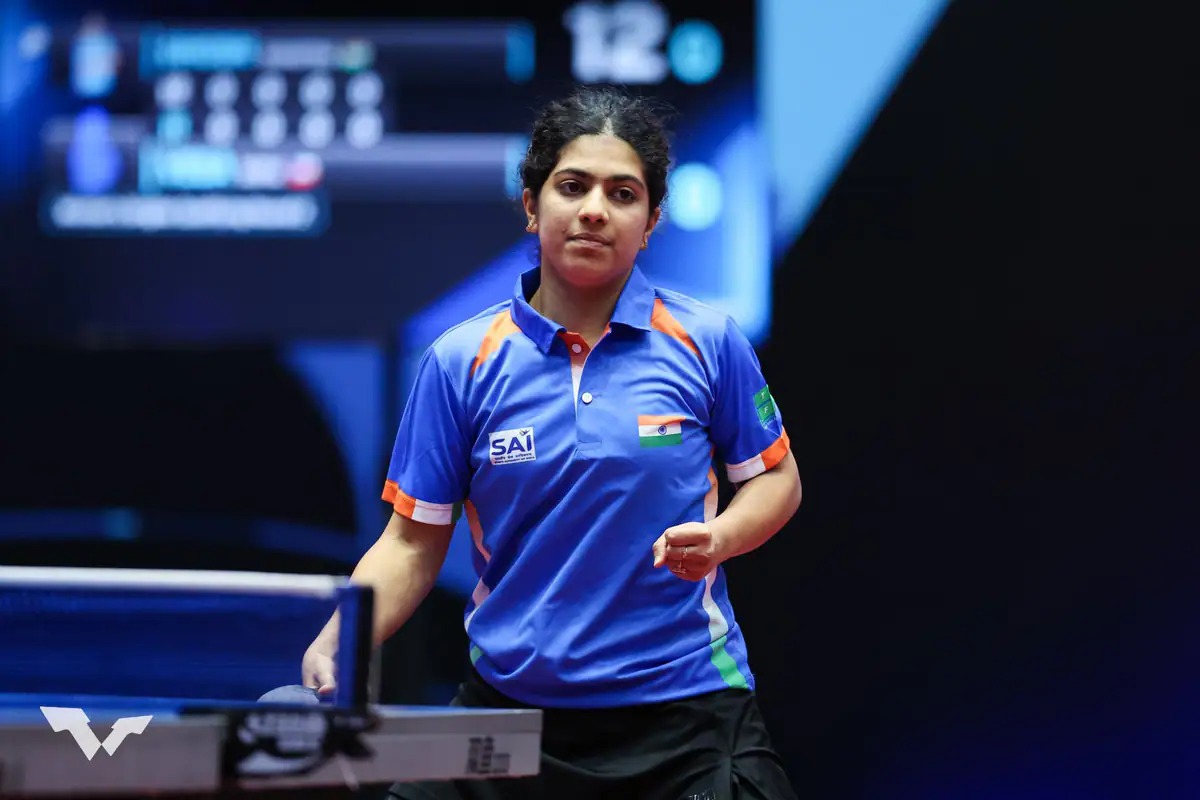
Swastika Ghosh stunned World No. 25 Miyuu Kihara 3-1 at WTT Contender Almaty, producing one of the biggest wins of India’s campaign in Kazakhstan.
Swastika Ghosh produced one of the biggest upsets of the WTT Contender Almaty 2026 as the World No. 149 Indian stunned fourth seed and World No. 25 Miyuu Kihara of Japan in the opening round of the women's singles draw.
In a performance that showcased both composure and attacking intent, Swastika defeated the vastly higher-ranked Japanese star 13-11, 11-7, 5-11, 11-7 to storm into the Round of 16 in Almaty, Kazakhstan.
The victory was a major statement from the Indian, who came into the tournament ranked 124 places below Kihara. It was also particularly impressive given Kihara's status as an established international player and reigning world doubles medallist. For Swastika, however, the numbers on the rankings table appeared to matter very little once the match began.
Swastika holds her nerve in a dramatic opening game
The opening game immediately demonstrated that this was not going to be a routine victory for Kihara. Swastika found herself involved in a tense battle right from the beginning. The Japanese player threatened to take control, but the Indian remained composed and kept herself within touching distance.
The game eventually went beyond 10 points, with both players fighting for the smallest of margins. Swastika showed remarkable nerve when it mattered most, eventually taking the opening game 13-11. That was a crucial moment.
Against an opponent ranked inside the world's top 25, winning a tight opening game can provide enormous psychological momentum. Swastika used it perfectly.
The Indian continued her assault in the second game. Swastika did not allow Kihara to dictate the exchanges and built an advantage that put the Japanese player under increasing pressure. She eventually closed out the game 11-7, moving to within one game of one of the biggest victories of her career.
At that stage, Kihara needed a response. And it came in the third game. The Japanese star managed to regain control and prevent Swastika from completing the upset immediately. Kihara opened up a significant advantage and eventually won the game 11-5.
Suddenly, the momentum had shifted. Swastika had two opportunities to close out the match but now had to find a way to reset herself against an opponent with significantly greater experience at the highest level.
The fourth game was where the Indian's composure stood out. Rather than allowing Kihara's third-game comeback to affect her, Swastika returned to the aggressive and controlled table tennis that had earned her the opening two games. The game remained competitive early on, but Swastika steadily established control.
She eventually closed it out 11-7, completing a remarkable 3-1 victory. The result sent World No. 149 Swastika Ghosh into the Round of 16 and immediately became one of the defining results of India's campaign in Almaty. It was not simply an upset based on rankings.
Swastika had beaten a player who has consistently competed at the highest level of international table tennis and done so by winning three of the four games.
Swastika's victory came during a mixed but eventful tournament for the Indian contingent. Yashaswini Ghorpade also reached the women's singles Round of 16 after defeating Valeria Shcherbatykh in the opening round. Her run then came to an end against Japan's World No. 18 Miyu Nagasaki, but only after an intense battle.
The 21-year-old Indian, ranked World No. 75, lost 8-11, 9-11, 11-8, 13-15, pushing the experienced Japanese star to the limit. The fourth game in particular could have changed the match. Yashaswini had several opportunities to take it into a decider but Nagasaki eventually survived 15-13.
While Yashaswini's singles campaign ended, she remained alive in the tournament through women's doubles.
Yashaswini and Diya Parag Chitale, the top-seeded Indian pair, advanced to the women's doubles semifinals after defeating Russia's Arina Slautina and Alina Zavarykina in straight games. Another Indian pairing has also reached the last four. Third seeds Sutirtha Mukherjee andt Syndrela Das defeated a home-favourite combination 3-1 to secure their semifinal place.
That gives India two women's doubles teams in the final stages of the tournament. The mixed doubles campaign, meanwhile, came to an end in the quarterfinals. The top-seeded pairing of Diya Chitale and Manush Shah lost 1-3, while third seeds Syndrela Das and Payas Jain also suffered a 1-3 defeat.
The men's singles draw brought a major disappointment for India. Third seed and World No. 43 Manush Shah was beaten 0-3 by Russia's Denis Ivonin, who is ranked 258th in the world. Ivonin had entered the main draw after winning two qualifying matches, making the upset even more striking. Manush's defeat ended India's men's singles challenge in Almaty.
But while the result was disappointing for the Indian camp, Swastika's performance provided a major reason for optimism.
For a player ranked 149th in the world, defeating a World No. 25 opponent is precisely the kind of result that can alter a career trajectory. Swastika showed that she can compete against players ranked significantly higher and, more importantly, sustain her level after losing a game. That final point is perhaps the most encouraging aspect of her performance.
After winning the first two games, she saw Kihara fight back in the third. Instead of allowing the match to slip away, Swastika regrouped and won the fourth game convincingly. The Almaty victory therefore represents more than an upset on paper. It is a statement that Swastika Ghosh belongs in conversations about India's emerging women's table tennis talent.
With the Round of 16 now ahead, the challenge becomes even greater.
But after knocking out a World No. 25 player, Swastika has already shown that rankings alone will not define what she can achieve in Almaty.
Comments (0)
to post comments, replies, and votes.
Loading comments…