Tejaswin Shankar Wins Decathlon Bronze at Asian Games After Strong Finish in 1500m
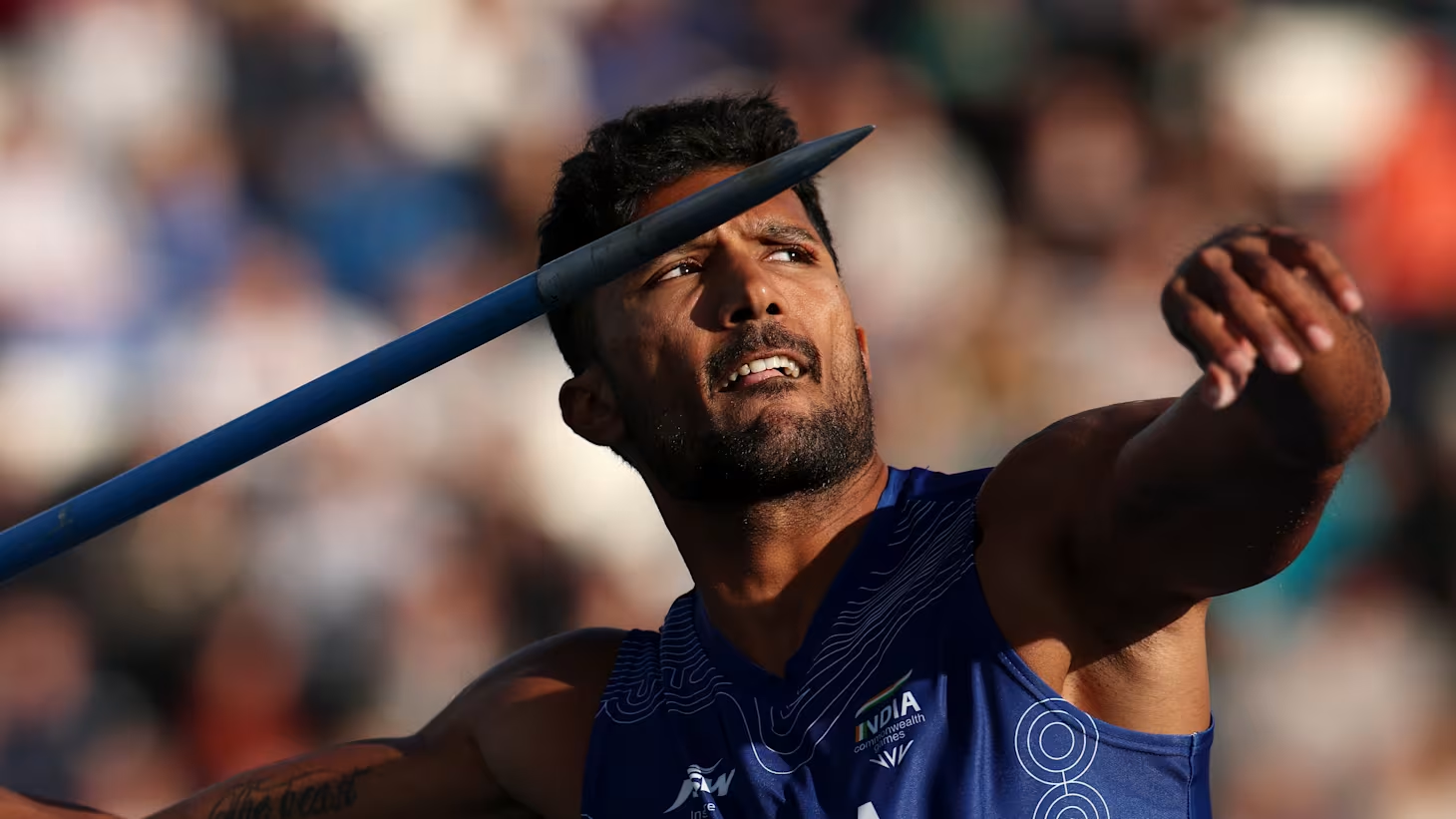
Tejaswin Shankar added another major medal to his growing collection in combined events, winning bronze in the men's decathlon at the Asian Games 2026 after finishing strongly in the final discipline.
The Indian accumulated 7,934 points across the 10-event competition, finishing behind Japan's Yuma Maruyama, who won gold with 8,123 points, and China's Chen Xinghua, who claimed silver with 8,012. Shankar entered the final day with the possibility of defending the silver medal he won at the previous Asian Games, but a difficult pole vault session saw him drop from the lead to third before the final two disciplines. He ultimately held on to the podium with a determined performance in the 1500m.
The bronze continues an impressive run of results for Shankar in combined events.
Shankar had finished the opening day in first place after five events, putting himself in an excellent position to challenge for another Asian Games medal. The second day, however, proved considerably more complicated. The Indian finished fourth in his pole vault group with a clearance of 4.30m, causing his overall score to fall. After the pole vault, he had accumulated 6,571 points and sat third in the overall standings.
That left the javelin throw and 1500m as the final opportunities to make up ground. Shankar entered the javelin competition knowing that the battle for the medals was still very much alive.
Javelin produces an important improvement
Shankar began his javelin series with a throw of 46.29m, which placed him eighth in the event at that stage. He then found considerable improvement with his second attempt. His 53.37m throw moved him up to fifth in the javelin standings and provided an important boost to his overall position. He finished his series with a third throw of 51.81m.
After the javelin, Shankar remained third overall with 7,210 points. The gap to the athletes ahead was significant, however. Maruyama led with 7,404 points, while Chen was second with 7,315. Shankar therefore needed a strong final discipline to keep his medal position secure and potentially challenge for a higher place.
The 1500m was the final event of the decathlon and therefore the last opportunity for the athletes to alter the overall standings. The calculations before the race showed how difficult Shankar's task was. He needed a substantial improvement in the final event to close the gap to Chen and Maruyama, while athletes behind him were also within striking distance of the podium.
That made the 1500m more than simply the final event on the schedule. It was the race that would determine the medal positions. Shankar responded by winning the 1500m. The victory in the final discipline gave him the points required to finish third overall with 7,934 points and secure the bronze medal. It was a particularly important finish because Shankar had to protect his podium position while also attempting to close the gap ahead.
The bronze adds to an already impressive medal collection for Shankar. He won silver at the previous Asian Games and has now followed that performance with another podium finish in the decathlon. His latest result also represents an improvement in his overall Asian Games total. Shankar's 7,934 points came close to the 8,000-point mark, a barrier he has crossed earlier this year. While he did not reach that benchmark in this competition, he still produced one of his strongest combined-event performances of the season.
His recent record also includes a bronze medal at the Glasgow Commonwealth Games earlier this year.
Across the Asian and Commonwealth circuits, Shankar has established himself as one of India's leading combined-events athletes.
The decathlon is unlike most athletics events because no single performance determines the final result. Athletes must survive two days and 10 disciplines, covering sprinting, jumping, throwing and endurance. A strong opening day can quickly be undone by one difficult event, while a late surge can transform the final standings.
Shankar's campaign followed exactly that pattern. He began strongly enough to lead the competition after five events. The pole vault then cost him valuable ground, dropping him to third. Rather than allowing that setback to derail his campaign, he responded in the javelin and ultimately produced his best finish of the competition in the 1500m.
That final race was crucial to his medal hopes.
Maruyama takes gold, Chen claims silver
Japan's Yuma Maruyama completed the competition at the top of the standings with 8,123 points, breaking the 8,000-point barrier. China's Chen Xinghua finished second with 8,012 points, also crossing 8,000. Shankar's 7,934 points left him 78 points behind Chen and 189 points behind Maruyama. For India, the result nevertheless represents another significant achievement in a demanding discipline.
Shankar leaves the Asian Games with bronze after beginning the competition as the leader, overcoming a difficult middle section and finishing with a decisive 1500m victory.
The colour of the medal may have changed from silver to bronze compared with his previous Asian Games appearance, but Shankar remains firmly among the leading combined-events athletes in Asia — and his 7,934-point performance provides another strong foundation for the next chapter of his career.
Comments (0)
to post comments, replies, and votes.
Loading comments…