India Men's National Team
Currently ranked 138th in FIFA world standings and 26th in Asia

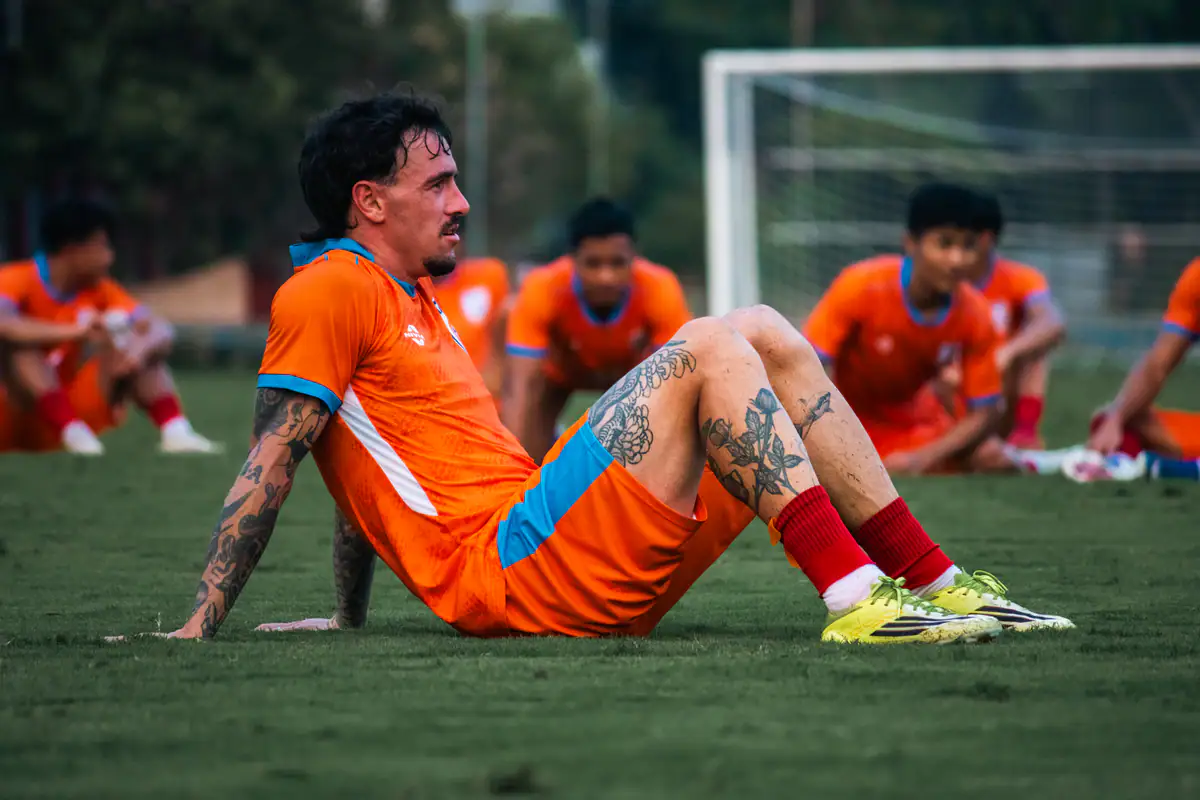
Examining India's slide to 138th in FIFA rankings, regional competitive gaps, and the urgent need for grassroots reform.
Examining India's slide to 138th in FIFA rankings, regional competitive gaps, and the urgent need for grassroots reform.
Staring at the FIFA world ranking table and finding your national team parked at 138th is a bitter pill for any dedicated supporter to swallow. For India, a country of over 1.4 billion people with a sporting culture that easily obsesses over cricket and celebrates Olympic triumphs, this number feels almost paradoxical. It represents a sobering reality check that cuts through the marketing hype and promotional campaigns surrounding the sport. Numbers on a global leaderboard don't lie about international results, even if they sometimes fail to capture the passion boiling inside local stadiums or the genuine effort put in by players on the pitch.
Sitting at 26th within the Asian Football Confederation adds another layer of perspective to the situation. While global supremacy is an unfair benchmark for a developing football nation, struggling to break into the upper tier of your own continent highlights deep-seated competitive gaps. Asia is no longer a monolith where a few traditional giants dominate without challenge; medium-tier nations have rapidly modernised their footballing ecosystems. When a team hovers in the mid-twenties regionally, it means they are routinely battling just to earn qualification spots for major continental tournaments, let alone competing for silverware.
To understand how the team slid to 138th, you have to look beyond single match results and examine the broader transitional phase the national setup has experienced over the past few years. International football is an unforgiving arena where stagnation equals regression.
As veteran stalwarts who carried the team through difficult decades began to age out or retire, the vacuum left behind exposed a lack of immediate, international-ready replacements. Tactical identities were shifted frequently as management tried to find a formula that balanced defensive solidity with attacking threat, often leading to disjointed performances during crucial international windows.
Another compounding factor has been the sheer volume of competitive fixtures played by rival federations compared to the national team’s schedule. While countries in Europe, South America, and even parts of Southeast Asia consistently maximise every international break with high-intensity friendlies and structured tournaments, erratic scheduling has sometimes left the players lacking match rhythm together. Points on the FIFA ranking board are accumulated through consistent wins against higher-ranked opponents. When you play infrequently or struggle to grind out victories away from home against regional peers, the mathematical formula inevitably pulls your ranking downward.
When we dissect the 26th spot in Asia, the real challenge comes into sharp focus.
In contrast, the national team has often struggled with the relentless physical tempo and tactical flexibility demanded by modern Asian football. When facing West Asian sides, the physical disparity in sprint speed, aerial duels, and transition play often becomes glaringly apparent. Against technically gifted East Asian squads, the difficulty lies in retaining possession under high-pressing systems. Closing this regional gap requires more than just defensive grit; it demands producing players who are comfortable receiving the ball under intense pressure and who possess the tactical intelligence to exploit fleeting spaces on the counter-attack.
The conversation naturally shifts to the domestic football structure, specifically the impact of the Indian Super League. When the franchise-based competition was launched, it promised to revolutionise the sporting landscape by bringing in renowned foreign coaches, upgrading stadium lighting and broadcast quality, and injecting private capital into club administration. In many ways, it succeeded in professionalising the daily environment for elite domestic players. Athletes today enjoy better fitness training, structured dietary regimens, and tactical exposure than any previous generation in the nation's history.
However, a closer look at the team sheets reveals a persistent structural dilemma that directly impacts the national team. For years, domestic clubs have relied heavily on foreign imports to fill the most crucial, spine-defining positions on the pitch: central defenders, creative attacking midfielders, and prolific centre-forwards. Because local clubs need immediate results to satisfy sponsors and owners, domestic players are frequently pushed out to wide positions or defensive midfield roles. As a direct result, when the national team coach assembles the squad for international qualifiers, finding a native, battle-tested striker who regularly scores 15 goals a season becomes an almost impossible task.
You simply cannot build a sturdy footballing skyscraper if you start construction from the tenth floor. The most glaring flaw in the ecosystem remains the absence of a comprehensive, year-round youth developmental pyramid. In top-ranking football nations, talented youngsters from age eight onwards are playing between 40 and 50 competitive, high-stakes matches every single year. These matches are officiated properly, played on decent surfaces, and managed by qualified youth coaches who prioritise spatial awareness and technical bravery over simply booting the ball upfield to win a Saturday morning trophy.
Locally, youth competitions remain largely fragmented, seasonal, or geographically isolated. While certain top-tier clubs run commendable residential academies, the vast majority of kids playing football across schools and districts lack access to a unified competitive league structure. By the time a promising teenager is scouted and enters a professional setup at age 16 or 17, they have already missed out on thousands of hours of crucial micro-tactical decision-making. Making up that developmental deficit in adulthood against international opponents who have been professionally moulded since elementary school is an incredibly steep uphill climb.
Modern football has evolved into a hyper-analytical, data-driven science where marginal gains dictate outcomes. To climb out of the 130s in the world rankings, traditional scouting methods based on word-of-mouth recommendations or isolated trial camps must be permanently replaced by digital tracking and centralised talent identification. Federations that punch above their weight globally utilise GPS data, video analytics, and biomechanical assessments to monitor thousands of registered players across every division. This ensures that a late-blooming talent in a remote district isn't accidentally overlooked simply because their school team didn't reach a state final.
Furthermore, coaching education requires a massive, sustained overhaul at the grassroots level. It is not enough to have a few UEFA- or AFC-pro license holders managing top-flight clubs if the coaches teaching ten-year-olds are still preaching outdated, risk-averse styles of play. Grassroots trainers must be equipped with modern pedagogical tools that encourage youngsters to dribble out of tight spaces, play out from the back, and understand spatial geometry on the field. The philosophy of the national team is ultimately forged on municipal grounds and school pitches, long before a player ever wears the national jersey.
Despite the sobering ranking figures, anyone who thinks the country lacks a genuine footballing soul hasn't visited its traditional sporting hotbeds. Travel through the northeastern states like Manipur, Mizoram, and Meghalaya, or walk through the bustling maidans of Bengal, the coastal villages of Goa, and the football-crazy districts of Kerala, and you will witness a passion that rivals anywhere in Europe or South America. In these regions, football is not just a secondary hobby to cricket; it is woven into the daily cultural fabric, drawing thousands of vocal spectators to local derby matches and village tournaments.
The raw talent emerging from these community hotspots proves that the genetic and technical potential exists in abundance. You can watch local teenagers execute breathtaking first touches, explosive dribbles, and intuitive passing combinations on mud pitches and artificial turf alike. The challenge facing administrators is creating seamless, frictionless pathways that connect these vibrant local hubs directly to professional academies without financial barriers, bureaucratic nepotism, or geographical neglect. When the raw street-smart creativity of traditional hotspots is matched with elite sports science and structured coaching, the national talent pool will expand exponentially.
Reversing the slide to 138th is not a task for impatient optimists looking for overnight miracles. It requires a ten-year commitment to institutional patience, administrative transparency, and structural consistency. The first step involves aligning the entire domestic football calendar so that club competitions, state leagues, and national team camps work in harmony rather than in constant friction. Clubs must be incentivised or strictly mandated to field younger domestic players in central attacking and defensive roles, ensuring that the national team always has a deep reservoir of match-sharp, confident options to call upon during FIFA windows.
Ultimately, climbing back into the world's top 100 and establishing a firm foothold inside Asia's top 15 requires everyone involved to pull in the same direction. Supporters must temper their demands for instant continental domination while remaining fiercely demanding about standards, accountability, and long-term planning. The players wearing the crest must embrace the physical and mental sacrifices required to compete at the highest international tempo. With a clear vision, decentralised grassroots investment, and an unwavering commitment to modern footballing methods, the current ranking can one day be remembered not as a permanent label but as the turning point where a sleeping giant finally figured out how to stand on its own feet.
to post comments, replies, and votes.
Loading comments…