Treesa Jolly and Gayatri Gopichand Make History, Enter BWF World Championships Quarterfinals
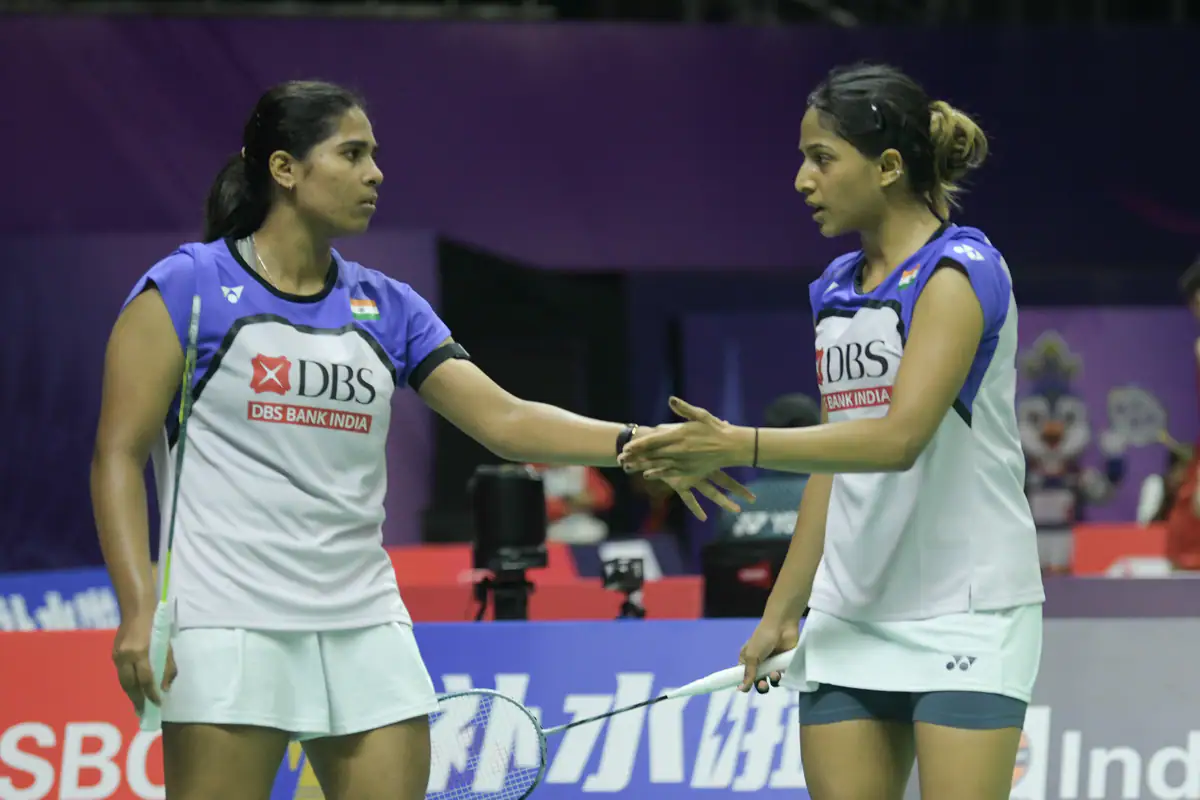
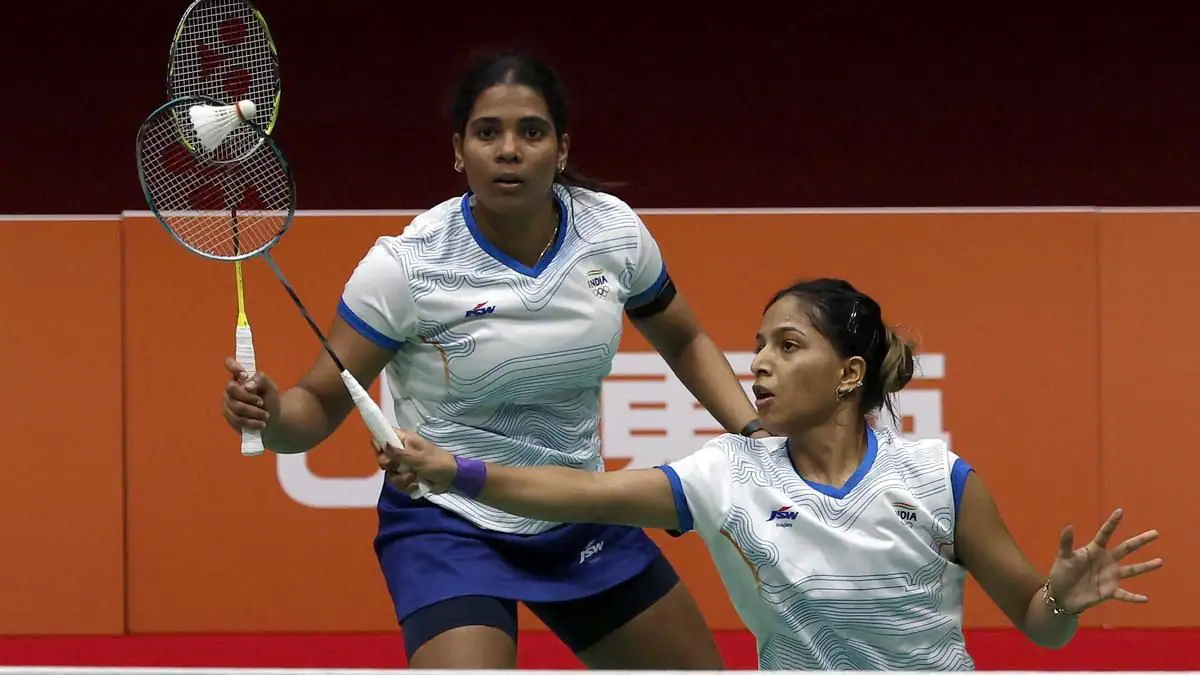
Treesa Jolly and Gayatri Gopichand defeated Japan’s seventh-seeded Rin Iwanaga and Kie Nakanishi 21-16, 21-12 to reach the BWF World Championships 2026 quarterfinals.
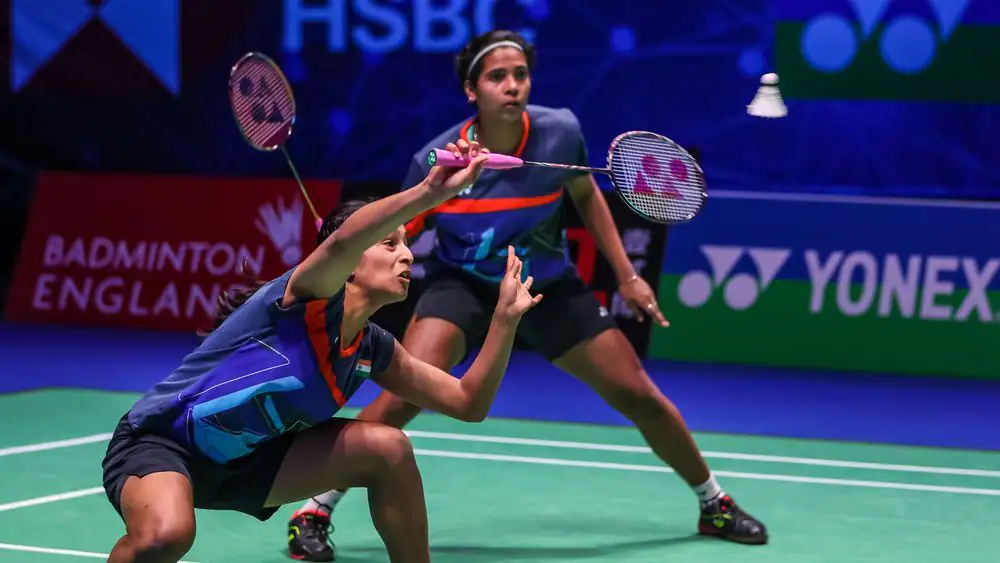
Treesa Jolly and Gayatri Gopichand produced one of India’s most significant performances at the BWF World Championships 2026, defeating seventh seeds Rin Iwanaga and Kie Nakanishi of Japan in straight games to reach the women’s doubles quarterfinals in New Delhi.
The Indian pair won 21-16, 21-12 in the Round of 16, ending an 11-year wait for India in the women’s doubles quarterfinals at the World Championships. The last Indian pair to reach this stage was Jwala Gutta and Ashwini Ponnappa in 2015.
More importantly, Treesa and Gayatri are now just one win away from a guaranteed World Championships medal. The victory over the highly-rated Japanese combination was not simply about the final score. It was a performance that showed the growing maturity of the Indian pair, particularly their ability to remain composed when the match threatened to turn.
The opening game was closely contested and Japan appeared to have taken control when Iwanaga and Nakanishi moved ahead 16-13. At that stage, the Indians were under pressure against a pair known for their speed, consistency and ability to keep rallies alive.
But Treesa and Gayatri responded with an impressive comeback. They stayed patient, avoided panic and gradually wrestled momentum away from the seventh seeds. From 13-16 down, the Indian duo produced a remarkable turnaround to take the opening game 21-16.
That comeback proved to be the decisive phase of the match. One particular moment at 17-16 underlined the quality Treesa brought to the court. Her cross block under pressure helped India maintain control during a crucial stretch of the game. Treesa’s physical presence, reach and attacking intent repeatedly gave the Indian pair an advantage.
Once the opening game slipped away from the Japanese pair, Treesa and Gayatri carried their momentum into the second.
The second game was far more comfortable for the Indians as they tightened their control and prevented their opponents from finding a way back into the contest. Treesa continued to bring power and aggression, while Gayatri contributed with her net play and placement.
The final score of 21-12 reflected India's growing dominance as the match progressed. After the victory, the pair highlighted the importance of remaining calm under pressure.
“I am happy we stayed calm and were able to finish the game,” the Indian pair said after the match. That calmness was particularly important after the difficult position they faced in the opening game. For Treesa and Gayatri, the win also reinforces their status as one of India's most important women's doubles combinations. They have long been identified as a pair capable of competing with the world's best, but major tournaments are ultimately judged by performances in high-pressure knockout matches.
Against the seventh seeds, they delivered. Treesa was arguably the more imposing presence on the day. Her ability to inject pace and power into rallies gave India an attacking dimension that the Japanese pair struggled to contain. She was aggressive when opportunities opened up and showed excellent defensive awareness during pressure situations.
Gayatri's role was equally important, particularly around the net and in constructing rallies. However, the match also highlighted an area where the partnership may need to evolve further against the world's strongest pairs.
Gayatri possesses excellent touch, control and deception, but her attacking game can sometimes lack the brute force needed to finish rallies. Her shots can become too soft, allowing elite opponents to keep her engaged in extended exchanges rather than being forced onto the defensive.
At the highest level of women's doubles, opponents study these patterns carefully. Top-ranked pairs are increasingly likely to recognise when a player is less inclined to use the smash or inject outright power. That can allow opponents to target that side of the court, keep the shuttle moving and force the partnership into longer, physically demanding rallies.
Gayatri was effective in attack and at the net against the Japanese pair, but developing a more consistent finishing option could make the Indian combination even more dangerous.
The question for the partnership going forward is not necessarily about changing roles completely. Treesa's physicality and power are major assets, while Gayatri's touch and technical control provide balance. The challenge is to ensure that the contrast between their styles does not become predictable.
When Gayatri can add more attacking threat, opponents will find it much harder to focus their tactical plans on one player.
For now, though, the immediate focus is on the quarterfinal. The victory has already given Treesa and Gayatri a place in Indian badminton history. Reaching the last eight ends an 11-year wait and puts them within touching distance of a World Championships medal.
With the tournament being played in New Delhi, the home crowd will now hope the pair can take another major step. Treesa's power, Gayatri's control and their ability to recover from pressure situations were all on display against Japan. Their next challenge will be even tougher, but the message from the Round of 16 was clear.
Treesa Jolly and Gayatri Gopichand are no longer simply a promising Indian women's doubles pair.
They are now quarterfinalists at the BWF World Championships, and one victory away from turning a historic run into a medal-winning campaign.
Comments (0)
to post comments, replies, and votes.
Loading comments…