World Athletics Has Raised the Bar Again, Beijing 2027 Could Become the Toughest Championships Ever to Qualify For
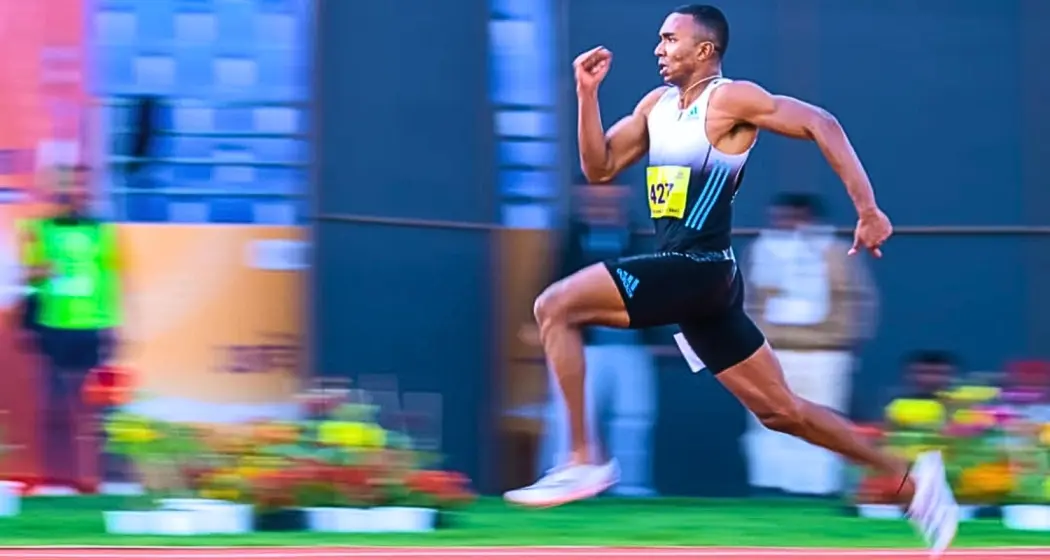
When World Athletics officially unveiled the qualification standards for the 2027 World Championships in Beijing, the reaction across the athletics world was immediate.
Shock. Not because the standards increased slightly that has happened regularly over the years. But because this time, the jump was massive. Across almost every major track event, the qualification marks have become dramatically tougher compared to both London 2017 and Oregon 2022. The message from World Athletics is now unmistakable:
The World Championships are no longer designed for broad participation.
They are being shaped exclusively for elite performers.
And the numbers prove it.
Sprinting Standards Have Entered Another Universe
The men’s 100m qualification standard perfectly captures the scale of the shift.
From London 2017 10.12s to Oregon 2022: 10.05s and now Beijing 2027: 9.95s
A total reduction of 0.17 seconds may not sound huge to casual fans. But in sprinting, that is enormous. Sub-10 seconds was once considered rare territory reserved for global medal contenders. Now it has effectively become the minimum entry ticket to even participate at the World Championships.
The women’s 100m shows an even sharper shift 11.26 → 11.15 → 10.96
That is a staggering 0.30-second tightening over a decade. To put this into perspective, entire national programs in many countries still do not consistently produce athletes capable of running below 11 seconds. World Athletics is effectively saying that simply being internationally competitive is no longer enough.
You now need to be genuinely world-class.
Perhaps the most brutal change comes in the 400m.
Men’s 400m
2017: 45.50
2022: 44.90
2027: 44.45
That is over one full second faster within a decade. At elite level, improving by one second in a one-lap sprint is monumental. In fact, many national champions across the world would now fail to qualify automatically for Beijing.
The women’s 400m tells a similar story 52.10 → 51.35 → 50.00
The new benchmark effectively demands Olympic-final level running just to secure direct qualification. This reflects a broader transformation in athletics globally. Better sports science, improved training methodologies, advanced shoe technology and increased competition density have pushed elite performances higher than ever before.
World Athletics has simply adjusted the standards to match that explosion.
The 800m and 1500m standards reveal perhaps the clearest evidence of modern athletics entering an ultra-elite phase.
Men’s 800m 1:45.90 → 1:45.20 → 1:43.00
A 2.9-second reduction across ten years is extraordinary for an event where races are often decided by hundredths of a second. Running 1:43 is no longer exceptional globally it is now considered the minimum requirement for direct World Championship entry.
The men’s 1500m is even more staggering 3:36 → 3:35 → 3:30
A five-minute mile was once legendary. Now athletes practically need to average close to 56-second laps for nearly four laps just to qualify. And the women’s 1500m from 4:07.50 → 4:04.20 → 3:58.00. The sub-4-minute barrier, once reserved for medal contenders, is now almost the expectation.
The biggest jumps come in long-distance events. Men’s 5000m : 13:22.60 → 13:13.50 → 12:50.00 That is a reduction of 32.6 seconds from London 2017 to Beijing 2027. Thirty-two seconds in elite 5000m running is enormous.
World Athletics has essentially moved the qualification line from “international standard” to “global elite.” The women’s 5000m has undergone an even sharper transformation: 15:22 → 15:10 → 14:36. A 46-second tightening. That is almost unheard of in athletics qualification evolution.
Marathon Standards Show the Most Dramatic Shift
Perhaps no event better reflects the growing professionalism of athletics than the marathon. Men’s Marathon: 2:19 → 2:11:30 → 2:06. Seven years ago, a 2:19 marathon was respectable international quality. Today, 2:06 is required for automatic qualification. That is an entirely different level of endurance running.
The women’s marathon has also transformed dramatically: 2:45 → 2:29:30 → 2:23:20
A reduction of over 21 minutes across a decade is astonishing. These standards now align almost directly with elite major marathon performance levels rather than traditional championship qualification marks.
The answer lies in two major factors.
Athletics has become faster almost everywhere. From sprinting to distance running, athletes are producing performances once considered impossible. Advancements in sports science, biomechanics, nutrition, recovery systems, shoe technology, altitude training & race pacing have collectively pushed global standards higher.
World Athletics believes qualification systems must reflect that reality.
Modern championships are increasingly prioritising television value, competitive quality & tighter event scheduling
Instead of large qualification pools, organisers now prefer compact fields filled almost entirely with genuine contenders. The phrase on the World Athletics graphic says it directly: “Higher Standards. Elite Only.”
That is not marketing language. It is policy.
What This Means for Countries Like India
For developing athletics nations, these standards create both motivation and difficulty. On one hand, they push federations to improve systems rapidly. On the other, they expose how large the global gap still remains in many disciplines. Athletes who once comfortably qualified for World Championships may now need career-defining performances just to enter the field. And that may ultimately be the biggest takeaway from the Beijing 2027 standards.
The global athletics ecosystem is evolving faster than ever before. Standing still is no longer enough.
Even progress itself may not be enough anymore.
Comments (0)
to post comments, replies, and votes.
Loading comments…